yesterday at 15:58
The German housing market has been under increasing pressure for years. Completions are significantly lagging behind actual demand, rents are rising incessantly in many cities, and the deficit in available housing is estimated at around 1.4 million units. Against this backdrop, innovative construction concepts are increasingly coming into focus – as a possible way to create housing faster and more affordably.
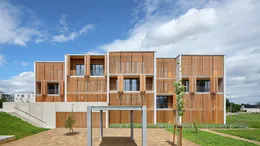
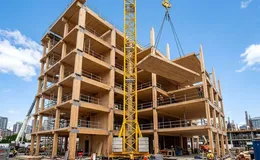
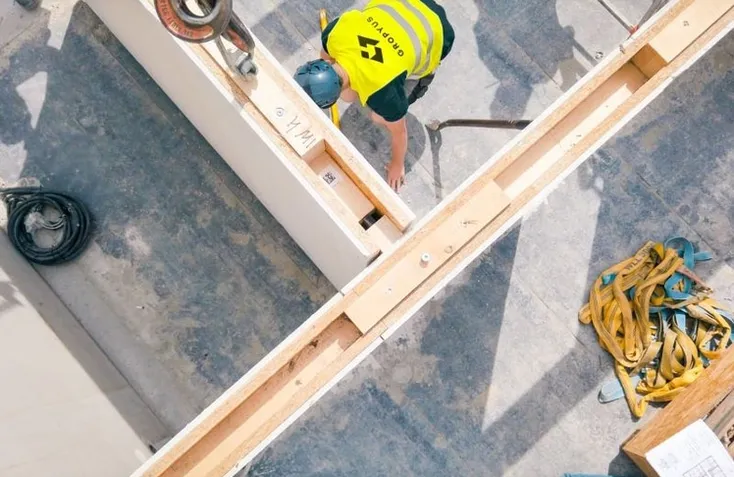
One of the companies attracting attention in this segment is Gropyus. In contrast to classic construction methods, the company primarily uses wood instead of concrete and steel. Buildings are planned in detail digitally, central building elements such as walls and installation shafts are industrially prefabricated and then assembled on the construction site. A multi-story residential building is currently being built in Berlin-Charlottenburg-Wilmersdorf for the housing company Vonovia – a practical test for this construction method in an inner-city location.
The central difference of the Gropyus approach lies in the production process. Many work steps that traditionally take place on the construction site are relocated to a factory. This is intended to shorten construction times, standardize processes more strongly, and reduce dependence on weather conditions and difficult-to-plan construction site processes. Planning, manufacturing, and construction execution are integrated into a common value chain.
The basis of every project is a digital twin that bundles all building data and controls production. For the Berlin project, the price per square meter is currently around 3,600 euros of living space – this puts the project at the level of comparable conventional new buildings. Gropyus sees the decisive economic lever in the future: Through economies of scale, increasing automation, digitalization, and the use of artificial intelligence, construction costs are to be significantly reduced in the long term.
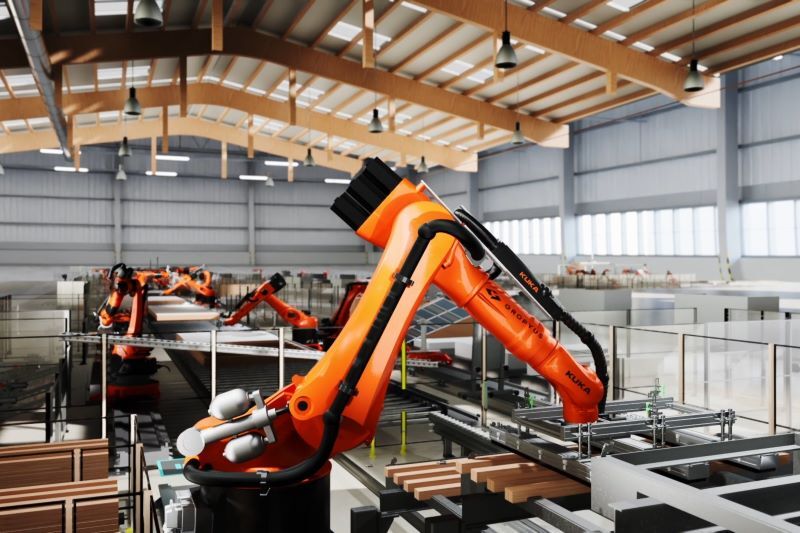
For the construction industry as a whole, the approach is relevant for several reasons. Many companies are simultaneously struggling with productivity problems, rising material costs, and a pronounced shortage of skilled workers. Industrially organized construction processes could unlock new efficiency potentials here – provided that serial timber construction can be implemented economically on a large scale.
Meanwhile, the demand for housing remains high. Recently, only about half of the politically targeted 400,000 new apartments per year were actually completed. If providers like Gropyus can demonstrably build faster and more cost-efficiently, serial timber construction could play a significantly larger role in the German housing market in the future.
Vonovia has apparently recognized the potential of the model: The company is now not only a client but also an investor in Gropyus. The Berlin project serves as an opportunity for it to gain practical experience with the method. If the hoped-for advantages in construction time and costs are confirmed, the model is also likely to be used in further residential construction projects – and represent an additional option for investors, housing companies, and municipalities in dealing with the ongoing housing shortage.