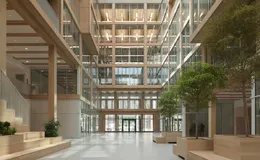
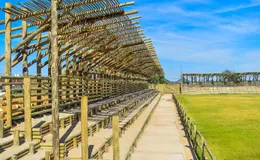
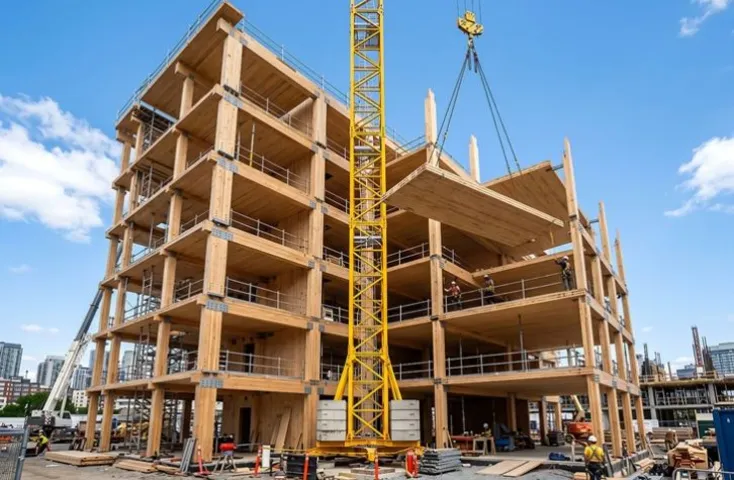
Lithuania’s wooden construction sector lags behind many European countries not due to a lack of technology, but because of legal, market and cultural barriers. While the Nordic states have spent decades creating a developed wooden construction ecosystem, in Lithuania this direction is still mostly associated only with individual homes or low-rise buildings.
Modern timber construction is successfully applied where an entire interconnected system is in place: clear regulations, experienced designers, local manufacturers, competent contractors and accumulated practical expertise. In the Nordic countries, this ecosystem developed alongside raw material resources and scientific research, giving them a structural advantage that will not be easy to catch up with quickly.
The Lithuanian market is still dominated by the stereotype that masonry and concrete are more reliable and durable than wood. This attitude slows not only private decisions but also public sector initiatives. Experts emphasise that clarity in state policy and the construction of public buildings – schools, kindergartens, administrative facilities – from wood could provide an important impetus for changing both market attitudes and the regulatory framework.
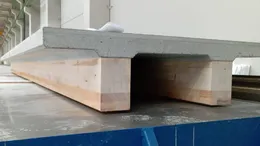
Timber construction is valued not only for its lower carbon footprint. Practical advantages include faster construction times, better process control and the ability to manufacture most structural elements in a factory. Prefabricated modules or components arrive at the site with a high degree of completion, reducing dependence on weather conditions and the likelihood of errors. CLT, Glulam, LVL and other engineered wood technologies make it possible to design large, complex buildings whose performance characteristics successfully compete with traditional structures.

One of the most frequently cited drawbacks of wooden construction – fire safety – is partly based on myth. The behaviour of modern engineered wood in fire is predictable and well studied.
“When wood burns, a protective char layer forms that slows the penetration of heat into the structure.”
Meanwhile, the real practical risk in the operation of wooden buildings is often not fire, but moisture. Proper protection of structures during both construction and operation is a prerequisite for ensuring the long-term durability of the building.
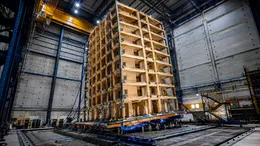
Experts agree that there are practically no technical obstacles to wooden multi-storey or even high-rise buildings in Lithuania. The physical properties of wood allow such projects to be realised; however, the most rational and, in the near term, most likely path is hybrid structures in which wood is combined with steel or reinforced concrete. Such solutions give designers flexibility, allow cost optimisation and at the same time exploit the environmental benefits of wood.
Additional impetus should come from the tightening European Union requirements to assess the entire life-cycle impact of a building on the environment. In this context, the main question is no longer whether wood can compete with concrete and steel from a technical standpoint. The question is different: whether Lithuania’s market, regulatory framework and construction sector will manage to adapt to the pace of Europe’s sustainability agenda.