19 Jul 2026
,Switzerland
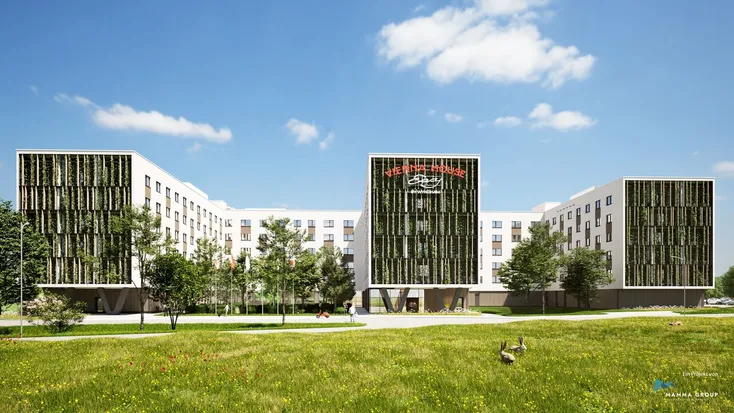
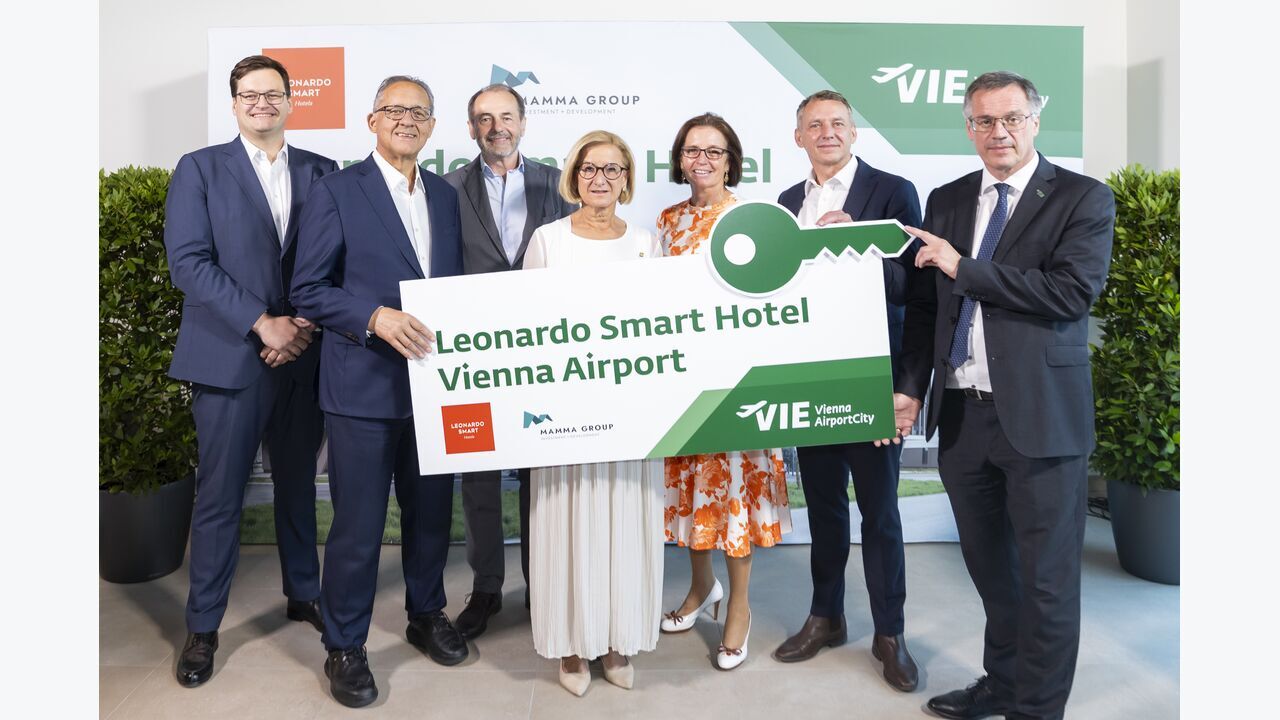
On June 25, 2026, a hotel of superlatives commenced operations at Vienna-Schwechat Airport: With 510 rooms, the new property is considered the world's largest hotel in timber construction – and at the same time Lower Austria's largest as well as Austria's fourth-largest hotel. The first guests checked in already one day before the official opening.
The six-story building stands directly next to the VIP & General Aviation Terminal on the B9 toward Schwechat. It was designed by the Vienna firm BKK-3 Architektur and constructed by the MAMMA Group under investor Herbert Pinzolits. The hotel is the first property of the new Leonardo Smart brand, which focuses on functional and uncomplicated stays.
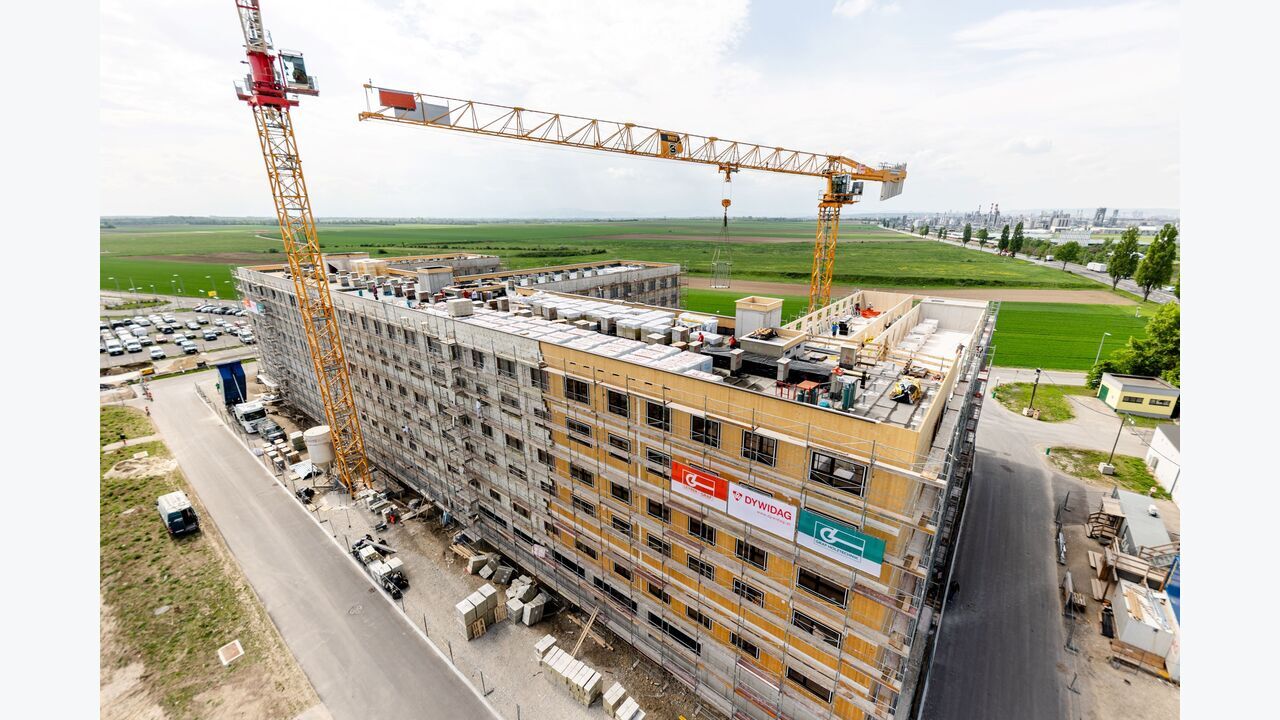
Anyone viewing the building from the outside might underestimate its innovative core. The ground floor and six bracing stairwell cores were executed in reinforced concrete, while the five floors above were built in timber-hybrid construction. Load-bearing exterior and partition walls as well as floor slabs consist of cross-laminated timber; load transfer follows a three-bay system via exterior and corridor walls.
The timber construction was handled by Graf-Holztechnik from Horn, while Theurl supplied approximately 4,000 cubic meters of cross-laminated timber. Around 10,900 square meters of CLT walls and 12,000 square meters of CLT floors were installed. The floor panels measuring three by fourteen meters were deliberately dimensioned so that no special transports were required. The standard room size of roughly three by six meters resulted from the interplay of architecture, fabrication, and logistics.
Assembly proceeded in five construction phases following a tight two-day rhythm of walls, bathroom modules, windows, and floors. While interior fit-out had already begun on one floor, the next floor was being erected above it. The building grew by two floors per construction phase per week; the raw timber assembly was completed after three and a half months. The logistical requirements were extreme: the time window was sometimes limited to a maximum of plus/minus 15 minutes.
According to Graf-Holztechnik, this pace was made possible by precise cross-trade planning, a high degree of prefabrication, regular lean meetings, and the advantages of recurring floor layouts.
“With proper planning, timber construction has practically no limits when it comes to building volume.” — Graf-Holztechnik
Parallel to the timber work, Lieb Bau Weiz carried out the drywall construction over a performance period of just under eight months. Between 15 and 30 drywall installers worked on site each day. The fit-out included large quantities of single- and double-stud walls, fire-protection cladding, furring walls, shaft walls, as well as gypsum-board, metal, and mineral-fiber ceilings. The CLT floors remained visible and carry the timber character through to the guest rooms.
Due to the slender hybrid construction, several execution variants had to be produced on site and verified by sound measurements – cross-laminated timber behaves fundamentally differently from reinforced concrete because of its natural vibrations and varying density. For fire protection, the CLT walls received gypsum boarding and furring layers for routing services, with strict adherence to tested Knauf fire-protection systems proving decisive. Weekly lean meetings and day-accurate milestones kept timber assembly, drywall work, and building services coordinated within a tight space. Drywall materials had to be delivered twice a week in roughly three-hour time slots, each involving 40 to 50 tons.
The hotel aligns with Vienna Airport’s sustainability strategy, which has operated CO₂-neutral since 2023. The building continues this strategy with CO₂-free heating and cooling supply. The total construction period was only 13 months – a record achievement for a project of this scale and the largest single project to date for the MAMMA Group.
With the opening, hotel capacity at Vienna Airport rises to over 1,400 rooms – an expansion that benefits transit passengers, flight crews, and the approximately 250 companies and more than 23,000 employees of Airport City.
The project’s history was not without turbulence: the property was originally planned as Vienna House Easy by Wyndham. The intended February opening failed after the designated operator, Revo Hospitality Group, filed for insolvency in January 2026. The MAMMA Group subsequently sold the property to Israeli Fattal Holding, which now operates the building as the first property of the new Leonardo Smart brand. The construction record remains unaffected: with 510 rooms, the property is and remains the world’s largest hotel built in timber construction.