5 Jul 2026
,Australia
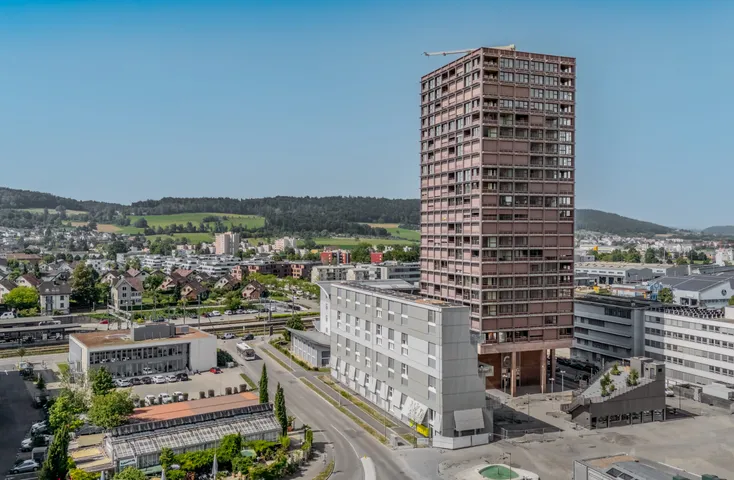
Wood is regarded as the building material of the future—and for good reason: trees remove CO₂ from the atmosphere while they grow, and when wood is used in durable products, part of that carbon can be stored permanently. What was long mainly limited to single-family homes is now reaching entirely different scales: high-rises, residential towers, and perhaps soon even one of Switzerland’s largest airports.
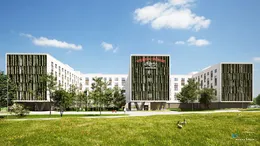
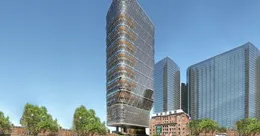
On the Zwhatt site in Regensdorf stands H1—a 75-meter residential tower that unites wood and concrete in an unusual way. The hybrid building contains 156 apartments, a two-story communal space, and a laundry room. Photovoltaic panels on the façade and roof generate electricity. The truly remarkable feature, however, lies in the load-bearing structure: while the access core, ground-floor levels, and floor slabs are made of concrete, the columns and beams are timber—including Swiss beech.
The beams were made from glued beech lamellae rather than veneers. According to the project team, the Swiss process used requires around 80 percent less glue than conventional methods. Another practical advantage of timber construction became apparent on site: thanks to industrial prefabrication, the H1’s structural shell rose by one story per week.
“It’s not about demonizing concrete; it’s about using it more selectively.” – Roger Boltshauser, architect
Architect Roger Boltshauser sums up the hybrid-building credo: the goal is not the complete replacement of concrete, but its targeted, reduced use where it is structurally indispensable.
The climate impact of H1 can be quantified: the hybrid approach in the residential floors saves approximately 600 tons of CO₂ compared with an all-concrete structure—about a quarter of the emissions that would otherwise occur. In addition, the timber used stores roughly 1,500 tons of CO₂, which, according to the project team, remains removed from the atmosphere for the time being.
The Federal Office for the Environment outlines three climate services provided by forests and wood: carbon storage in living forests, storage in long-lived wood products, and the substitution of emission-intensive materials such as concrete or steel. Together, these three effects make wood one of the few building materials that delivers a genuine climate benefit.
Wood is not, however, a climatic free pass. Its overall climate performance depends critically on forests remaining vital, biodiverse, and sustainably managed. Clear-cutting, monocultures, or forests weakened by climate change can seriously undermine the calculation.
Timber construction is no longer a niche. Since the revision of fire-protection regulations in 2015, timber buildings have been permitted in all building categories and uses. While high-rises are subject to special requirements, these new rules have made projects such as H1 feasible in the first place.
Not every ambitious scheme reaches execution, however. The Winterthur high-rise project “Rocket,” also planned as a timber-hybrid building, is now to be realized in steel and concrete for reasons of risk and economic viability. This shows that enthusiasm for wood as a material can encounter tangible economic obstacles in practice.
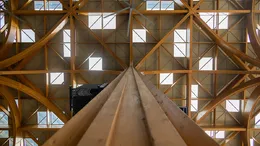
All the more remarkable, then, is what is planned at Zurich Airport. From 2030 onward, a new Dock A is to be built there—designed by BIG and 10:8 Architekten under the project name “Raumfachwerk.” The passenger levels are to be made largely of sustainable timber. The roof is conceived as a large-scale photovoltaic installation intended to cover roughly two-thirds of the dock’s annual electricity demand.
The future of construction will not consist of a single material. Yet wood is increasingly taking on roles that once seemed unthinkable—far beyond the classic single-family house and right in the infrastructure of the 21st century.