According to data at the beginning of 2026, Laos topped the global ranking of countries with the largest share of lost tree cover: over the previous year, the country lost 16.82% of its forests. Sweden came in second with 11.76%, and Bolivia in third with 11%. In absolute terms, the largest sources of global deforestation remain Indonesia, the Democratic Republic of the Congo, Brazil, the USA, Canada, Russia, and China. The consequences of forest loss in these countries have long gone beyond national borders, affecting climate systems and biodiversity on a planetary level.
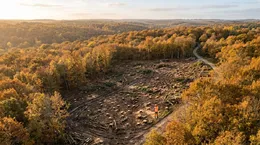
During the reporting period, Russia lost more than 4.2 million hectares of tree cover, Brazil — over 3.3 million hectares. Overall, about 10 million hectares of forest disappear worldwide each year, with 96% of these losses occurring in tropical regions characterized by high biodiversity and significant carbon reserves.
Some losses are not irreversible: they are related to seasonal logging and fires, after which the forest can recover. However, the scale of fires is growing at alarming rates. In 2024, fire destroyed 6.7 million hectares of forests — almost twice as much as the year before.
The long-term dynamics are no less alarming. From 2001 to 2024, annual tree cover loss almost doubled — from 13.4 million hectares to 29.6 million hectares. Over the same period, the planet lost more than 517 million hectares of forests, which corresponds to approximately 13% of their area at the beginning of the millennium.
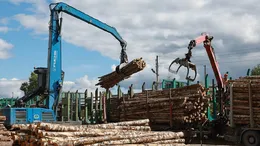
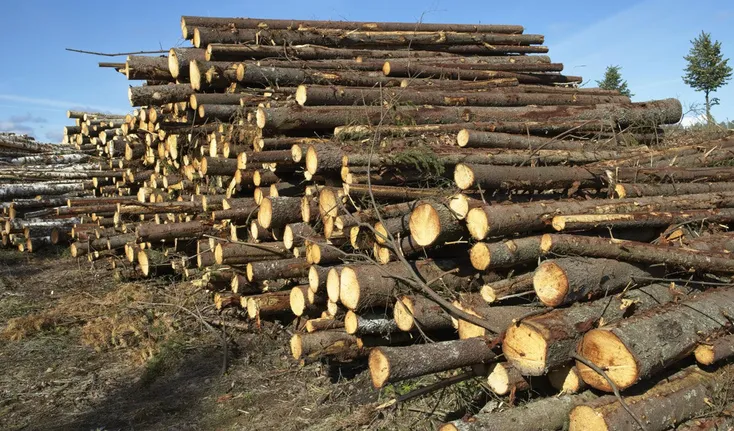
The causes of deforestation vary significantly from country to country. In Laos, the rapid reduction in forest cover is driven by the expansion of agricultural land and mineral extraction. In Sweden, the main factor is industrial logging, although some of the cleared areas are subsequently replanted. In Bolivia, deforestation is accelerating under pressure from soy plantations and increasingly frequent forest fires.
Against this background, Brazil shows some progress: thanks to strengthened control over illegal logging, the country managed to reduce the rate of destruction of Amazonian forests by 36%. This result is seen as evidence that targeted government policy can reverse the negative trend.
Deforestation is increasingly manifesting as an economic rather than just an environmental risk. Global markets for palm oil, beef, and soy are coming under pressure due to reputational threats and regulatory restrictions. Investors are increasingly taking into account risks associated with deforestation, redirecting capital towards "green" funds and sustainable financing instruments.
Carbon credit markets are gaining popularity as a mechanism for forest conservation. However, experts warn: without creating truly significant financial incentives for countries with the largest forest areas, irreversible losses could accelerate, jeopardizing the fulfillment of global climate commitments.