
yesterday at 10:58
,France
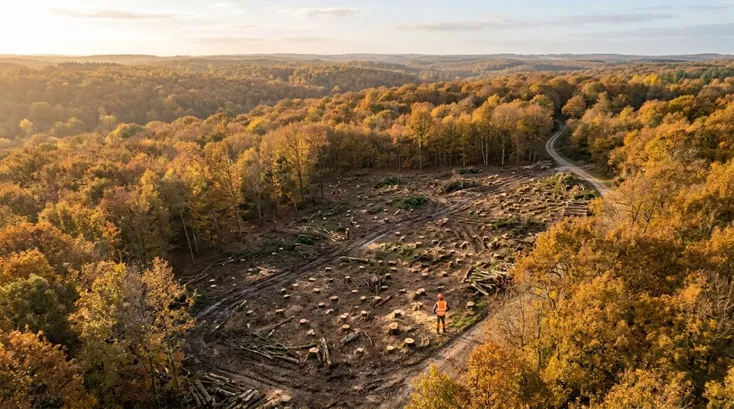
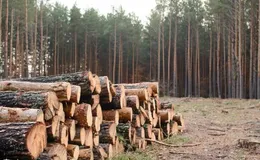
France is one of the most forested countries in Europe, with 17 million hectares of forests covering nearly a third of its territory. Yet each year, around 38 million trees are cut down — more than 104,000 per day, or 72 per minute. These estimates, drawn from data by the Office national des forêts (ONF) and the Institut national de l'information géographique et forestière (IGN), are based on an annual timber harvest of between 40 and 50 million cubic meters. To grasp the scale, imagine these trees lined up end to end: they would form a line stretching over 100,000 kilometers.
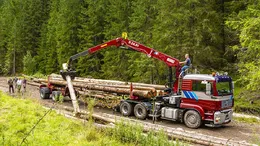
Contrary to popular belief, neither urbanization nor agriculture is the main driver of these fellings. Firewood tops the list by far, accounting for nearly 40% of the French harvest. Millions of trees end up each year in fireplaces, stoves, or domestic boilers. France is thus Europe’s largest consumer of firewood, with around 7.4 million households equipped. Construction timber and the paper industry follow, while urbanization represents only a marginal share of total fellings.
Paradoxically, despite these 38 million trees cut each year, France’s forest area continues to grow. Since 1850, the French forest has almost doubled, rising from 9 to 17 million hectares. This trend is largely explained by rural exodus, which allowed former farmland to regenerate naturally. France thus gains about 80,000 net hectares of forest each year — eight times the area of Paris. Because the annual harvest represents only about half the natural growth of the forests, the overall forest stock keeps increasing.
This positive balance in area nevertheless masks an ecological quality issue. Old broadleaf forests are sometimes replaced by fast-growing conifers that support far less biodiversity. A hundred-year-old oak can host hundreds of animal and plant species, whereas a young Douglas fir shelters only a fraction. In the Morvan, centuries-old broadleaf forests have thus given way to conifer monocultures since the 1960s. Climate change further worsens the situation by weakening trees through repeated droughts and encouraging the spread of pests such as bark beetles, which are devastating spruce forests in many regions.
On a global scale, the 38 million trees felled in France seem negligible compared with the 15 billion lost each year worldwide, a deforestation concentrated mainly in Brazil, Indonesia, and the Democratic Republic of Congo. France appears relatively virtuous by comparison. Yet this national balance sheet is misleading: the country imports massive quantities of timber, including tropical and exotic species. In 2023, these imports reached 8.5 billion euros. The true forest footprint of the French therefore extends far beyond national borders: a piece of exotic-wood furniture or flooring bought in a supermarket may come from a tree felled thousands of kilometers away.
The figure of 38 million trees ultimately tells the singular story of a country that cuts large amounts of wood for heating while watching its forest expand. This equilibrium rests on the legacy of rural exodus, the natural regeneration of abandoned land, and a management approach that harvests less than forest growth. But it remains fragile. Global warming and the steady rise in demand for wood could call it into question. The simple act of lighting a fireplace in winter — so common in French homes — is in reality the leading cause of tree felling in France.