
20 Jul 2026
,Romania
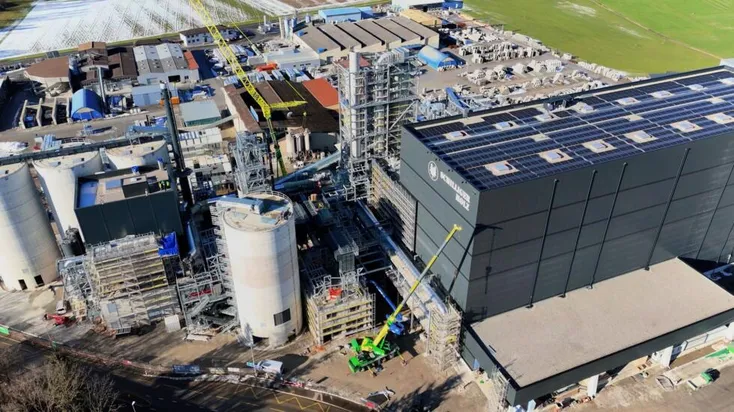
Schilliger Holz AG has commissioned a new industrial plant near Küssnacht am Rigi in central Switzerland dedicated to the production of wood-fibre insulation boards under the Lignatherm brand. Located in the Fänn industrial area, the facility represents an investment of more than CHF 100 million and marks a significant strategic expansion for one of Switzerland's established sawmill operators into higher-value wood-based construction materials.
The plant is engineered to process up to 50,000 tonnes of wood chips per year using dry-process technology, a method that allows for precise control over board density and thermal performance. The resulting Lignatherm panels are designed for a broad range of building applications, including roofs, walls, floors, ceilings and interior construction, positioning the product across both new-build timber construction and the energy-efficient renovation sector.
A central feature of the project is its integration with Schilliger Holz's existing sawmill operations. The plant draws on Swiss wood chips as its primary raw material, with supply sourced in part directly from the company's own sawmills in Haltikon and Perlen, both located within a short distance of the Küssnacht facility. This proximity keeps transport routes short and gives the operation a measurable regional footprint — two factors the company has placed at the core of its market positioning, alongside energy-efficient production methods and the use of certified domestic timber.
The economic rationale for the investment lies in the transformation of sawmill by-products into a significantly higher-value output. Wood chips generated during primary timber processing have traditionally flowed into lower-value applications such as biomass energy or particleboard. By converting those residues into insulation boards, Schilliger Holz captures additional value from material that would otherwise leave the wood chain at a comparatively low price point. The move also opens an additional and stable outlet for sawmill residues more broadly, which may benefit other timber processors supplying chips to the facility.
The Lignatherm project reflects a wider trend within the European sawmill industry, where vertically integrated timber groups are increasingly moving beyond conventional lumber and timber products to develop proprietary construction material lines. As demand for thermally efficient building envelopes grows across European markets — driven by tightening energy standards and a strong renovation pipeline — wood-fibre insulation has attracted renewed industrial interest as a renewable, vapour-permeable alternative to mineral or petrochemical-based products.
For the Swiss timber construction supply chain, the plant adds domestic capacity at a moment when sourcing pressure and lead times have tested the resilience of specialist supply networks. Timber builders, insulation distributors and contractors focused on energy-efficient building can now access a Swiss-produced wood-fibre board without reliance on cross-border supply, a consideration that has gained practical weight in recent years.