today at 09:29
,Germany
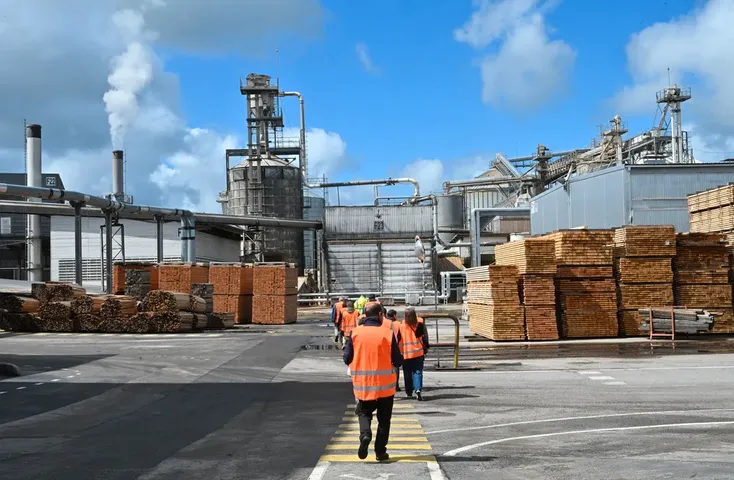
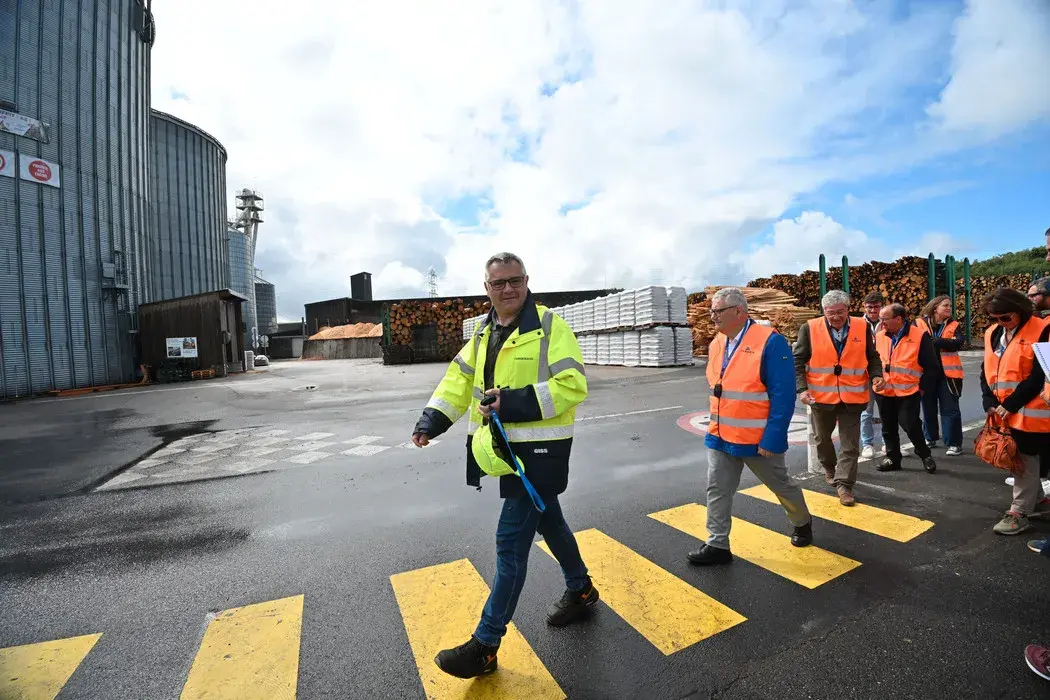
At Tra-le-Bos, near Égletons, Farges Bois operates an industrial facility of rare scale in the French wood industry. Highly organized and secure, the site transforms thousands of logs every day into products for construction and outdoor fittings, within an integrated chain where almost nothing is wasted.
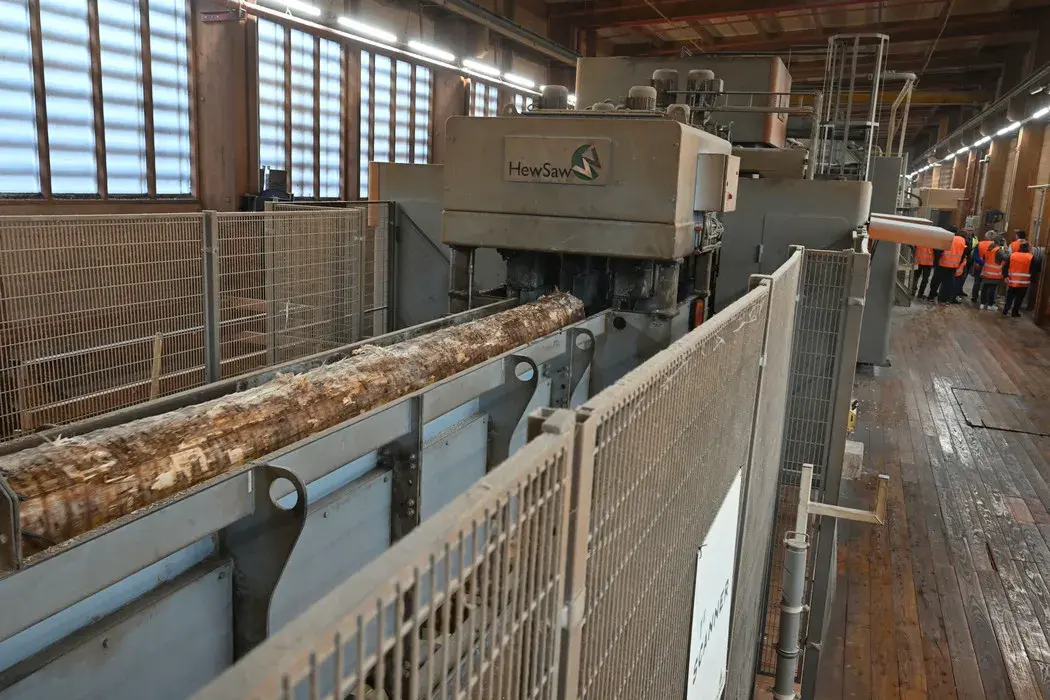
On June 5, around thirty members of Medef Limousin visited the plant, guided by Damien Larue, the site director. They discovered an industrial complex where selected logs successively go through debarking, sawing, drying, and planing. Production residues are valorized into heating pellets, while bark feeds the biomass boiler. The company thus claims full valorization of the raw material.
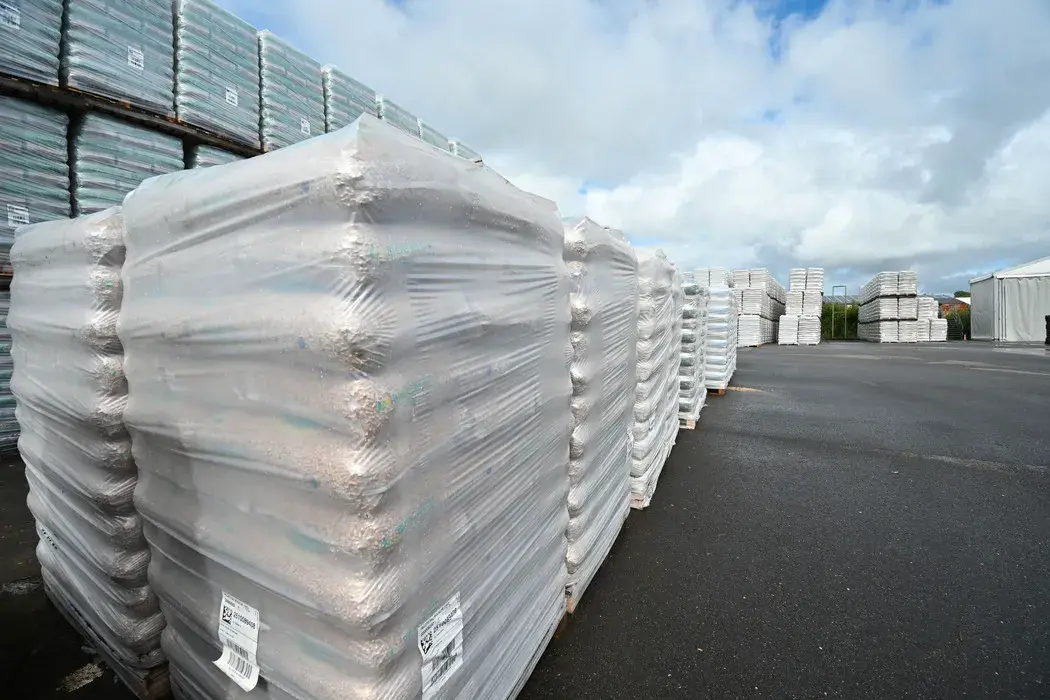
Farges Bois’s current output is evenly divided between pellets and wood for construction or outdoor use. The company produces 175,000 tonnes of pellets per year, representing about 6 to 7 % of national consumption, in a French market that remains an importer.
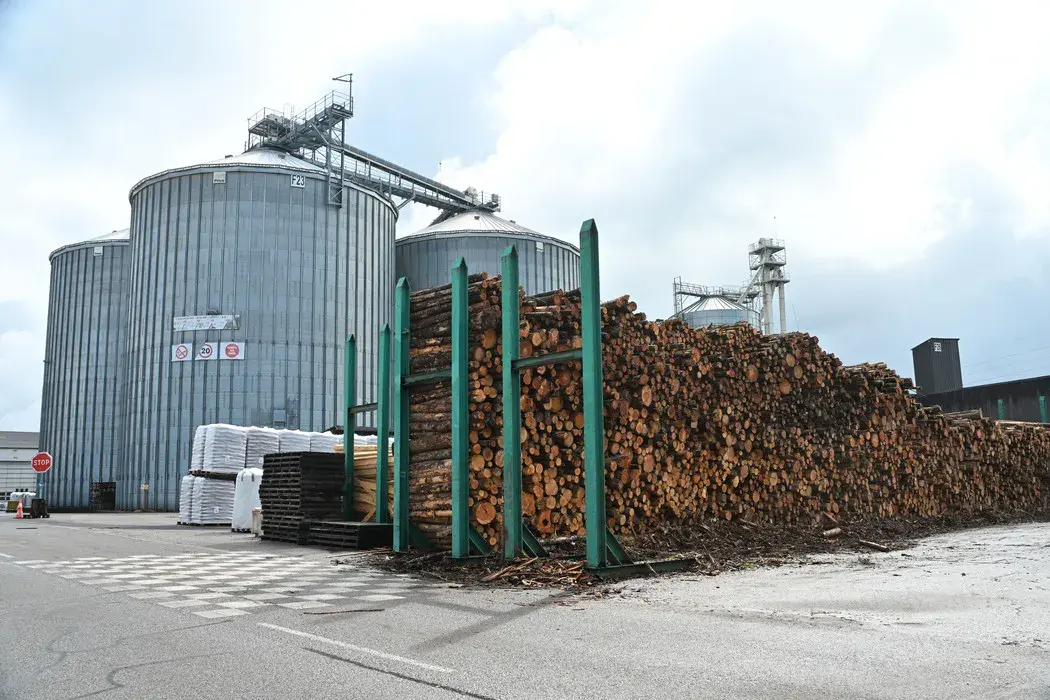
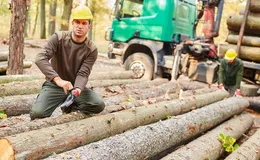
The sawmill mainly sources softwood from the forests of central France, within an average radius of about 90 kilometres. This proximity is a strategic factor for supply, even as species composition evolves. Douglas fir is gradually gaining ground, while spruce, considered more fragile, is no longer being planted.
On a national scale, the Égletons site ranks among the major facilities in the sector. It remains modest, however, compared with major European players, particularly Swedish ones, whose industrial capacities reach significantly higher volumes.
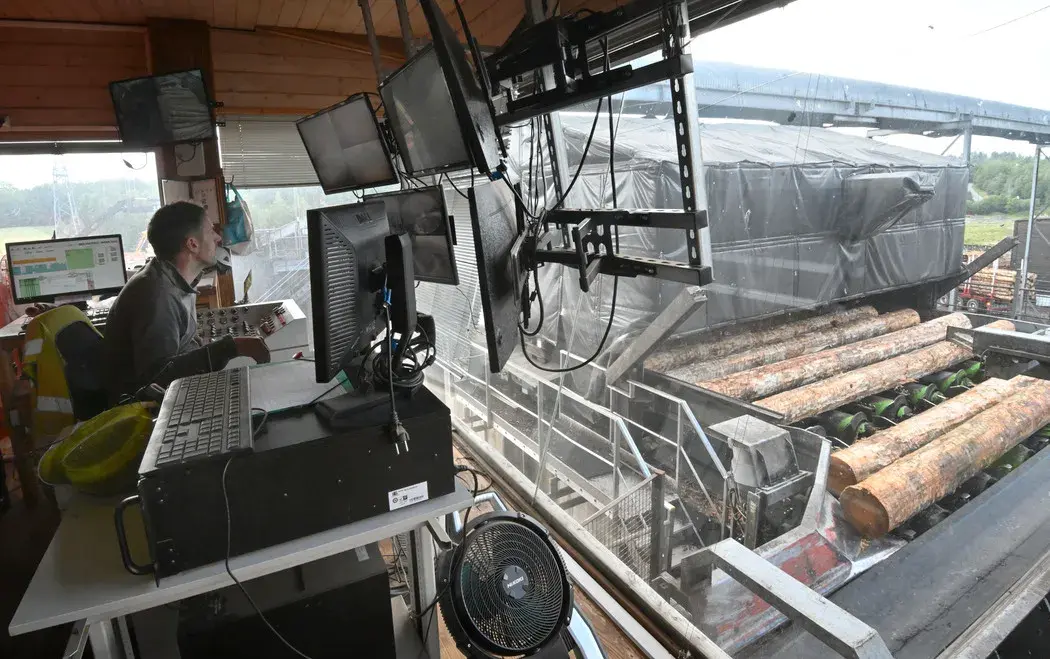
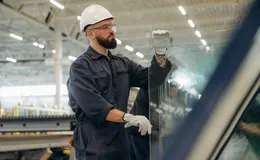
At the heart of the plant, the saw line illustrates the level of automation achieved. An operator pilots the installation in front of a wall of screens, with a central objective: extracting maximum value from each log. The line can produce up to 120 boards per minute, in a flow designed to limit interruptions and optimize material use.
Handling is kept to a minimum to streamline operations and protect the products. The drying kilns can accommodate up to 250 m³ of wood. This stage lasts from four to fifteen days, depending on the target moisture content and the final use of the pieces produced.
Farges Bois masters a six-stage drying process based on slow evaporation to avoid damaging the wood. The latest investment is a continuous dryer designed to move the product through six successive environments. This technology is expected to improve drying consistency and meet rising market requirements.
With pellet capacity now at its maximum, the next development focus will be on gluing, expected within two years. This move will allow the company to further integrate processing and better respond to the needs of timber construction, a growing but demanding market in terms of quality, dimensions, and product stability.
“Our goal is to give the most value to the wood.” — Damien Larue, site director of Farges Bois
After 140 million euros invested over twenty years, Farges Bois plans an additional 50 million euros over the next five years. These investments will fund the development of gluing, a new debarking line, and an electrical bypass, all essential to continuing the site’s modernization.
Founded in 1958 by Roger Farges and acquired in 2005 by the Piveteau family, the company now employs 265 staff, plus 15 temporary workers. Yet recruitment remains a major challenge: 20 positions are currently open.
In a sector facing productivity demands, the energy transition, and the rise of timber construction, Farges Bois intends to continue its development by focusing on industrial integration and maximum valorization of the forest resource.