today at 09:29
,Germany
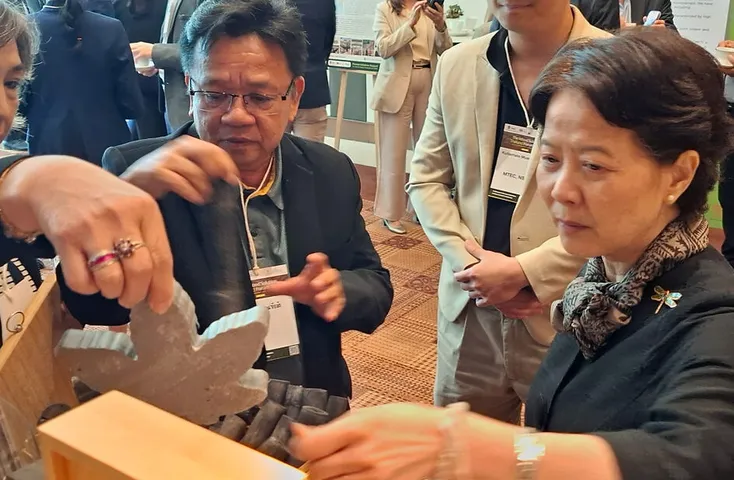
Thailand and Sweden have reaffirmed their commitment to building a sustainable timber industry spanning the full value chain — from plantation forestry through to engineered wood products and modern timber construction — at the Wood Solution Thailand Forum 2026, held in Bangkok. The gathering brought together foresters, researchers, corporate executives, and government officials from both countries, marking a significant milestone in a bilateral partnership that has grown considerably since its launch in 2022.
The forum drew on a relationship that now encompasses forestry, academia, finance, and public administration. Ambassador Arunrung Phothong Humphreys positioned Sweden as a natural partner for the initiative, pointing to the country's robust forestry sector, sophisticated wood-processing industry, and decades of experience reconciling commercial growth with environmental responsibility. More broadly, the initiative has been framed as a new model for connecting grassroots rural communities with emerging green industries, operating under the formal framework of the Thailand–Sweden Strategic Partnership Agreement.
The project traces its origins to cooperation among the Thailand-Nordic Countries Innovation Unit, the Eco-Innovation Foundation, the Stockholm Environment Institute (SEI), and Sida. Emanuel Lundin described the endeavour as a shared undertaking aimed at generating long-term value from Thailand's largely underused forestry resources. To build momentum ahead of the forum, SEI Asia led a dedicated three-month stakeholder engagement phase designed to deepen participation and surface practical next steps.
Collaborative research examined Thailand's capacity to expand sustainable forestry and timber-based construction at scale. Throughout the forum's sessions, speakers repeatedly stressed that the initiative must mature beyond academic study into a broader development movement — one that draws in education, construction, finance, and government alongside the forestry sector itself. A consistent theme was the necessity of constructing an ecosystem that genuinely links forest owners, processors, manufacturers, investors, architects, and policymakers within a coherent and mutually reinforcing structure.
Swedish experience offered instructive precedent. Presenters described how smallholder and family-owned forests in Sweden have been integrated into long-term value chains through a combination of fair pricing mechanisms, certification standards, and reliable market access — a model with clear relevance for Thailand's fragmented rural forestry landscape.
The forum also served as a showcase for Thai initiatives already under development. These included economic plantation programmes, engineered wood products, and early construction applications demonstrating timber's viability as a mainstream building material. The Phrae Sustainable Wood City initiative drew particular attention as a promising model grounded in the province's long-established teak industry. Exhibitions extended the scope of the initiative beyond conventional timber, highlighting bamboo commercialisation efforts and the use of Casuarina species for coastal erosion control.
Education featured prominently as a foundational pillar. An academic programme based in Phrae is currently training approximately 150 postgraduate students in forestry resource and environmental management. Supporting mechanisms on display included certification systems, water and forestry management curricula, and farmer income diversification projects such as lac production.
The afternoon session brought Thai pioneers in engineered wood and bamboo into direct dialogue with international representatives from countries where sustainable forestry and timber construction are already established industries, providing both validation and a practical benchmark for Thailand's ambitions.
"Today is a small preview of what is yet to come." — Kaplan, closing the forum
The remark captured the forum's prevailing spirit: that while meaningful progress has been made, the movement requires significantly broader participation to reach its potential. Underpinning that ambition is a draft roadmap extending to 2037, which sets out a phased trajectory from foundational capacity-building and pilot projects through to industrial-scale production and, ultimately, Thailand's emergence as a regional leader in engineered wood and timber construction.