
yesterday at 20:29
,Ukraine
Romania is preparing the toughest environmental legislation in its history, with penalties for serious crimes comparable to those applied in cases of violent crime. The Ministry of Environment has finalized the draft transposition of European Directive 2024/1203 on environmental crime, a regulatory act with a declared objective: pollution and environmental destruction should no longer be profitable activities.
The draft cannot be submitted to Parliament by the current interim Executive and is to be promoted by the future Government. Minister Diana Buzoianu presented the reform as a major measure against what she called "environmental mafias" — networks that exploit the permissive legislative framework to obtain substantial gains with minimal criminal risks.
The draft structures criminal liability on four levels of severity. Acts that may endanger human life or environmental integrity will be punished with imprisonment from 1 to 5 years. Pollution that causes significant damage to water, air, soil, or biodiversity will attract penalties ranging from 2 to 7 years. Irreversible or large-scale destruction may be sanctioned with 3 to 10 years of imprisonment.
The most severe threshold is reserved for cases where an environmental crime causes the death of a person: the penalty will range from 10 to 20 years of imprisonment, a level of severity that places such acts in the same category as serious violent crimes. The draft also introduces new offenses, including some associated with the concept of ecocide — large-scale and irreversible destruction of ecosystems.
Attempt and acts committed through negligence may be punished in numerous situations, and the commission of offenses in the territory of protected natural areas will constitute an aggravating circumstance.
Legal entities will not escape consequences proportional to the scale of their activity. The value of a fine-day may reach 25,000 lei, and judges will have tools to calibrate sanctions according to the financial capacity of the company involved.
The reform comes in the context of a clear European imperative. Directive 2024/1203 obliges all member states to treat environmental crime with a severity close to that applied to drug trafficking or organized crime. The reason is concrete: according to Europol and Interpol estimates, environmental crimes generate tens of billions of euros annually at the European Union level, representing the fourth most profitable illegal activity, with a clear upward trend.
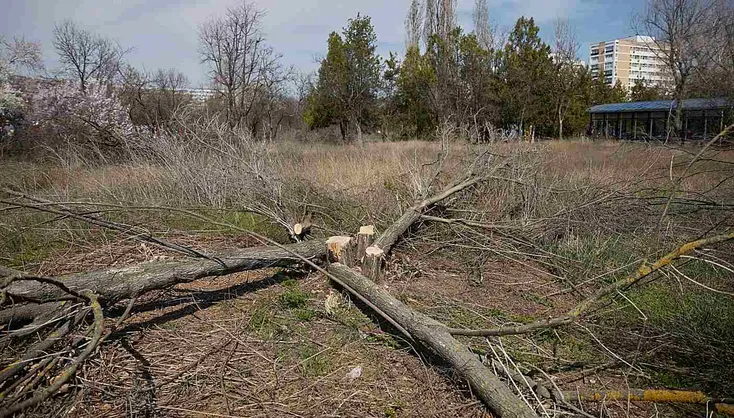
Romania urgently needs such a legislative framework. The country continues to face massive illegal logging of forests, clandestine waste disposals, accidental river pollutions, and illegal waste incinerations. The European Commission has already opened several infringement procedures against Romania for non-compliance with environmental legislation, exerting additional pressure for accelerating reforms.