The Ukrainian wood processing industry enters 2026 with clear expectations: stable access to resources, predictable state policy, and completion of reforms that have remained unfinished for years. Without these conditions, even positive signals — in particular, growth in timber harvesting volumes — will not convert into real investments, production expansion, and new jobs.
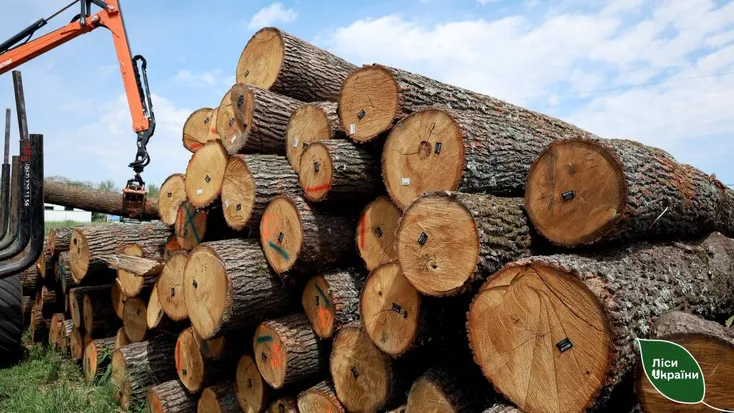
An increase in harvesting is a positive signal, but only if environmental and legal standards are observed. The issue is not about exceeding harvesting limits, but about the full and timely use of the resource already provided for by forest management plans and current legislation. Timber must reach the market, be processed, and generate added value — creating tax revenues, foreign exchange earnings, and jobs. Timber left in storage performs none of these functions.
Up-to-date and approved forest management materials form the foundation for planning harvesting, procurement, contracts, investments, and employment. Where these materials are outdated or unapproved, decisions are made under uncertainty — and uncertainty destroys long-term planning. State Enterprise “Forests of Ukraine” and relevant authorities must accelerate the updating and approval of forest management materials in all regions where this directly affects resource availability.
The Carpathian region holds strategic importance for supplying resources to the wood processing industry. Changes in forest management practices in Zakarpattia, Ivano-Frankivsk, Lviv, and Chernivtsi regions directly affect enterprises, employment, and entire communities that depend on the forestry sector.
In spring 2027, a ban on clear-cutting for final felling will take effect in the Carpathians. Less than two years remain until that point, and preparations must begin now. The transition to close-to-nature forestry is environmentally justified, yet it must not cause a sharp reduction in timber supply. The state, forest users, and the wood processing industry must agree in advance on a model that combines environmental sustainability, stability of the resource base, and uninterrupted operation of enterprises.
If such preparation is not carried out, the consequences will be painful: resource shortages, market tension, loss of production capacity, and job cuts in regions where alternative employment is virtually nonexistent.
Growth in timber stocks is a phenomenon that requires professional assessment taking into account commodity market cycles. Accumulation of stocks for specific assortments, species, or storage sites cannot automatically serve as an argument against increasing harvesting. The problem often lies not in excess supply, but in insufficient flexibility of sales mechanisms.
To address this situation, exchange instruments — particularly Dutch auctions — should be used more actively. This format allows timber to be sold promptly, reduces warehouse stocks, and determines real market prices without lengthy administrative procedures. Timber in storage creates no added value, supports no employment, and generates no tax revenues — it simply awaits a decision that can be made much faster.
Enterprises need a clear understanding of several key issues simultaneously: what resources will be available in 2026, what will change in 2027, the status of forest management planning in specific regions, and when new exchange mechanisms will become operational. Any increase in harvesting must be based on up-to-date forest management plans, legality, sustainability, transparent sales, and real demand — only then is the decision justified and sustainable.
Predictability for several years ahead, combined with rapid response to global market conditions, will enable enterprises to scale up and deepen processing. The development of Ukrainian wood processing is not only about current tax revenues. It is about the country’s strategic and economic independence, built from specific raw materials, specific decisions, and a specific sequence of actions.