25 Jun 2026
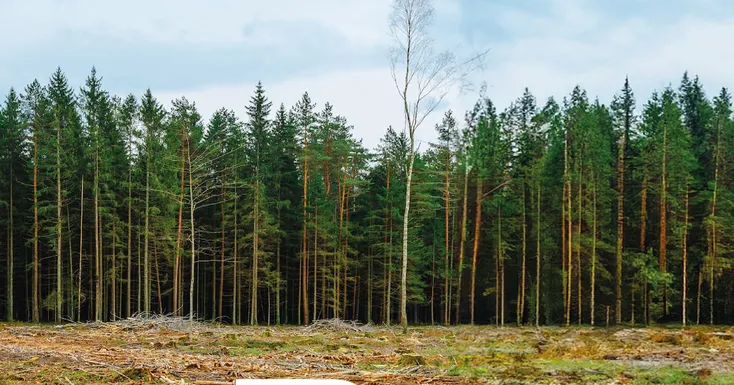
The French forest is going through an unprecedented period of weakening. Fires, pests, repeated droughts: the effects of climate warming are being felt there with increasing acuity, even though the forest ecosystem continues to play an essential role for biodiversity. This unprecedented vulnerability is profoundly reshaping the contours of a wood industry that is nevertheless growing, faced with resource tensions, price instability, and major regulatory challenges.
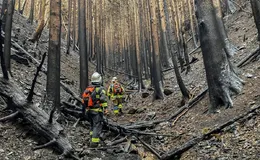
The fire risk, long confined to a few identified areas of the territory, has now spread across the whole of France.
“Previously, we only monitored three zones across French territory. Today, we have to prevent fires everywhere in France.”
The mortality of trees eloquently illustrates this degradation: it has more than doubled in ten years, rising from 7.4 million cubic metres per year between 2005 and 2013 to 16.7 million between 2015 and 2023. In this context, certain emblematic species such as beech or oak are now considered ill-suited to the future climate, forcing the Fédération nationale du bois (FNB) to launch a vast programme of diversification of forest species. Around a third of French forests will therefore have to be adapted to the new climatic conditions.
To these ecological disturbances are added economic pressures coming from across the Rhine. Massive bark-beetle attacks in Germany have disrupted the European wood market, prompting German buyers to turn to France for supplies. This additional pressure on the French resource has mechanically driven prices up: standing logs now reach €130 per cubic metre, compared with €100 at the beginning of the year.
On the regulatory front, the European Deforestation Regulation (EUDR), due to enter into force at the end of 2026, will introduce an obligation to geolocate the parcel of origin for every batch of wood imported from outside Europe. This traceability requirement is one that not all players are yet ready to meet, particularly some sawmills whose capacities remain insufficient. Distributors such as Dispano have already anticipated these requirements by excluding countries deemed uncontrollable in terms of traceability, such as Liberia or Myanmar. The regulation also restricts the use of threatened species — moabi, merbau, cumaru, ipé —, forcing operators to turn to older woods of larger diameters.
In this difficult context, the wood industry stands out as an exception in a construction sector that is largely stagnant. Its turnover rose by 3 % in 2024 compared with 2022, driven by the RE2020 regulation in new construction and by the growth of energy-efficient renovation, notably external thermal insulation to improve energy performance certificates. The emergence of new products, such as wood fibre, is also contributing to the renewal of the offering.
The France Relance 2030 plan has played a decisive role in this momentum, injecting three billion euros into the sector. These investments have made it possible to modernise industrial facilities and relocate a significant part of production. The effects are measurable: French wood imports have fallen by nearly half, from 4 million cubic metres before 2020 to 2.29 million in 2024.
“Little by little, the national industry is regaining market share from imports.”
This recovery is also reflected in an enriched offering, with 20 % more references across all segments compared with the pre-Covid-19 pandemic period.
The renewed attractiveness of wood is nevertheless fuelling competition. Generalist traders are increasingly positioning themselves in this material, forcing long-standing specialists to differentiate themselves through the depth of their services and the value of their professional expertise.
Price volatility represents another major challenge. The conflict in the Middle East is fuelling tariff instability that the CMEM is closely monitoring through a Price Increase Observatory, which has already recorded 300 increases among the 600 French suppliers tracked. On the ground, some traders are facing increases of up to 12 % on certain products, forcing them to adjust their prices daily and drastically shorten the validity period of their quotations.
The slowdown in new construction is also affecting commercial relations: payment delays and unpaid invoices are rising, even though the situation is not yet considered critical. Wood and panel specialists are faring better thanks to generally stronger structures and larger financial reserves, while payment terms for craftsmen are lengthening, reflecting a diffuse concern across the market.
In the longer term, the sector will also have to face a succession challenge: a quarter of the FNB’s approximately 1,500 members have no identified successor, weakening a fabric of often family-run businesses. The wood industry is therefore moving forward amid a cluster of cumulative uncertainties — fragile forest resources, unstable prices, a sluggish construction market and business models that need reinventing — while retaining the strengths of a sector that continues to grow in a world that is resolutely turning towards more sustainable materials.