yesterday at 18:58
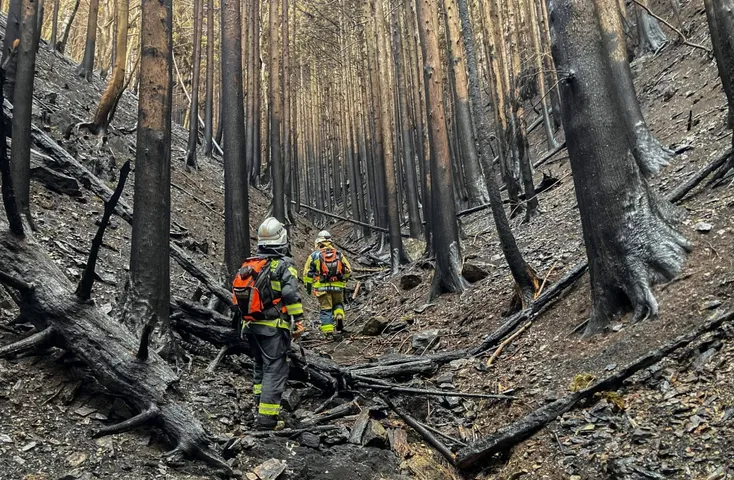
Japan's largest wildfire in more than half a century has prompted forestry cooperatives and timber companies to establish a unified industry body dedicated to salvaging scorched cedar before the damaged wood loses its commercial value.
The blaze, which broke out in February in north-eastern Japan, burned approximately 3,370 hectares of plantation forest, leaving an unusually large volume of fire-damaged timber still standing across the affected landscape. With much of the burnt cedar remaining structurally usable, industry players recognised a narrow window of opportunity — one that would close as moisture loss gradually degraded the wood's quality and workability.
The newly formed organisation, TEAM Shinrin Saisei Ofunato, brings together 17 bodies from within Iwate Prefecture and beyond, reflecting both the scale of the challenge and the growing concern across Japan's timber sector about increasingly frequent and destructive forest fires. Around 50 people attended the group's formal launch in Ofunato on 12 June, where Kazuhisa Nakazaki was appointed as representative.
"I hope the organisation's efforts will help revitalise the forestry industry," — Kazuhisa Nakazaki, representative of TEAM Shinrin Saisei Ofunato.
The group's core strategy is to coordinate the full chain of operations — from logging and milling through to construction — in order to create viable markets for salvaged wood. A central goal is to provide sufficient economic incentive for forest owners to fell their damaged trees and invest in replanting, rather than leaving degraded stands unmanaged.
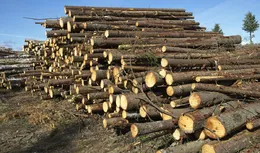
Prior to the inauguration ceremony, attendees were shown a sorting yard where fire-damaged cedar is classified according to burn severity and structural bending, then directed either towards construction timber or biomass power generation. Prototype building materials produced from damaged logs were also on display, offering a tangible indication of the possible end uses the organisation hopes to develop at scale.
The group is also considering extending its salvage operations to Otsuchi, where an April wildfire became Japan's second largest since 1989. The two major fires, both along the same stretch of Iwate's coastline, have significantly expanded the scope of the recovery effort and underscored the need for a coordinated, long-term response to fire-damaged forests in the region.