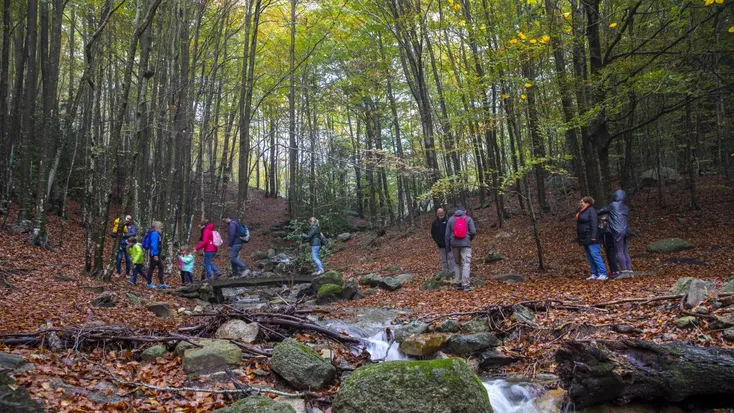
The forests of peninsular Spain today consume 20% more water than in the 1990s. This is not a direct consequence of climate change, but of the sustained growth of forest cover over recent decades. This is the conclusion of a study carried out by researchers at CREAF —Center for Ecological Research and Forest Applications— that analyzes how the expansion of tree cover and, above all, the understory has profoundly transformed the water cycle in the natural ecosystems of the Iberian Peninsula.
The work is supported by a solid empirical base: 11,456 forest plots analyzed across three different periods between 1986 and 2024. To dissect the different components of the hydrological cycle, the researchers used the MEDFATE ecohydrological model, a tool that allows separation and quantification of processes such as evapotranspiration, infiltration, and surface runoff.
The consequences of this greater plant consumption are concrete. The study estimates that the water that ultimately reaches rivers and aquifers —what scientists call “blue water”— has decreased by 28% compared to 1990s levels. A drop of this magnitude has direct implications for the availability of water resources in a country already facing growing pressure on its water reserves.
Researcher Jesús Sánchez-Dávila, one of the study’s authors, notes that the current forest structure carries more weight in these changes than global warming itself.
«The current forest structure explains the changes in the water cycle more than climate change does.» — Jesús Sánchez-Dávila, CREAF researcher
This statement does not diminish the importance of the climate crisis, but it reframes the debate: management —or the lack of it— over forest land emerges as a determining variable that environmental policies can no longer ignore.
Among all the factors identified, the growth of shrubs stands out. The decline of extensive livestock farming and the historical lack of forest management have allowed the understory to expand with little control. This phenomenon is closely linked to the rural abandonment that has characterized much of the peninsular interior in recent decades: without grazing or human intervention, shrub vegetation proliferates rapidly.
The study’s authors acknowledge the ecological value of shrubs. They protect the soil from erosion, regulate local temperatures, and provide shelter and food for numerous animal species. However, they argue that in a context of growing water scarcity, it is necessary to precisely understand their role in the water cycle and maintain their presence at levels that do not compromise resource availability.
CREAF warns against a simplistic reading of its results: the study’s data should not be interpreted as an argument in favor of logging forests to increase river flows or fill reservoirs. Deforestation does not usually translate into significantly greater water flow to rivers, and its consequences for biodiversity, soil stability, and carbon sequestration would be difficult to reverse.
The real challenge, according to the researchers, is not to produce more “blue water,” but to manage “green water” more intelligently: the water that returns to the atmosphere through vegetation evapotranspiration. In the face of more frequent and intense Mediterranean droughts —a trend that climate models project with solid consistency— CREAF proposes strengthening active forest management as an adaptation tool.
In this regard, the researchers put forward continuous-cover forestry as a viable technical option. This practice regulates light reaching the forest floor while maintaining permanent tree cover, which limits conditions that favor explosive understory growth and helps balance the ecosystem’s water consumption. The goal is to prepare Spanish forests for a future in which water will be an even scarcer and more contested resource.