22 Jun 2026
,Germany
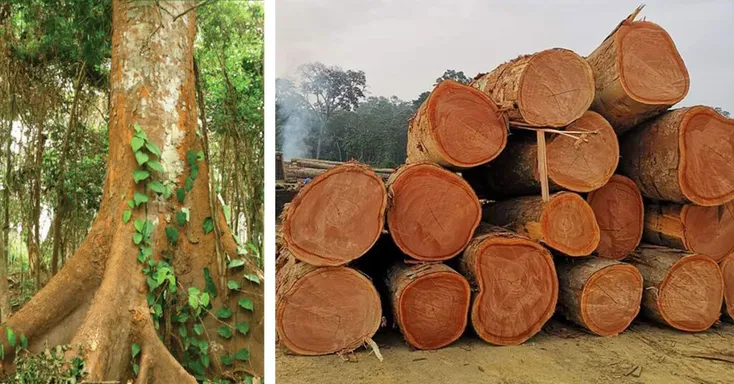
Chinese-owned sawmills have resumed cutting okoumé across West and Central Africa, injecting new momentum into a tropical hardwood market that had grown notably subdued. The revival in Chinese milling activity has brought fresh orders to exporters who had been operating in relatively quiet conditions, and the International Tropical Timber Organization (ITTO) reports that price increases are now increasingly visible across the region.
The firming of prices, however, reflects not only a recovery in demand but also significant constraints on the supply side. Exporters are contending with higher export taxes, persistent wet weather disrupting harvesting and transport, and recurring power cuts that interrupt milling operations. These pressures are reducing the volumes of logs reaching ports, compounding the effect of tightening supply for certain species. Production of azobé and okan has declined, and the availability of okan — a premium structural hardwood — has tightened especially sharply, intensifying competition among buyers for what remains on the market.
China's gradual return to the market represents the most consequential shift in the current trading environment. Chinese-owned mills have restarted active okoumé production, and while the price gains for okoumé itself remain modest, exporters regard renewed Chinese purchasing as an encouraging indicator of broader recovery. Okoumé logs destined for China are currently priced at €190–220 per cubic metre.
Demand across the rest of Asia is more uneven. The Philippines has stabilised, while Vietnam continues to stand out as one of the strongest and most consistent buyers in the region. Vietnamese demand for tali, padouk, and ovangkol remains firm, providing reliable support for producers in several exporting countries. Asian buyers are paying €175–250 per cubic metre for azobé and ekki, and up to €300 per cubic metre for padouk logs.
Europe, by contrast, remains the weakest destination for tropical timber. Environmental policy pressures, carbon-reduction measures, and sluggish construction activity have slowed uptake considerably. The combination of regulatory constraints and subdued building sector demand means that any recovery flowing through European channels is proceeding far more slowly than the demand-driven rebound visible in Asia.
On the ground across producing countries, the rainy season continues to hamper both harvesting operations and the movement of logs to ports. Drier conditions are largely confined to central and northern Cameroon and parts of the Central African Republic, leaving much of the broader region exposed to weather-related disruption. Electricity shortages add a further layer of operational difficulty, with recurrent cuts affecting milling capacity in several countries.
Despite these pressures, sawnwood prices have firmed. Bilinga FAS GMS is trading at €700 per cubic metre, okoumé FAS GMS at €450 per cubic metre, and padouk FAS GMS at €980 per cubic metre — figures that reflect both tighter supply and the gradual return of Asian buying interest.
The overall outlook for West and Central African producers is cautiously positive, though the recovery remains narrowly based. Asian demand, led by China and Vietnam, is the principal engine of any improvement, and the durability of current price levels depends on sustained Chinese purchasing continuing alongside exporters' capacity to manage the compounding pressures of rising taxes, unreliable energy supply, and constrained infrastructure. A broad global recovery in tropical hardwood markets remains, for now, some distance away.