yesterday at 10:29
,France
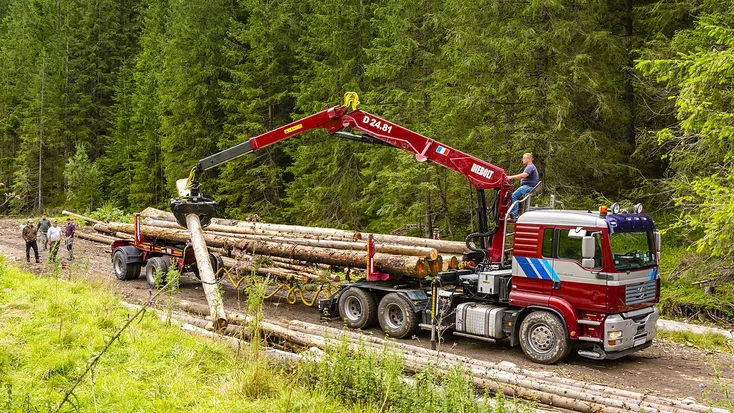
Poland's wood-processing industry has issued a formal appeal to President Karol Nawrocki and Prime Minister Donald Tusk, urging them to halt a series of forest policy changes that the sector warns could inflict severe damage on State Forests and the broader timber economy. The appeal was submitted by the Coalition for Polish Wood, an industry body representing companies that purchase approximately 12 million cubic metres of timber each year and collectively contribute around 5% of Poland's gross domestic product.
The intervention followed the Council of Ministers' approval on 23 June of a draft amendment to the Forest Act. The industry's central objection concerns a provision known as UD108, which would oblige State Forests to transfer 2% of annual timber sales revenue to the National Fund for Environmental Protection and Water Management. Industry representatives describe UD108 not as an isolated measure but as part of a broader policy sequence that began with a harvesting moratorium introduced in January 2024.
The Ministry of Climate and Environment has announced plans to designate one-fifth of all State Forests land for nature and social functions from 2027. Under the proposal, approximately 1.43 million hectares would receive the new classification, of which at least 787,000 hectares would be closed entirely to harvesting. State Forests has been given until 28 August to prepare an implementation plan for the exclusions.
Industry groups warn that withdrawing active management from 20% of forest area could put up to 70,000 jobs at risk. The wood sector as a whole directly employs around 350,000 people, with a further 450,000 jobs supported across the wider wood economy. The Coalition argues that the government has failed to conduct a proper assessment of the social and economic consequences before proceeding.
"The voice of entrepreneurs is being ignored."
The dispute is unfolding against a backdrop of tightening domestic timber supply. The industry estimates that a stable market requires roughly 41 million cubic metres of timber annually. Buyers received approximately 38 million cubic metres in 2025, and availability is expected to fall further to around 37 million cubic metres in 2026.
The supply squeeze is already translating into financial distress. Credit insurer Coface recorded 117 insolvencies among wood-products manufacturers in 2025, up sharply from 85 the previous year. The National Debt Register places unpaid liabilities in the furniture and wood sector at 352 million złoty, and the problem has spread beyond factories to distributors, pointing to strain across the entire supply chain.
"The liquidity crisis has not stopped at the factories."
The Ministry of Climate and Environment has defended the reforms as essential to meeting the European Union's climate and biodiversity commitments, including a target to protect 20% of public forests. Environmental groups have voiced support for that objective, and State Forests reported a net profit of 764 million złoty in 2024 amid rising timber sales — a figure the ministry's allies cite as evidence that the institution can absorb reform.
The Coalition counters that Poland's strong position in EU markets for furniture, flooring and wood-based panels — built over decades — could be undermined by the new regulatory environment. The concern echoes similar anxieties elsewhere in Europe: Swedish wood and furniture producers have separately petitioned their government over EU deforestation rules. As of publication, the Ministry of Climate and Environment had not publicly responded to the Coalition's letter. The UD108 amendment is now before parliament, and the deadline for the State Forests harvesting plan remains 28 August.