yesterday at 10:29
,France
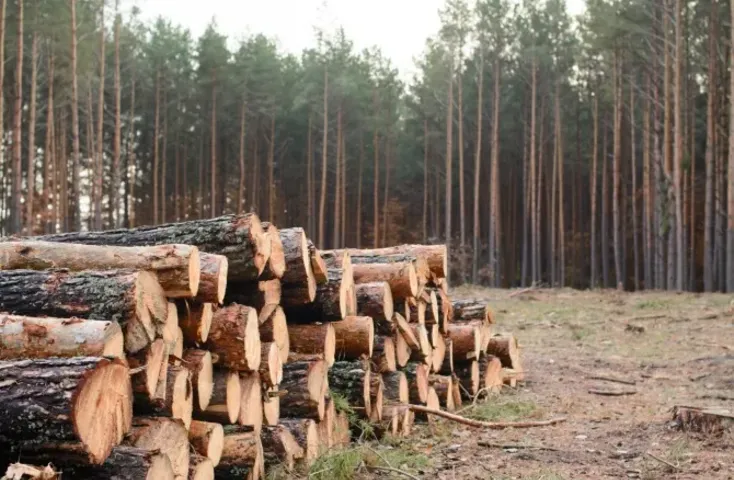
The Cabinet of Ministers of Ukraine has updated timber-harvesting rules that will remain in force throughout the period of martial law and for another 12 months after it ends. The changes apply to the vast majority of the country’s forests, except for the mountain forests of the Carpathian region, where some of the new provisions have been introduced on a permanent basis.
The key innovation of the document is that timber obtained from sanitary felling will temporarily not count toward the overall harvesting limit. This will allow the state enterprise “Forests of Ukraine” to harvest an additional 400 thousand cubic meters of timber per year. According to the ministry’s estimates, the new permanent rule for the Carpathian mountain forests could provide another 600 thousand cubic meters annually.
Sanitary felling has also been extended to forests damaged by shelling and missile strikes. No additional approvals are now required to remove hazardous trees in such areas. At the same time, the document obliges forestry enterprises to ensure forest regeneration after felling, and if the new mechanism reduces the main-felling fund by 30 % or more, harvesting limits must be recalculated downward.
For the mountain forests of the Carpathians, it is now permanently permitted to harvest stands with lower tree density where a well-formed young undergrowth is already present. A new permanent felling category has also been introduced for sparse forests — thin and weakened stands covering nearly 10 thousand hectares in total. On seed orchards established in the 1980s–1990s, clear-cutting of over-mature plantations is now allowed, followed by artificial regeneration or the establishment of new plantations.
The resolution also sets clear age limits for tending felling and defines criteria for classifying trees into categories. Corrections of technical errors in felling permits will be processed through the “EkoSystema” platform and the Diia Portal.
The new rules are being adopted against the backdrop of a high-profile scandal involving illegal logging, publicly disclosed by Prosecutor General Ruslan Kravchenko.
According to the prosecutor’s office, at least 13 thousand illegally felled trees caused state losses exceeding UAH 248.6 million. The case involves 29 suspects — forestry officials, foresters, and business representatives.
The uncovered schemes included illegal logging in nature reserves, falsification of felling permits, use of sanitary felling as cover for unlawful harvesting, and sale of timber at understated prices. It is precisely because of the risk of such abuses that the resolution separately provides for enhanced control over compliance with harvesting limits.
In parallel, in October 2024 the Verkhovna Rada adopted Law No. 9665, which significantly increased penalties for forest crimes. Illegal felling under martial law now carries a penalty of up to 10 years’ imprisonment. The law introduced criminal liability for transporting timber without accompanying documents and broadened the very concept of illegal logging: it now covers not only forests but also trees in parks, squares, and nature reserves. Liability applies both to those who illegally cut trees and to those who transport or store them without supporting documentation.