
25 Jun 2026
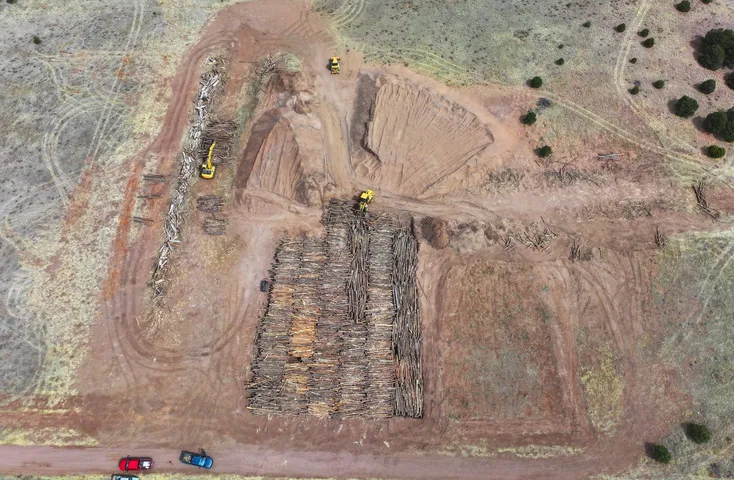
A video posted to LinkedIn showing bulldozers burying large quantities of felled trees in southern Colorado has gone viral, sparking widespread confusion and outrage among viewers who questioned why apparently usable timber was being destroyed rather than repurposed.
The footage, which drew hundreds of comments and spread rapidly across social media, left many users baffled by the sight of heavy diesel-powered machinery piling substantial volumes of lumber into the ground. Critics demanded to know why the wood was not being sent to sawmills, used for construction, or at the very least burned for energy.
The company behind the operation is DuraVault, a firm that practices what is known as wood vaulting — a technique that falls under the broader category of biomass carbon removal and storage, or BiCRS. Rather than allowing felled timber to decompose naturally on the forest floor or be burned, the method involves burying wood underground in conditions designed to dramatically slow the rate of decay, effectively locking away the carbon it contains.
The scientific rationale behind BiCRS centers on a straightforward but often overlooked reality: dead and decaying timber releases significant quantities of carbon dioxide into the atmosphere over time. By sealing wood underground and denying it the oxygen and moisture necessary for rapid decomposition, companies like DuraVault argue they can prevent that carbon from re-entering the atmosphere for decades or even centuries — transforming what would otherwise be a source of emissions into a long-term carbon store.

The business model built around this process relies on carbon credit markets. The stored carbon is quantified and sold as credits to corporations and other organizations seeking to offset their own greenhouse gas emissions, generating revenue that funds the burial operations themselves.
Central to the controversy is the question of whether the buried wood could have been put to better use. DuraVault and others in the BiCRS industry maintain that they do not bury commercially viable timber. According to company representatives, the wood they process consists exclusively of material unsuitable for construction or manufacturing — trees killed by wildfires, lumber damaged by beetles, and so-called slash wood, the branches and treetops left over after logging operations.
Much of the buried timber originates from forest thinning and fire remediation projects, in which land managers remove excess or hazardous trees to reduce wildfire risk. In many such cases, the volumes of wood produced are too small to interest sawmills, or the cost of transporting the material to processing facilities makes it economically unviable. Proponents argue that the wood in question is simply not the straight-grained, knot-free, structurally sound material required by the construction or furniture industries — it is instead warped, cracked, rotted, or otherwise degraded beyond commercial use.
The viral reaction to the video nonetheless reflects a deeper public skepticism toward carbon offset markets and novel climate technologies, with many viewers struggling to reconcile the image of buried wood — and the diesel emissions produced by the bulldozers performing the burial — with genuine environmental benefit. Whether wood vaulting will ultimately prove to be a credible and scalable tool for carbon sequestration remains a question that scientists, regulators, and the market are only beginning to seriously examine.