yesterday at 12:29
,Germany
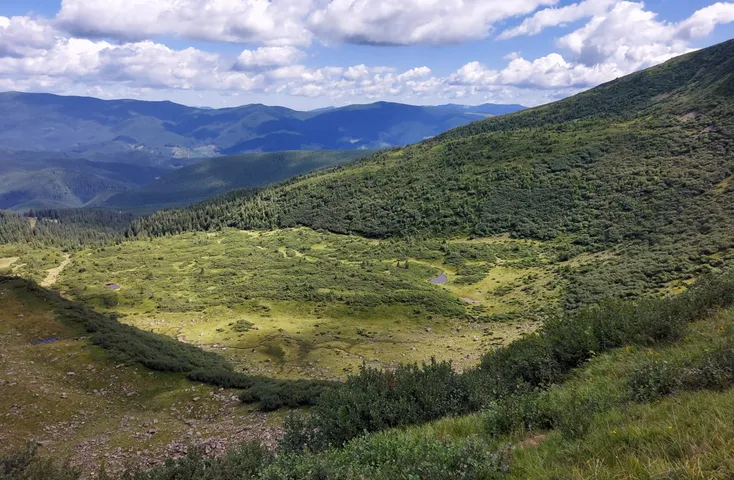
The war has turned the Carpathians into a zone of new ecological conflicts. The region, which until recently was perceived as a kind of «protected hinterland», is increasingly under pressure from business interests and weakened state control. Not only natural areas near the front line have suffered: the remoteness of the mountains from combat zones has become a factor of additional strain. Businesses have massively relocated to western regions, logging has intensified, and infrastructure plans are being pushed forward more quickly — with potentially long-term consequences for mountain landscapes.
Problems traditional to the Carpathians have only worsened during wartime. Ecologists speak of abuses in forestry management, the complicated ability to respond promptly to violations, and growing risks for territories that should be maximally protected.
The most acute line of confrontation revolves around forests. The pressure of new economic processes overlaps with long-standing Carpathian issues, and the forestry sector is most often associated with violations. An additional factor has been reduced transparency: for security reasons, several registries related to the state of forestry have been closed. The public no longer has access to forest planting plans or forest maps showing where logging is scheduled. Ecologists question the necessity of such «closures» in regions far from combat zones, particularly in Lviv and Zakarpattia oblasts.
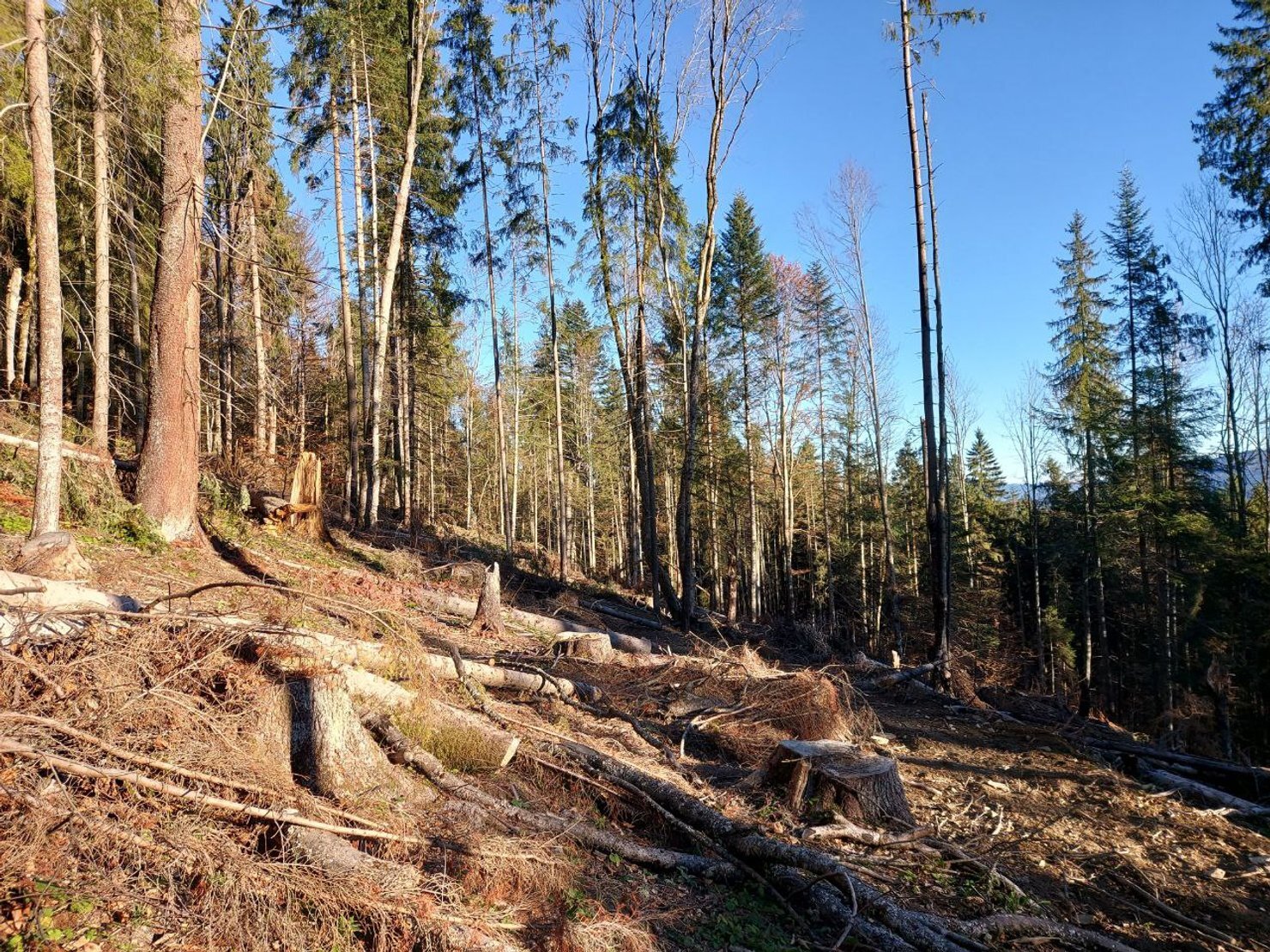
At the same time, state oversight has weakened. Scheduled inspections have been completely halted, and any unscheduled inspections are only possible with approval from the relevant ministry. According to environmentalists, this reduces the speed of control and makes it overly dependent on the political will of leadership.
A separate line of conflict has been attempts to remove the «last safeguard» in the field of logging. In 2024, some stakeholders supported draft law No. 9516, which proposed abolishing the environmental impact assessment (EIA) for continuous sanitary logging. For the Carpathians, this mechanism is critically important: continuous sanitary logging has effectively remained the only permitted method of large-scale deforestation, while mountain forests perform key anti-landslide and water-regulating functions — reducing the risks of landslides and riverbank erosion. Although the public managed to stop the draft law, ecologists emphasize that pressure on EIA procedures has not disappeared.
Another set of risks involves large-scale infrastructure projects, which, according to environmentalists, are planned or implemented without proper environmental impact assessments. Such initiatives could permanently alter the appearance of mountain ridges and, as a result, deal a blow to the region's tourist appeal.
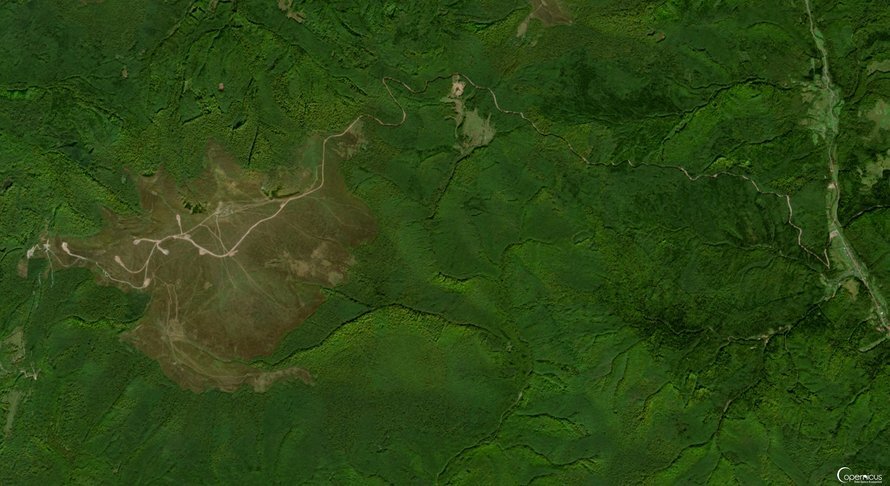
The most high-profile example is the project for a large resort on Svydovets, one of the best-preserved massifs in the Carpathians. Svydovets is known for its post-glacial lakes, ancient forests, and as a habitat for hundreds of plant and animal species listed in Ukraine's Red Book. The plans include developing a significant part of the territory with hotels, ski lifts, and slopes. Ecologists warn that while off-road driving leaves deep «scars» on slopes, the consequences of paving with asphalt and concrete are practically irreversible.
In 2025, a new wave of conflicts was added to this list — the construction of wind power plants on mountain meadows. A notable case is the Runa meadow in Zakarpattia, where, in the spring of 2025, work began on laying roads and building foundations despite the absence of a positive EIA conclusion. According to ecologists, at altitudes of 1300–1400 meters, 11 sites have already been cleared, and at least eight foundations have been poured. Environmentalists warn that similar plans could affect at least six mountain ridges in Zakarpattia, including Svydovets.
Experts identify roads as the unifying element of most threats. Both logging and heavy construction require access for machinery, and thus — new or expanded forest paths that reach ever higher into the mountains. In the case of Runa meadow, ecologists claim that part of the road was laid through an ancient forest area where any economic activity is prohibited by law. For the potential mega-resort on Svydovets, they estimate that new roads will also be needed — including through ancient and old-growth forests.
Environmentalists see a solution in expanding the protected fund — creating new national parks, reserves, and ancient forest natural monuments. Protected status, they emphasize, makes logging and construction on safeguarded territories illegal, while keeping wild nature accessible for responsible tourism and small, ecologically sustainable businesses. The economic argument for local communities is the opportunity to fill budgets through tourism without destroying the region's natural foundation.
The Carpathians are no longer a «protected hinterland». The war has changed the rules of the game, and risks are multiplying due to closed data, weakened control, attempts to undermine EIA procedures, and infrastructure projects that entail the expansion of road networks. The region faces a choice between irreversible landscape changes and strengthening protection as an investment in the long-term economy of communities and sustainable tourism.