8 Jul 2026
,Ukraine
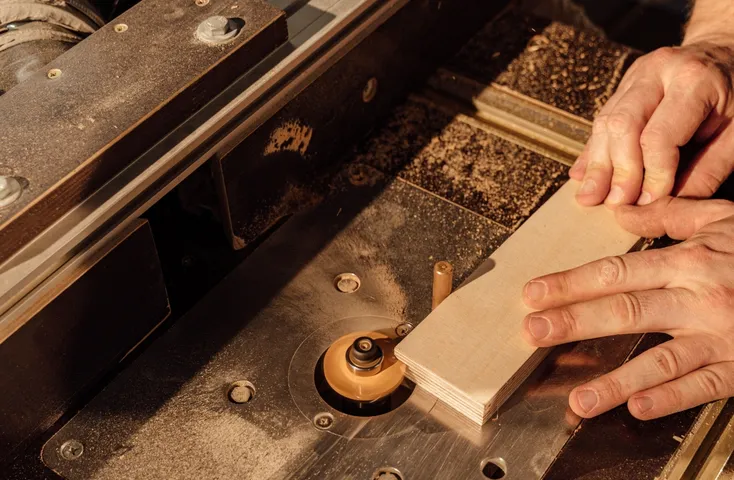
The Romanian furniture industry has undergone one of the most profound transformations in its recent history over the past two decades. The number of employees has fallen by more than a third, hundreds of local producers have disappeared from the market, and those that survived have been forced to radically reinvent their business models. At the intersection of these changes lies a broader phenomenon: pressure from large international retail chains, shifting consumer preferences, and the acceleration of economic globalization.
IKEA’s entry into the Romanian market in 2007 coincided with a significant shift in consumer behavior. The Swedish giant’s standardized products, minimalist design, and competitive prices redefined buyer expectations, placing enormous pressure on traditional manufacturers. Many of them lacked the financial or operational capacity needed to compete on the same terms of price, distribution, and modern aesthetics.
The decline in sector employment reflects precisely this structural inability to adapt. Rising raw material costs, inefficient distribution, and insufficient investment in design and innovation accelerated the withdrawal of many small and medium-sized producers. The mass-production model, which allows large retailers to offer prices that are difficult to match, left little room for maneuver for local firms anchored in traditional practices.
Not all Romanian companies succumbed to competitive pressure. Some found a path to survival by transforming their business models or by integrating into the supply chains of major international retailers.
Ecolor, a Cluj-based company and one of IKEA’s key suppliers, invested in automation and process efficiency. Even so, the company has recently faced increasingly intense economic pressures, illustrating that supplier status to a global giant does not, in itself, guarantee long-term stability. Aramis, a group based in Baia Mare, has remained one of Romania’s largest furniture manufacturers and continues to be a relevant partner in international markets. Lemet, for its part, chose internal modernization, investing in technology, updated production lines, and the development of its own retail network.
What unites these examples is precisely the avoidance of direct competition with mass-market products. Made-to-order furniture, a focus on the premium segment, exports, and the digitalization of sales have become the solutions through which adaptable companies have strengthened their position. Specialization in high-value-added niches has provided a margin of resilience that mass production could not ensure.
The restructuring of the industry has had considerable social consequences. Thousands of employees have had to change jobs or even fields of activity. A significant portion of the sector’s specialists have emigrated, drawn by higher salaries and better working conditions offered in other European countries, thereby exacerbating Romania’s skilled labor shortage.
The future of the Romanian furniture industry depends largely on companies’ ability to invest in technology, automation, and digital order-management solutions. The transformation the sector has undergone over the past twenty years is not just the story of one economic field, but a snapshot of globalization’s impact on the Romanian economy as a whole. The difference between companies that survived and those that disappeared was not solely about production capacity, but about the speed with which they responded to changes in consumption, digitalization, and increasingly intense and sophisticated competition.