
19 Jul 2026
,Ukraine
On June 3, the State Agency of Forest Resources of Ukraine announced the suspension of forest logging for power lines in the Carpathians. The official reason was the creation of an independent commission tasked with verifying environmentalists’ claims about the destruction of the habitat of red-listed salamanders. However, just a few days later it became obvious that the declared intentions diverged from reality.
Satellite images from June 9, published by ecologist Andriy Tupikov, confirmed: logging operations in the wind farm construction zone did not stop. According to his calculations, after the agency’s official statement, the equipment advanced another 350 meters deep into the forest massif. As a result, approximately 1.1 hectares of forest were additionally destroyed within the habitats of protected species.
Wind farm construction in the Transcarpathian highlands has been ongoing for several years and from the very beginning has been accompanied by systematic violations of environmental protection legislation. The key developer is the company “UK ‘Wind Parks of Ukraine’”, relocated from Kramatorsk to Perechyn. The enterprise plans to build wind farms on at least ten sites in Transcarpathia — in total more than 330 turbines with a total capacity of over 1.73 gigawatts.
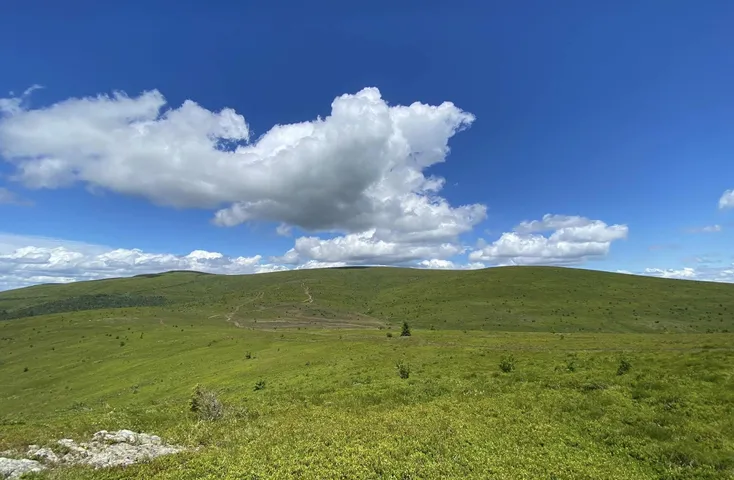
On Runa polonyna, the active phase of construction began in spring 2025 — without conducting an environmental impact assessment. To lay access roads to future wind turbines, old-growth forests and primeval forests were cut down, and habitats of red-listed species were destroyed. Eco-activists claim that at least 40 hectares of forest have been destroyed on the polonyna — despite assurances from the relevant ministry about significantly smaller scales of intervention.
The State Inspectorate of Architecture and Urban Planning later acknowledged violations of legislation in the issuance of permits for construction. However, in February 2026, the Ministry of Economy provided a positive conclusion regarding the implementation of the project on Runa, citing energy necessity under wartime conditions. In parallel, “Zakarpattyaoblenergo” ordered logging for power lines needed to connect future stations to the grid — these very works became the subject of a loud scandal at the beginning of June.