yesterday at 14:58
,Romania
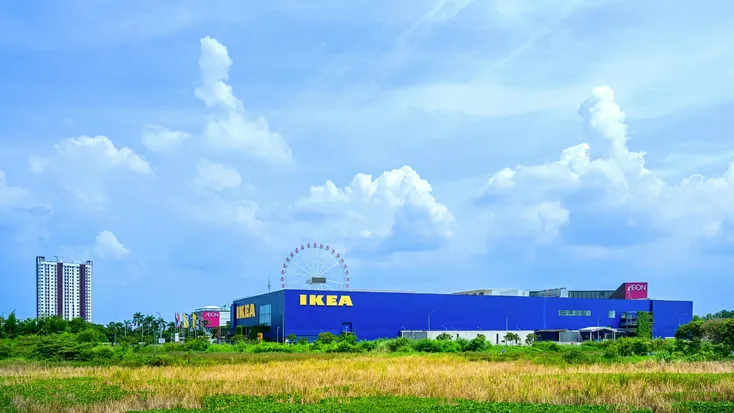
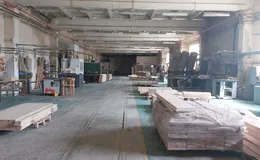
IKEA Industry plans further group layoffs in Poland. The job reductions will mainly affect the production plants in Wielbark and Goleniów. In the first of these, up to 240 people may lose their jobs, in the second — around 160. The cuts will affect both production and administrative staff.
The plant in Wielbark is one of IKEA’s key production centers in Poland — employing around 1,500 people, which means the planned layoffs will be particularly noticeable there. The company attributes the decision to a difficult economic situation: a drop in orders, rising operating costs, and the need to adjust the scale of operations to current market conditions. However, the problems facing the Swedish giant are not isolated — they form part of a wider crisis affecting the entire furniture industry, whose manufacturers are increasingly confronted with weakening demand and more cautious consumer purchasing decisions.
The announced layoffs are not only a response to current difficulties but part of a deeper restructuring of the entire organization. For several years, IKEA has been consistently changing its operating model in response to new consumer behaviors. The traditional format — large warehouse stores on the outskirts of cities, requiring customers to make lengthy visits and arrange their own transport — is increasingly losing out to the convenience of online shopping and the expectation of fast delivery.
In response, the company is developing smaller outlets in city centers, intensively strengthening e-commerce channels and simplifying the purchasing process. Automation of logistics, better demand forecasting and process optimization are intended to reduce costs without compromising product availability. The restructuring therefore covers not only employment but the entire way the company operates.
Poland’s furniture industry has for years been one of the greatest successes of the national manufacturing sector — the country ranked among the world’s top furniture exporters. The pandemic initially brought a boom: a surge in renovations and home furnishing significantly boosted sales. Today, however, the sector faces a very different reality.
Weaker consumption, lower foreign demand, high costs of energy, transport, labor and raw materials — these are the challenges an increasing number of companies must confront. For many consumers, furniture has become a purchase that, amid financial uncertainty, can be postponed without major consequences. The strong dependence of Polish manufacturers on exports means that any economic slowdown in Western Europe is almost immediately reflected in shrinking order books. Additional pressure comes from price competition and growing customer expectations for promotions or cheaper alternatives.
The effects of the crisis extend far beyond the factories themselves. They also impact transport companies, component suppliers and local labor markets. Layoffs in Wielbark and Goleniów could be particularly painful for these towns — where large industrial plants serve as the main employer and backbone of the local economy. If the economic situation does not improve, more companies may be forced to cut investment, employment and costs. For the entire furniture industry, the era of pandemic-driven growth is ending — and questions now arise about efficiency, cost control and the ability to sustain demand in a much tougher environment.