
20 Jul 2026
,Romania
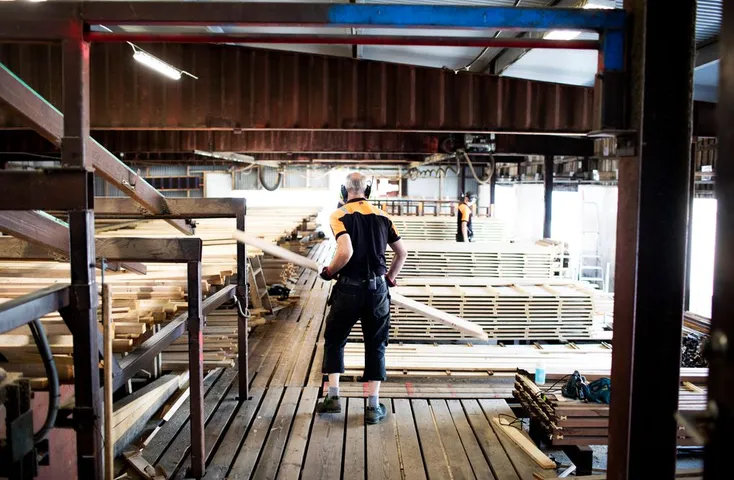
The German sawmill and timber industry is in a persistent crisis. Weak construction activity, high production costs and growing international trade barriers have been placing considerable strain on the sector for months. The German Sawmill and Timber Industry Association (DeSH) considers the situation to remain critical and warns of far-reaching consequences for employment, regional value creation and Germany as an industrial location.
Since the beginning of the year, the economic situation of the industry has deteriorated further. The hoped-for spring recovery has failed to materialise, and demand from the construction sector remains weak. Already last year, production fell to its lowest level in a decade. According to internal association surveys, further declines of nine to ten percent are now threatening in construction timber production. The consequences would be tangible: fewer shifts, short-time work and a gradual reduction in industrial capacity.
Compounding the situation is the international environment. Geopolitical tensions and increasing trade barriers are significantly restricting sales opportunities on global markets. At the same time, European competitors are consolidating through acquisitions and mergers, while German companies face additional pressure due to difficult location conditions.
Although increased timber harvesting by many forest owners has improved raw material supply since the beginning of the year compared with the difficult previous summer, this has done little to change the structural situation of the industry. The construction sector remains in crisis mode: last year, fewer apartments were completed than at any time since 2012. Experts view the slight rise in permit numbers merely as a glimmer of hope, not as a sign of genuine market recovery.
High raw material and energy prices continue to drive up production costs and further weaken the international competitiveness of German companies. Political conflicts on the world stage are exacerbating sales problems.
The economic importance of the sector is considerable: the German sawmill and timber industry comprises more than 2,000 companies with around 30,000 employees and annual turnover of up to 14 billion euros. Germany is considered Europe’s leading producer of construction timber and ranks fifth worldwide.
In light of this situation, DeSH is calling for decisive action. The association is urging a crisis summit between politics and industry to jointly develop a viable future strategy for wood processing. Without improved framework conditions, the association warns, one of Germany’s most important industrial sectors risks permanently losing substance.