
20 Jul 2026
,Romania
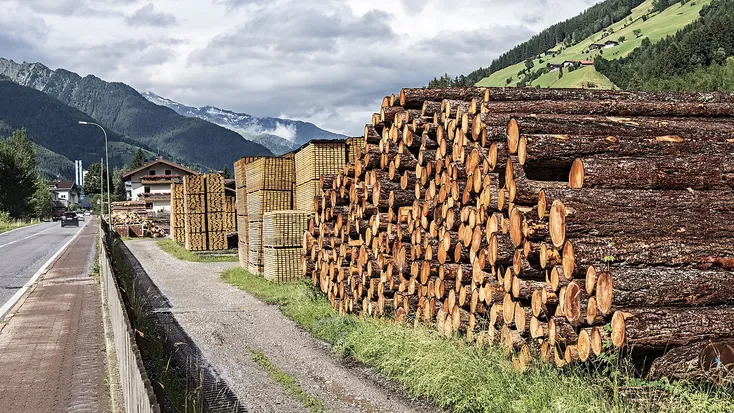
Italian sawmills have brought domestic sawn softwood production back toward one million cubic metres annually, a recovery that nonetheless highlights the scale of the country's dependence on foreign supply. The Italian market consumed 5.45 million cubic metres of sawn softwood in 2024, while 1.47 million cubic metres of roundwood were also imported during the same period, leaving domestic production to cover only a fraction of national demand.
The figures were drawn from the European Organisation of the Sawmill Industry's 2025–26 Annual Report, presented at the Federazione Filiera Legno assembly held in Bologna on 9 July. The gathering also marked the launch of Professionisti Legno, a new professional body established under Law 4/2013 with the backing of PEFC Italia, UNCEM and Consorzio LegnoLegno. The organisation brings together key timber trades — carpenters, packers, graders and ecodesign technicians — and was described at the assembly as a structural step toward sector-wide cohesion.
"An essential step in building a genuine National Wood Product System."
That ambition was central to the address delivered by Angelo Luigi Marchetti, who argued that Italy requires an industrial policy capable of treating raw material supply, forest management, innovation, timber construction, logistics and packaging as a single interconnected ecosystem rather than a series of separate sectors. Deputy Minister Valentino Valentini reinforced the point, framing system-building as a question of shared vision, skills and planning capacity, and linking it explicitly to the strength of Italy's national brand.
The production recovery Italian sawmills are achieving comes against a difficult commercial backdrop. Margins across the sawmilling sector remain near zero, and the squeeze shows little sign of easing. The same pressure is being felt across Europe: sawn softwood output in countries belonging to the European Organisation of the Sawmill Industry fell 1.5% in 2025 and is forecast to decline again in 2026. The Finnish forestry giant Stora Enso has responded by halting operations at its Veitsiluoto sawmill in northern Finland from August, a signal of how severely market conditions are weighing on even large-scale producers.
Within Italy, other segments of the wood supply chain present a more resilient picture. Broadleaf production is expected to reach 340,000 cubic metres in 2025, underpinned by supply chains centred on chestnut — a species historically woven into the economies of Italy's mountain and hill communities. Timber also remains indispensable to Italian logistics, with operators handling 160 million pallets annually and producing more than 84 million units. Timber construction is expanding further still, with turnover exceeding €2.3 billion, according to the federation's 2025 Wood Construction Observatory.
The broader European context, drawn from FOREST EUROPE's State of Europe's Forests 2025, offers a striking backdrop to Italy's domestic challenge. European forests now cover 232 million hectares, equivalent to 35.4% of the continent's land area, having expanded by more than 23 million hectares over the past 35 years. Standing forest stock across the continent has reached 38.3 billion cubic metres, a level 45% higher than in 1990, and forest growth continues to exceed harvesting across the region.
Italy participates in this continental greening in a historically notable way: for the first time since the Middle Ages, woodland has overtaken farmland in total area. Yet despite this abundance, Italy remains one of Europe's three largest timber importers — a paradox that Marchetti's proposed national wood product system is explicitly designed to address.
Across Europe, the sawmill industry comprises 32,000 companies, employs 220,000 workers and generates annual turnover of €51.4 billion, producing 102 million cubic metres of sawnwood in 2024. More than 90% of logs processed by European sawmills are sourced within the EU, a degree of regional self-sufficiency that Italy has yet to replicate at the national level. The arithmetic of Italy's position remains unambiguous: domestic mills produce close to one million cubic metres for a market that demands 5.45 million. Closing that gap — through coordinated industrial policy rather than piecemeal intervention — is the task that the Bologna assembly placed at the centre of the sector's agenda.