yesterday at 19:58
,Poland

Romania's manufacturing industry recorded a 4% decrease in April 2026 compared to the same period of the previous year, according to an analysis carried out by the Romanian Foresters Association (ASFOR) based on data provided by the National Institute of Statistics. The negative evolution is all the more worrying as it reflects a structural trend, not just a conjunctural fluctuation.
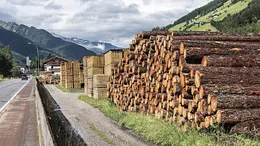
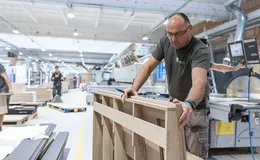
In the wood sector, the picture is contradictory. Primary processing advanced by 5.3%, indicating that raw material continues to be processed and valorized in the early stages of the production chain. In contrast, furniture manufacturing recorded a decline of 18.2%, a figure that raises serious questions about the competitiveness of Romanian industry in high value-added segments. Compared to the first four months of the year, the decline in the furniture industry already exceeds 10%, outlining a worrying downward trend.
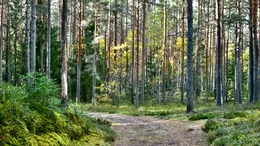
ASFOR draws attention to an obvious paradox: Romania possesses a remarkable forest resource — forests add nearly 59 million cubic meters of wood mass annually — yet the country exploits only about 30% of this annual growth. By comparison, countries with a strong forestry tradition, such as Germany, Austria, Finland, and Sweden, valorize a significantly higher proportion of their silvicultural potential while maintaining high sustainability standards.
Of the 18–19 million cubic meters of wood marketed annually in Romania, only about 8 million actually reach the processing industry. The rest is used predominantly as fuel — firewood — meaning that an important part of the national resource is consumed at the lowest possible level of added value.
Romania valorizes raw material in the first stage of processing but loses competitiveness in the high value-added segment. — ASFOR
The furniture industry is one of the most dynamic export sectors of the Romanian economy. Approximately 86% of production is destined for external markets, with Romania supplying furniture to over 120 countries. The forestry sector and wood industry together contribute approximately 3.5% to the gross domestic product, generate a trade surplus of up to 2 billion euros annually, and support hundreds of thousands of jobs, both in urban and rural areas.
Nevertheless, the potential remains insufficiently valorized. ASFOR proposes extending investments from the DR-24 program — currently focused primarily on the mechanization of forest exploitation — toward higher processing industries. The logic is simple: public support should follow the value chain, not stop at its lower end.
The European context currently offers favorable conditions for a strategic reorientation. The bioeconomy and the use of wood in construction are at the center of the European Union's sustainability agenda, and demand for wood-based products is expected to grow in the coming years. Romania is theoretically in a privileged position to benefit from this wave. In practice, however, the absence of coherent policies to stimulate higher processing of the domestic resource leaves the country as a supplier of cheap raw material rather than transforming it into a producer of high-value goods.
Without clear intervention at the level of industrial and forestry policy, the gap between resource potential and actual economic performance risks deepening, to the detriment of both the industry and the communities that depend on it.