18 Jul 2026
,Ukraine
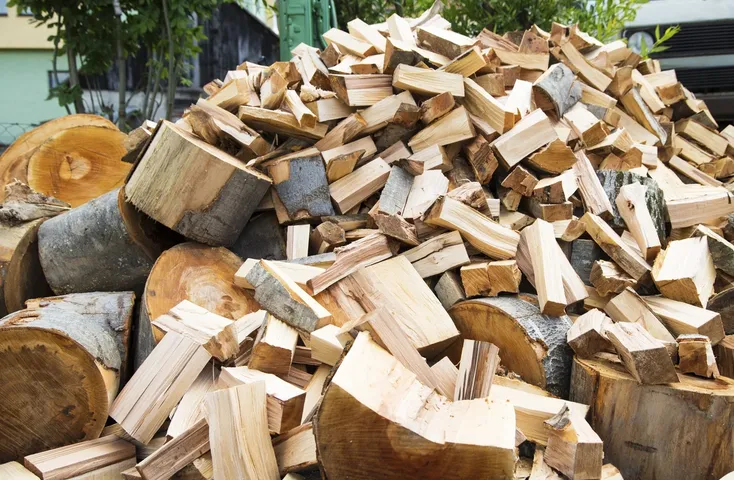
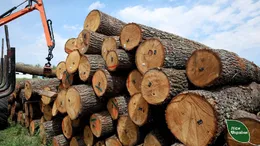
In 2026, firewood remains for millions of Ukrainian families not an archaic relic but a fully practical necessity. Amid prolonged war, power outages, and unstable centralized heating, a wood-burning stove or fireplace is often the only reliable alternative. This is especially noticeable in rural areas, where harvesting firewood has long been not just a household chore but part of the family way of life and the community’s cultural memory.
At the same time, a great deal of legal confusion has recently accumulated around firewood. Draft Law No. 9665, which envisaged liability for storing or transporting timber without supporting documents, caused quite a stir — yet it never came into force: the president did not sign it. Therefore, current legislation applies today: the provisions of the Forest Code, the Code of Ukraine on Administrative Offenses, and the Criminal Code regarding illegal logging and damage to forest lands. Storage or transportation of small volumes of firewood without documents does not in itself entail automatic criminal liability — however, it may serve as grounds for checking the origin of the timber.
Unauthorized felling of trees in state forests carries administrative fines and the obligation to compensate for the damage caused. If the losses are significant, criminal liability arises. At the same time, there is a widespread misconception that one can freely collect deadwood in the forest or cut down trees felled by a storm. In reality, this is not the case — any harvesting of timber in a state forest without an appropriate permit is illegal, regardless of the tree’s condition.
The consequences of mass illegal harvesting extend far beyond the legal risks for any individual. Deforestation reduces biodiversity, increases soil erosion, and heightens the risks of fires and floods. Forests recover slowly, and every illegally felled tree is not only a fine but real damage to the ecosystem that future generations will feel.
The simplest and safest way to supply a household with firewood is through official purchase. The state offers several channels for this: the State Enterprise “Forests of Ukraine,” local forestry enterprises, and the specialized platform “DrovaYe.” Through the latter, a citizen can order up to 15 cubic meters of firewood per year, receiving documents confirming the legal origin of the timber. The procedure is standard: authorization on the platform, selection of supplier, species and volume, specifying the delivery address, payment, and receiving a receipt or waybill. Delivery is usually arranged and paid for separately; when receiving the goods, one must present a passport and the registration number of the taxpayer’s account card.
Purchasing directly from a forestry enterprise is also a completely legal option, provided the buyer receives the relevant documents. Another legal method is harvesting timber on one’s own private land plot: no special permits are required for this, but going beyond the boundaries of one’s plot or cutting in a state forest is prohibited in any case.
All received documents — receipts, waybills, invoices — should be kept. They are the main proof of the legal origin of the firewood during possible inspections. This is especially relevant when transporting large batches: inspectors have the right to demand supporting documents, and their absence may lead to the drawing up of a protocol or even an investigation into illegal logging. Official purchase is advantageous not only from a legal standpoint: it supports a transparent market, reduces demand for illegal timber, and helps control permissible harvesting volumes.
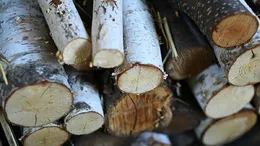
The practical value of firewood is determined primarily by the tree species. Hardwoods — oak, hornbeam, ash — burn longer and give off more heat, but are harder to kindle. Softwoods — pine, alder — catch fire quickly but also burn out quickly. Birch is a kind of gold standard: it combines decent heat output, ease of burning, and a pleasant aroma.
Moisture content of the wood is critically important. Freshly harvested firewood contains a lot of water, so it must be dried for about a year before use. Wet firewood means not just less heat: it produces more smoke and condensate, pollutes the chimney, and increases fire risk. Proper drying begins with proper stacking: firewood is placed under a shelter on a base, not on the ground, and gaps are left between the logs for air circulation. The top of the stack is covered, while the sides are left open — so the wood does not rot. It is best to keep the firewood stock at least a meter away from the walls of the house: this protects against moisture, rot, and unwanted insects.
Regarding purchase timing, experienced householders recommend doing it in spring or summer. At this time prices are lower, queues are shorter, and — most importantly — there is enough time for the wood to dry before the heating season begins.
A separate and common mistake is buying firewood “from hand” without any documents to save money. Such a transaction can result in a fine, confiscation of the entire stock, and suspicion of involvement in illegal logging.