Mondragón Opens in Álava the Largest Sawmill in Southern Europe to Lead the European Forest Industry
yesterday at 12:58
,Spain
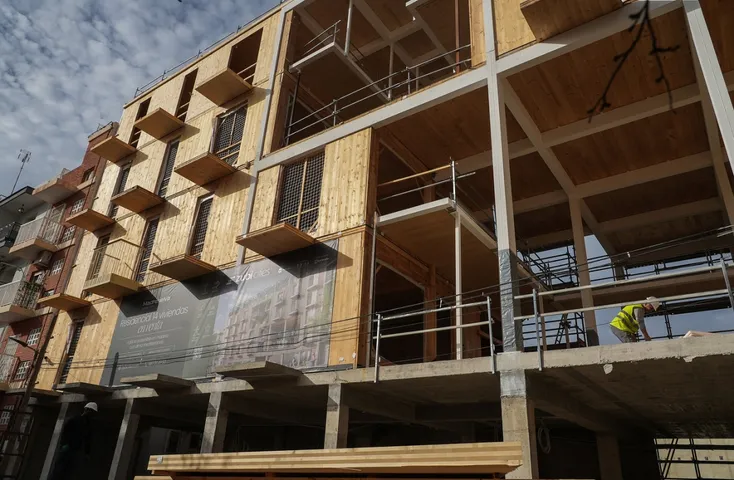
Valencia has built the first high-rise building with a wooden structure in the province. The project, located in Burjassot, has drawn attention for challenging the traditional perception of wood as a fragile and short-lived material. The developer Zubi Cities argues that technical advancements and current regulations, which demand the same safety standards regardless of the material, have rendered this image obsolete.
Although the use of wood as a structural element is still in its early stages in Spain, it is beginning to gain traction in the residential market. The Madreselva building is part of this trend, combining industrialized construction, lower environmental impact, and technical solutions designed to address common concerns about fire safety and durability.
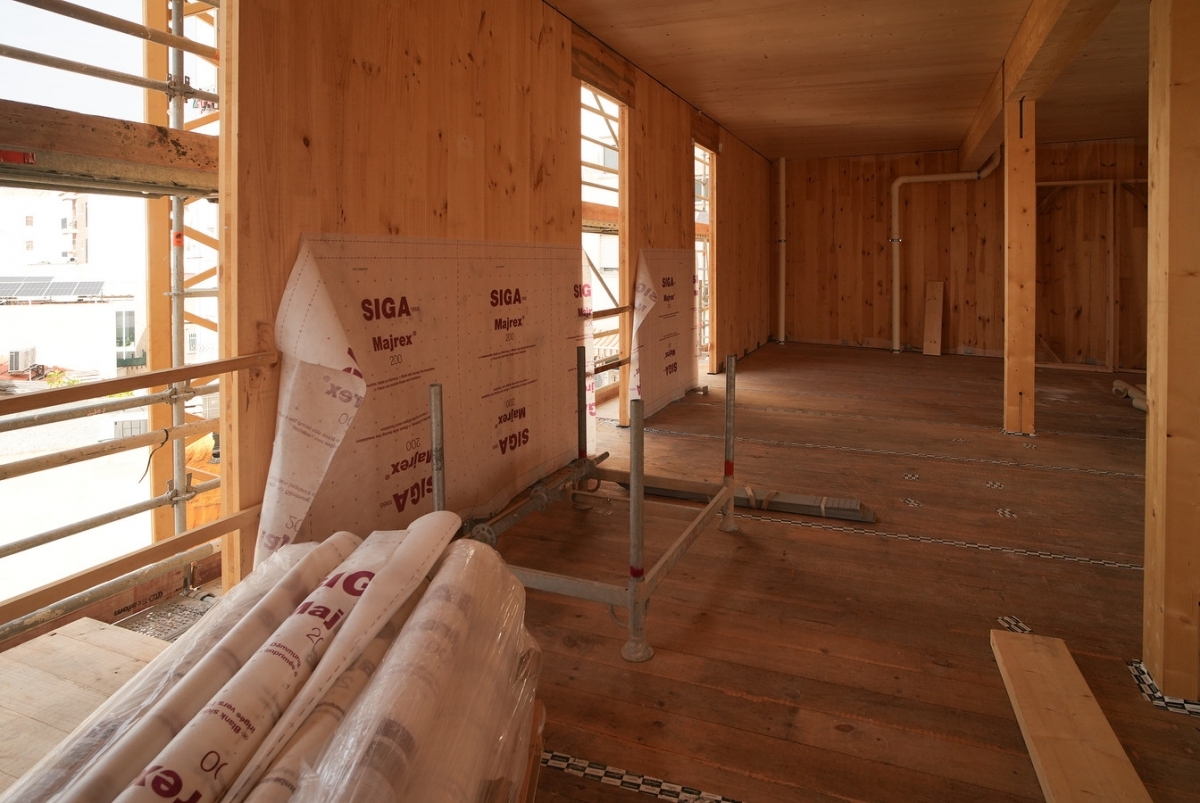
The project comprises 14 homes and is designed to foster community living, featuring a central inner courtyard and shared spaces such as a terrace, urban garden, landscaped areas, and multipurpose zones. More than half of the homes have been purchased by foreign buyers, a fact the developer interprets as a reflection of greater familiarity with this type of construction outside Spain and a primarily cultural barrier in the local market.
From a construction perspective, the building adopts a hybrid system. The foundation and ground floor are made of concrete, while the upper floors combine steel columns and wooden elements, primarily cross-laminated timber panels. This solution aims to optimize structural performance and reduce environmental impact, while also facilitating disassembly and material reuse at the end of the building’s life cycle.
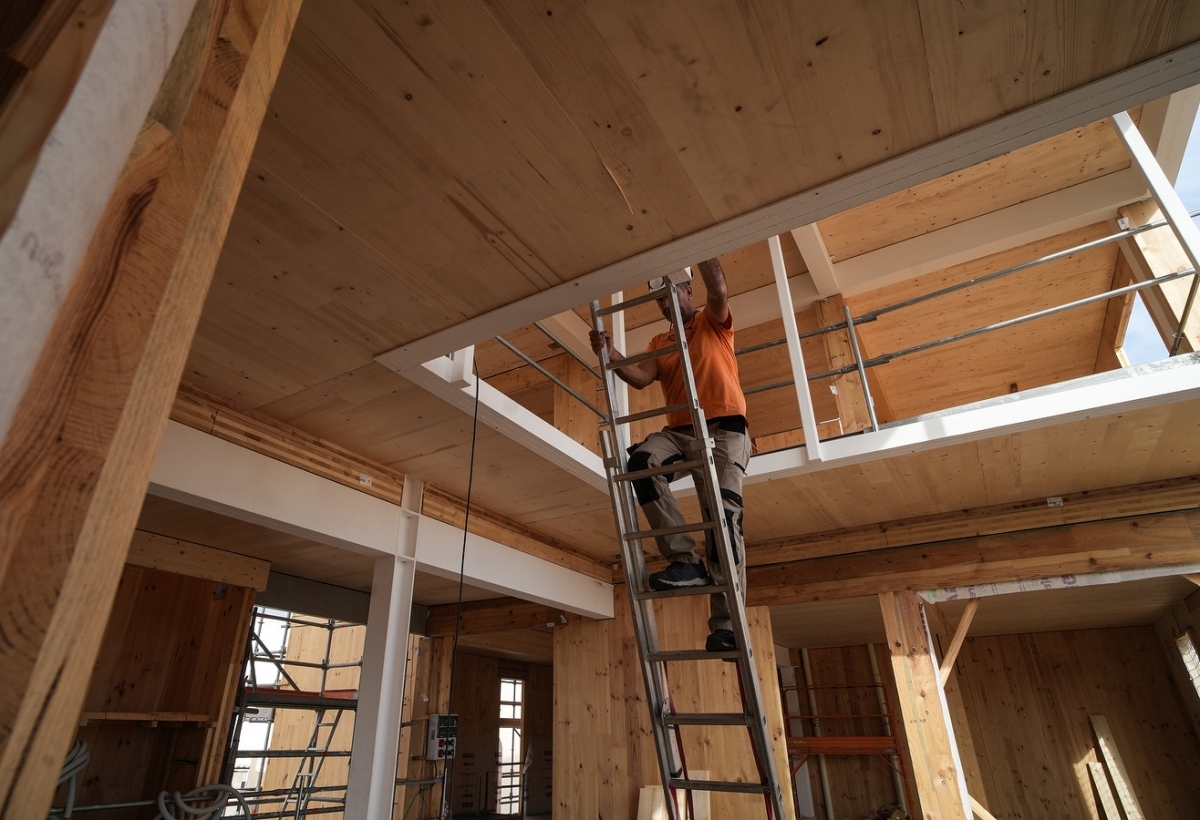
The industrialization of the process is key: structural elements are manufactured in a workshop, numbered, and assembled on-site as a large module, which shortens construction timelines. According to the developer, the structural phase was reduced by about two months compared to a conventional concrete building.
Regarding fire safety, the project complies with current regulatory requirements. The technical wood used exhibits predictable behavior in the face of fire, forming a charred layer that acts as protection, and is also encapsulated within the construction system, reinforced by facade and insulation layers.
The building also incorporates energy efficiency and environmental management criteria, aiming to achieve an AA energy rating and the GOLD VERDE certification. It includes renewable energy solutions, dual-flow ventilation, reduced water consumption, sustainable mobility options, and advanced waste management.
Zubi Cities anticipates that this project will have a ripple effect in Burjassot and is already preparing a second, larger-scale residential development. Within the industry, the developer predicts that wooden construction will gain prominence in the coming years, driven by industrialization, reduced reliance on on-site labor, and higher final product quality.