23 Jun 2026
,Ukraine
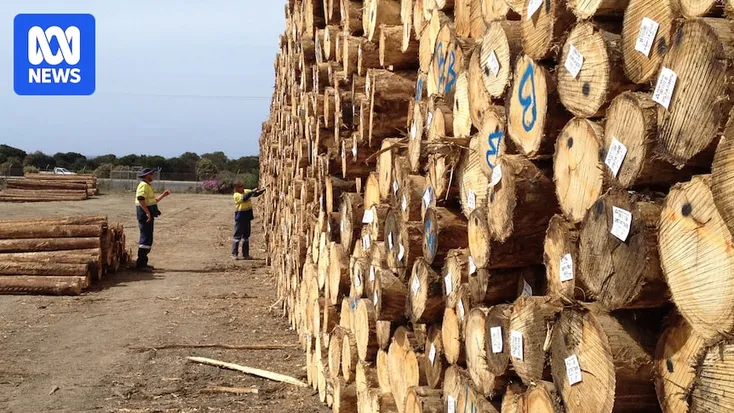
Russian timber is making its way into Australia despite sanctions imposed in response to Moscow's invasion of Ukraine, according to the Australian Forest Products Association (AFPA), which is calling on the federal government to close the loopholes enabling the trade.
Australia introduced tariffs on Russian and Belarusian timber in April 2022 as part of a broader package of economic measures against Russia. However, industry representatives say those tariffs can be circumvented when Russian wood is routed through third countries before being exported to Australia under a different country of origin. The AFPA says timber processed in countries such as China or Lithuania — where it may be transformed into products like laminated veneer lumber — can enter the Australian market without attracting the 35 per cent tariff applied to Russian-origin goods.
The association estimates that up to 100,000 cubic metres of timber containing Russian wood enters Australia each year through this kind of indirect trade. At a time when the domestic market is depressed and local sawmills are operating with full yards, the AFPA argues that cheap rerouted timber is undermining Australian producers.
"We don't think Australians want to fund the war in Ukraine and we don't think Australians want Russian timber in their houses." — Australian Forest Products Association

The Department of Foreign Affairs and Trade says Australia remains firmly committed to supporting Ukraine, pointing to its enforcement of more than 1,800 sanctions and the continued application of the Russian-origin timber tariff. The government's position is that importers bear responsibility for conducting due diligence and ensuring tariff compliance throughout their supply chains.
Concerns about the legality of Russian timber predate the war. Major certification bodies, including the Forest Stewardship Council (FSC) and the Programme for the Endorsement of Forest Certification (PEFC), have suspended certification of Russian timber over illegal logging concerns — a development that has increased scrutiny of its presence in global supply chains.
The University of Adelaide is part of an international project working to address this problem by building a genetic database capable of tracking and verifying the origins of timber. Professor Andrew Lowe, who is involved in the project, says the supply chains between eastern Russia and China are particularly difficult to police.
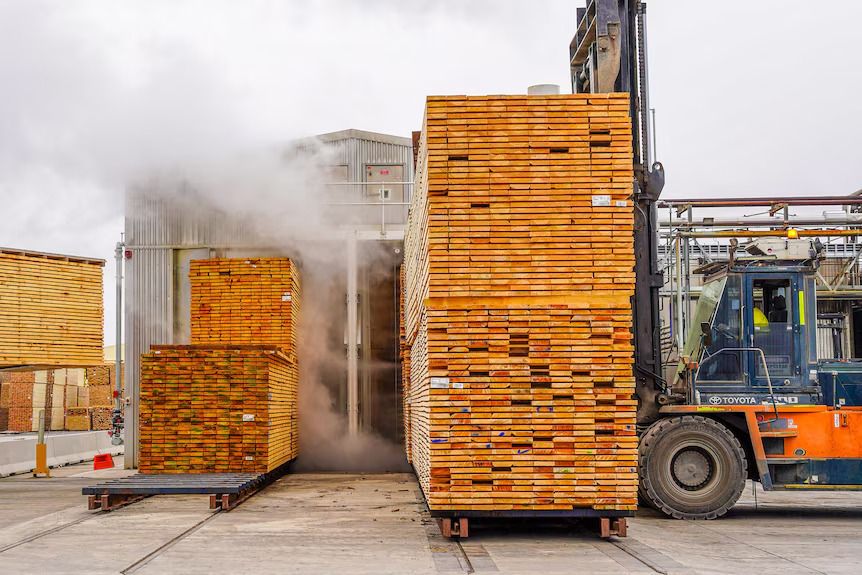
"We know that is a route of illegal logging." — Professor Andrew Lowe, University of Adelaide
Professor Lowe acknowledges that any border testing regime would need to be fast enough to avoid delaying legitimate timber imports — a practical constraint that complicates enforcement. Nevertheless, the AFPA is pushing for the introduction of border testing in Australia as a means of identifying Russian timber and preventing its entry regardless of the declared country of origin.
The issue is unfolding against the backdrop of a national housing shortage, with Australia still relying on imported timber to meet construction demand despite having a substantial domestic forestry industry. Housing Industry Australia has cautioned that stable timber supply chains are critical to achieving national housing targets.
Senior economist Tom Devitt warned that if geopolitical and economic disruptions push up timber costs, governments will need to find other ways to reduce the overall cost of building homes — or risk falling short of the construction volumes the country needs.
Russian timber is not subject to an outright import ban in Australia; the restrictions target trade involving sanctioned individuals or entities rather than the commodity itself. The AFPA says this distinction makes product-of-origin labelling all the more important, arguing it would give consumers and builders the ability to make informed choices. Industry representative Richard Hyett contends that choosing Australian timber supports local jobs, guarantees compliance with Australian standards, and avoids entanglement in supply chains of questionable provenance.