yesterday at 12:29
,Germany

Russian President Vladimir Putin on Monday signed a law introducing controversial changes to the forest protection regime in the Lake Baikal region. The document, debated for several years, allows for limited logging in specific cases and, according to critics, could threaten the ecosystem of a UNESCO World Heritage site.
Lake Baikal has been listed as a World Heritage Site by UNESCO since 1996. Scientists and environmental groups stress that any weakening of existing restrictions increases the risk of damage to the lake’s highly fragile natural system.
The law formally retains the ban on logging within the Central Ecological Zone of the Baikal Natural Reserve. At the same time, it introduces exceptions that allow forest clearing in areas classified as having lost their ecological, water-protection, or other protective functions.
The legislation also makes it possible to reclassify certain plots of land within the protected zone that belong to the Forest Fund. The Forest Fund includes all forested territories under federal management in Russia. Critics argue that this provision could pave the way for new construction and expanded economic activity in the Baikal region.
Supporters of the law argue that the amendments are intended to resolve infrastructure and everyday challenges in remote lakeside communities. They point to the need to build roads, utilities, and basic public facilities in areas that are currently difficult to access.
The Ministry of Natural Resources insists that Lake Baikal retains the highest level of environmental protection and that commercial logging remains prohibited. According to the authorities, the changes are designed to improve safety and living conditions for local residents rather than to enable large-scale economic exploitation.
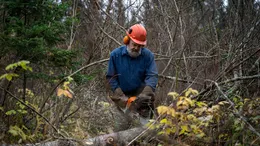
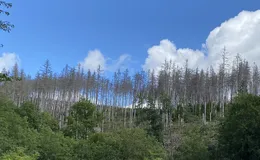
Opponents of the law focus on the broad and ambiguous criteria used to define forests that have lost their protective functions, as well as on the expanded use of sanitary logging. Environmentalists warn that measures intended to combat pests, fires, and disease could, in practice, be used to justify extensive clear-cutting.
Further concerns relate to the role of private business interests. During public debate, critics alleged that certain economic actors could benefit from tourism, infrastructure, and logging projects in the region, including interests linked to businessman Oleg Deripaska. Environmental groups also highlight risks associated with construction and infrastructure development, such as the use of heavy machinery, soil erosion, and a lack of transparency in land reclassification procedures. In their view, these factors could shift policy priorities from conservation toward development and cause long-term harm to Baikal’s ecosystem.
The bill was introduced in 2023 and faced consistent opposition from the scientific community, including representatives of the Russian Academy of Sciences. A public campaign against the legislation gathered more than 116,000 signatures on Change.org.
UNESCO had previously warned that changes of this nature could undermine the legal certainty of protection for a World Heritage site. The key question now is how the law will be applied in practice: how forests deemed to have lost protective functions will be identified, how transparent land reclassification decisions will be, and whether the new exceptions will lead to increased logging and expanded development along the shores of Lake Baikal.