yesterday at 12:29
,Germany
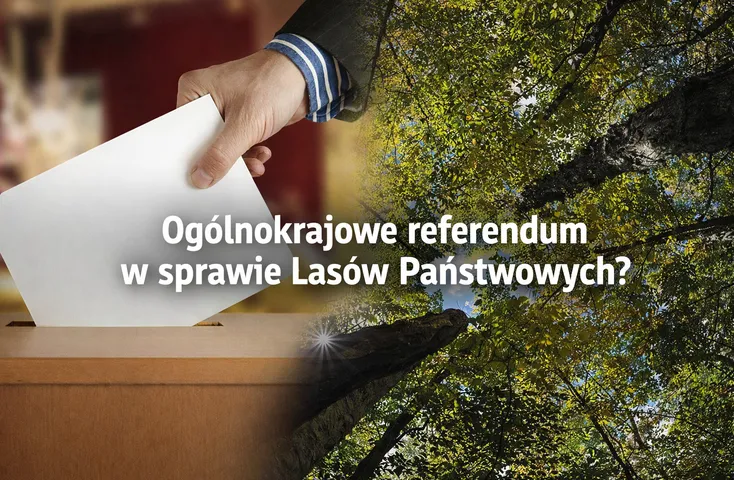
The demand for a nationwide referendum on State Forests reemerges in response to the pace and scale of changes in forest policy. Critics of the government’s current approach argue that decisions made by the Ministry of Climate threaten the financial stability of the State Forest Holding "State Forests" (PGL LP), the country’s raw material security, and the traditional model of Polish forestry.
State Forests manage the majority of forests in Poland, balancing environmental, social, and economic functions. The dispute revolves around issues such as the exclusion of large areas from forest management, the role of non-governmental organizations in decision-making processes, and the consequences of these actions for the timber industry and local communities.
Supporters of the referendum argue that the scale of the changes is fundamental. They primarily highlight the exclusion of hundreds of thousands of hectares of forests from economic use, which, in their view, undermines the model of sustainable, large-scale forest management that has been in place in Poland for decades.
The concept of so-called "social forests" is also critically assessed. According to opponents of the changes, this slogan is merely marketing, as forests in Poland have already served social functions. In practice, they argue, it leads to further exclusions of areas from use, generating additional costs for State Forests, including through burdens on the Forest Fund.
Legal concerns are also being raised. Critics claim that some decisions by the Ministry of Climate and Environment lack sufficient grounding in existing legislation, including the Forest Act and the Nature Conservation Act. The debate repeatedly returns to questions about the decision-making process, the scope of consultations, and the compliance of actions with the law.
At the same time, concerns are voiced about the financial situation of PGL LP. Limiting timber harvesting while increasing financial burdens could, according to critics, lead to a weakening of the enterprise’s economic stability. In this narrative, State Forests are seen as a strategic state resource, and any disruption to their functioning would have consequences for the country’s raw material sovereignty.
Another point of contention is the influence of non-governmental organizations on forest policy. Critics of the current direction of changes argue that the voices of scientific communities and forestry practitioners are being marginalized, with decisions made under activist pressure without sufficient consideration of scientific knowledge and professional experience.
The creation of new nature reserves also sparks controversy. Attention is drawn to conflicts with local communities and the fact that designating an area as a reserve imposes restrictions on forest use, including for recreation or gathering forest undergrowth.
In the background lie economic consequences. The timber, sawmill, and furniture industries—one of the leaders of Polish exports—may feel the effects of restricted access to raw materials. Critics warn of disruptions to the entire forest-timber supply chain and growing tensions within State Forests itself.
The call for a referendum fits into a broader dispute over the direction of forest policy in Poland: where lies the boundary between nature conservation and forest management, and who should decide on priorities. Supporters of the plebiscite argue that such significant changes require social legitimacy and broad public debate.