
16 Jun 2026
,Australia
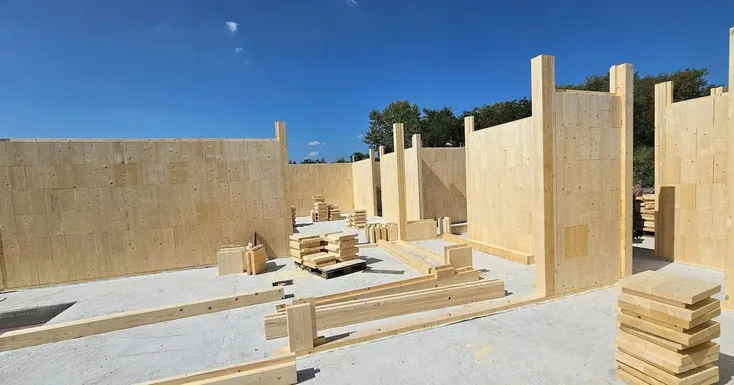
The construction industry is undergoing a profound transformation driven by the industrialization of processes, the standardization of components, and the search for materials with a lower environmental footprint. In this context, the company NiTO Holzstein has developed a construction system based on large-format modular solid wood blocks that aspires to become a real alternative to traditional methods.
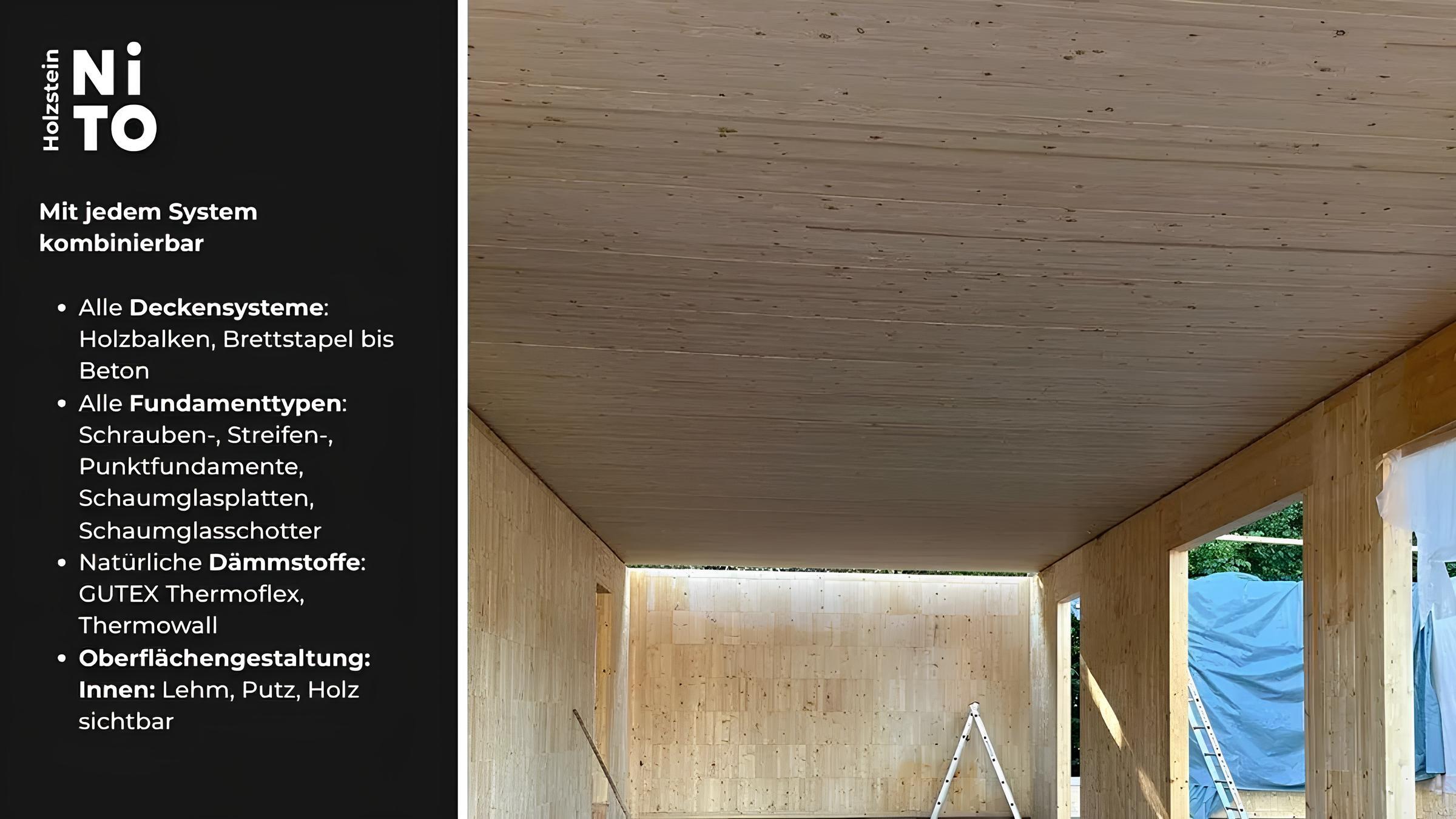
The fundamental principle of the system lies in the elimination of cement during the structural phase. Instead of mortars or adhesives, the blocks are assembled through a high-precision interlocking system that minimizes reliance on wet processes and chemical substances. Each block is manufactured with structural timber of class C24 and consists of six boards joined with patented wooden nails. Its weight is around ten kilograms, although there is a more compact version designed for specific applications.
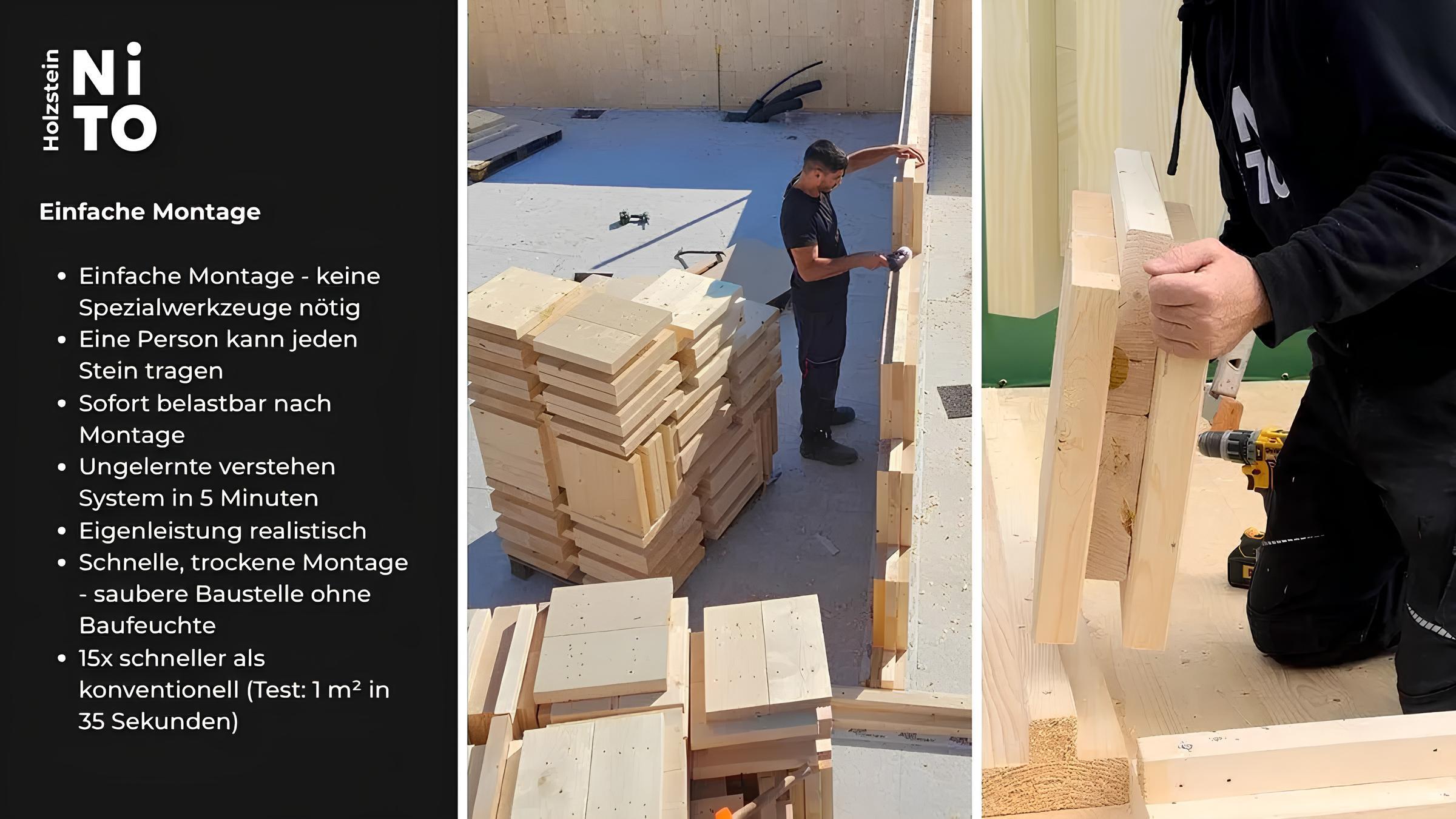
Execution speed is one of the system’s most highlighted advantages. According to its promoters, it is possible to install nearly one square meter of wall in less than a minute, which would allow the load-bearing structure of a single-family home to be erected in approximately seven days. However, this timeframe refers exclusively to the structural skeleton and does not include the foundation, installations, insulation, carpentry, or finishes, phases that still require conventional times and processes.
The system holds certification from the German Institute for Construction Technology, allowing its use in that country under specific conditions. Its application is authorized in buildings of up to two stories plus an attic, within the limits established by said accreditation. This regulatory validation has been decisive in opening the German market, where technical construction standards are particularly stringent.
Outside Germany, however, the landscape is more restrictive. The system’s application is still limited to pilot projects or non-structural elements, and its international expansion depends on obtaining new certifications in different markets. The company is currently working on this process, with prospects for significant progress toward the end of 2026.
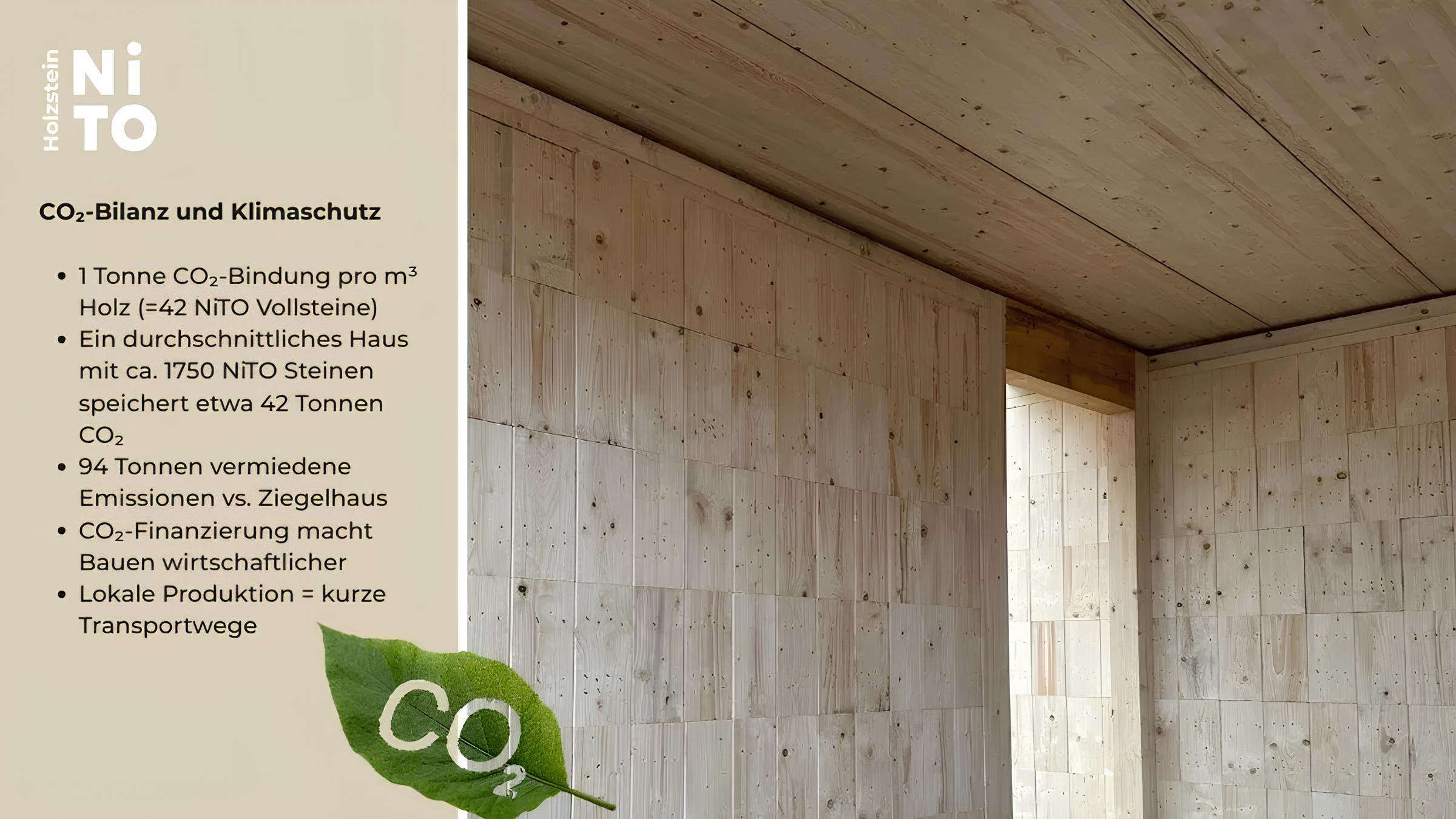
The environmental dimension constitutes one of the project’s pillars. The blocks are manufactured with solid wood without chemical additives, sourced from certified origins, making them potentially recyclable and reusable materials aligned with the principles of the circular economy. In addition, wood acts as a carbon sink by retaining CO₂ throughout the building’s service life, thereby contributing to the sector’s decarbonization goals—one of the largest emitters of greenhouse gases globally.
Among its technical advantages are also dimensional stability, good thermal performance, and reduced labor costs in certain phases of construction. The system’s flexibility allows it to be applied in single-family homes, small commercial buildings, and modular extensions, broadening its potential range of use.
Nevertheless, the real long-term impact of NiTO Holzstein will be conditioned by factors beyond its technical performance. Adaptation to local regulations in different countries, overcoming regulatory barriers, and demonstrating economic viability at an industrial scale will be the true determinants of its market penetration. The system represents a genuine evolution in timber construction, but its integration into conventional construction processes remains an ongoing challenge.