yesterday at 12:29
,Germany
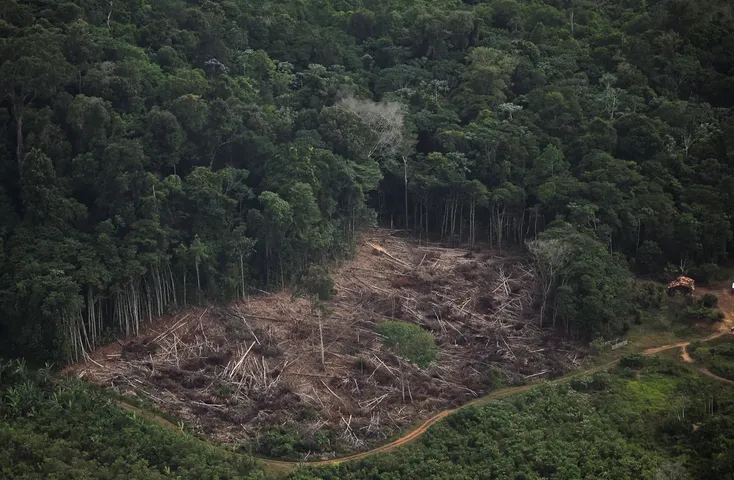
Brazilian President Luiz Inácio Lula da Silva has urged world leaders to agree on clear plans to phase out dependency on fossil fuels, halt deforestation, and secure the financial resources needed to achieve these goals. Although political targets have been formally set, their implementation continues to stumble over the issue of a “just transition” and funding. According to available estimates, the so-called “Belém Outcome” has been disappointing in this regard: ambitions are high, but the mechanisms for implementation and funding do not match the promises made.
Calls to accelerate climate measures are based on the results of the first global stocktake conducted in 2023 and the agreements reached at COP28 in Dubai. There, countries committed in principle to a gradual phase-out of fossil fuels and to halting and reversing deforestation and forest degradation by 2030.
However, a key question remains unresolved: who bears the cost and under what conditions. The concept of a “just transition” assumes that no country is left behind, but negotiations often break down precisely over issues of fairness and financing. Countries with higher historical emissions and stronger fiscal capacities advocate for a broader distribution of responsibility, while nations with significant forest resources demand predictable funding, technology transfer, and fair monitoring rules. Without an agreement on a financial framework, the set targets remain mere political declarations.
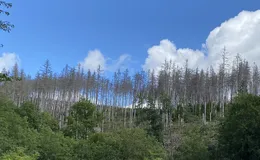
Despite international commitments, forest loss and degradation continue at an average rate of about 25 million hectares per year over the past decade. This is 63% higher than the rate needed to meet existing targets by 2030, clearly indicating a growing discrepancy between political promises and real trends on the ground.
An additional problem is that climate pledges submitted ahead of the COP in Belém are still not aligned with 2030 goals. Analyses of Nationally Determined Contributions (NDCs) point to the so-called “forest gap” – the difference between globally agreed targets and what countries actually plan to implement. According to current projections, deforestation by 2030 would be reduced by less than 50%, meaning nearly 4 million hectares of forests would still be lost annually.
Forest degradation, meanwhile, remains almost unaddressed: it is expected that by 2030, nearly 16 million hectares will be degraded annually, which is only about 10% less than current levels. Combined, this means that by the end of the decade, around 20 million hectares of forests would be lost or degraded each year – an area roughly twice the size of South Korea.
The authors of these analyses warn that the estimates are based on an incomplete picture: only about 40% of countries have submitted updated plans so far. Nevertheless, it is emphasized that even major commitments, such as those from the European Union or China, do not change the fundamental conclusion – the global trajectory remains far below the level needed to achieve the targets.
To reduce the financial gap, Brazil has introduced a new initiative – the Tropical Forests Forever Facility fund, which has so far gathered pledges amounting to 6.7 billion US dollars. However, a key weakness has been highlighted: limited monitoring of forest degradation, which could create room for countries to receive funds while continuing to destroy primary forests.
The fund announces the establishment of a scientific committee and a review of monitoring indicators over the next three years, but critics warn that precise and binding monitoring of degradation is a prerequisite for the credibility of such mechanisms.
In the same context, an earlier commitment of 1.8 billion US dollars to support the conservation and recognition of 160 million hectares of territories of indigenous peoples and local communities is also highlighted – a measure often cited as one of the most effective in protecting forests on the ground.
The debate is increasingly extending beyond tropical regions. Countries of the global north are responsible for more than half of the global forest cover loss over the past decade, fueling demands for a global accountability framework that would also encompass non-tropical regions such as Australia, Canada, and Europe.
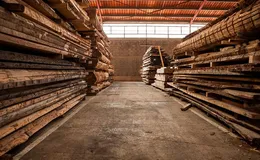
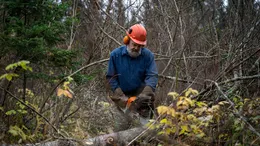
The problem is further complicated by differences in reporting. Industrial logging is often cited as the main cause of forest cover loss, but due to discrepancies between reporting deforestation and degradation, degradation linked to logging often remains invisible in official statistics. According to available data, only 59 countries report systematically monitoring forest degradation, and nearly three-quarters of them are tropical forest countries.
At the diplomatic level, the IUCN Congress adopted a resolution on ensuring fair accountability and implementation resources, with an emphasis on harmonizing forest protection standards among countries. There is also mention of developing a “Forest Plan,” which is expected to be developed for COP31 in Turkey, with the aim of strengthening alignment and transparency.
As an example of a country with the potential for stronger leadership, Australia is highlighted. It is currently the only country whose climate commitment includes halting and reversing deforestation and forest degradation by 2030. However, achieving this goal, according to estimates, depends on credible leadership from developed countries and long-delayed climate financing. At the same time, Australia faces its own challenges: as one of the global hotspots for deforestation, with continuous logging of indigenous forests, it would need to do significantly more to align its own practices with international ambitions.
Lula’s call thus boils down to an old dilemma of global climate policy: will an agreement on phasing out fossil fuels and halting deforestation finally be backed by measurable commitments, stable funding, and transparent monitoring – especially of degradation – or will a “just transition” remain merely a slogan, and the “forest gap” a reality by 2030.