
yesterday at 09:58
,Poland
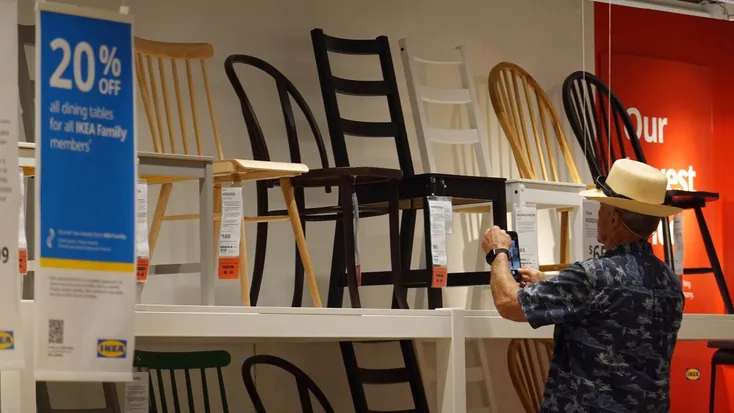
Swedish furniture giant Ikea is demonstrating resilience in its commitment to expand within the United States, showing no signs of slowing down despite the recent economic challenges posed by newly imposed tariffs. The company recently made headlines with the announcement of a significant investment, further solidifying its footprint in the competitive U.S. market.
As part of its ambitious $2.2 billion expansion strategy, Ikea has earmarked $213 million to acquire prime property in Manhattan for its new store. This move underscores Ikea's dedication to increasing its presence in the United States, where it already enjoys a substantial customer base. The decision aligns with the company's long-term vision of making its products more accessible to a broader audience. This development comes at a time when changes in U.S. trade policy are introducing new challenges for international retailers.
The timing of Ikea's announcement is particularly noteworthy, given the recent imposition of significant tariffs by President Donald Trump. The U.S. government has levied a 10 per cent tariff on softwood timber and lumber and a 25 per cent tariff on kitchen cabinets and upholstered wooden furniture, effective from October 14. These measures have been introduced as part of a broader strategy to enhance national security and foster domestic production within the United States.
The impact of these tariffs on furniture costs is yet to be fully realized, but there is potential for significant increases. The tariffs are set to incrementally rise next year, potentially reaching 30 per cent on furniture and 50 per cent on cabinets. Such increases could significantly affect the cost structure for international retailers like Ikea, which sources a substantial portion of its materials from outside the U.S.
Despite these looming challenges, Ikea remains undeterred in its expansion efforts. The company has expressed confidence in its ability to adapt to the new trade environment and continues to focus on delivering quality products at competitive prices. This resilience suggests a strategic approach where Ikea may absorb some of the increased costs or adjust its sourcing to mitigate the impact of tariffs on its final pricing.
For consumers, this commitment by Ikea indicates that while prices might adjust, the availability and variety of Ikea products are unlikely to diminish. The retailer is known for its innovative solutions and efficient supply chain, attributes that will be crucial as it navigates the complexities introduced by the tariffs.
Ikea's strategic expansion in the U.S. goes beyond mere increase in retail spaces. It involves enhancing customer experience through new technology integrations in stores, optimizing logistics networks, and investing in local communities by creating job opportunities. These initiatives are designed not only to capture a larger market share but also to maintain Ikea's strong brand reputation globally.
Moreover, Ikea is exploring sustainable practices and eco-friendly initiatives which resonate well with growing consumer demand for environmentally responsible products. This approach not only aligns with global sustainability trends but also bolsters Ikea's brand as a leader in environmentally conscious retail practices.
In conclusion, Ikea's determination to pursue growth in the U.S. market, even amid new tariffs, demonstrates a calculated approach to expansion. By investing heavily in prime retail locations and adopting innovative practices, the company reinforces its commitment to serving American consumers. The challenges posed by the tariffs may require strategic adaptations, but Ikea's proactive stance and forward-thinking investments suggest that it is well-prepared to continue thriving in the evolving economic landscape.