
19 Jun 2026
,Great Britain
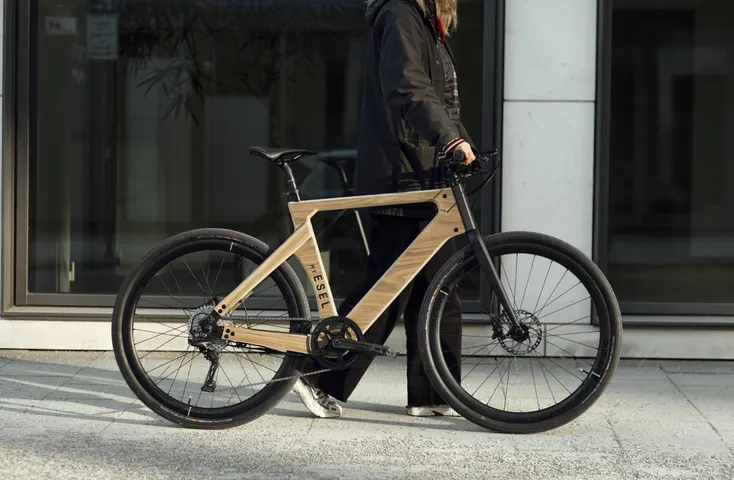
Esel Bikes is an Austrian brand that produces e-bikes with laminated wood frames, using birch, ash, and walnut as the main materials. A proposal that stands out clearly from the landscape dominated by aluminum and carbon, focusing on aesthetics, build quality, sustainability, and exclusivity. The forks, for which wood does not offer sufficient structural guarantees, are made of carbon: a necessary technical compromise that the brand does not seek to hide.
The range includes two main models. The urban model starts at 5,490 euros, while the eGravel reaches 6,690 euros. The latter weighs 15.8 kg, a value that is average for the e-gravel category, but far from the lightest references in the segment. It is not, therefore, a bicycle that competes on weight: it competes on something else.
The question that inevitably accompanies any wooden product exposed to daily use is always the same: how long will it last? Weather, humidity, temperature fluctuations, frost, and thaw are the variables that test any organic material. Esel responds with a multi-layer coating specifically developed to protect the frames from these agents, and with the use of stratified laminated wood — an already established industrial technology, also employed in architecture for load-bearing structures designed to last for decades.
The woods used are PEFC-certified and come from forests managed according to verified sustainability criteria. On the level of intentions and supply chain, the project is coherent. On the level of real-world durability, however, the picture is still incomplete: Esel is a young brand and its bicycles do not yet have long-term usage data that could confirm expectations.
Unlike carbon, whose behavior is now widely documented and predictable, that of treated wood depends on less standardizable variables: the quality of the lamination, the continuity of maintenance, and periodic checks on the integrity of the coating. This is not necessarily an absolute disadvantage, but a complexity that the buyer must take into account.
These doubts about durability do not make Esel a bad idea. They do, however, turn it into a conscious and partly experimental choice. Those who buy the eGravel get a product made with almost artisanal care, certified materials, and an aesthetic identity that is hard to find elsewhere. At the same time, they indirectly participate in the practical verification of a project that is still awaiting confirmation in the real world. It is a role that not all buyers want to take on, but for those who accept it, Esel offers something genuinely different.