1 Jun 2026
,Germany
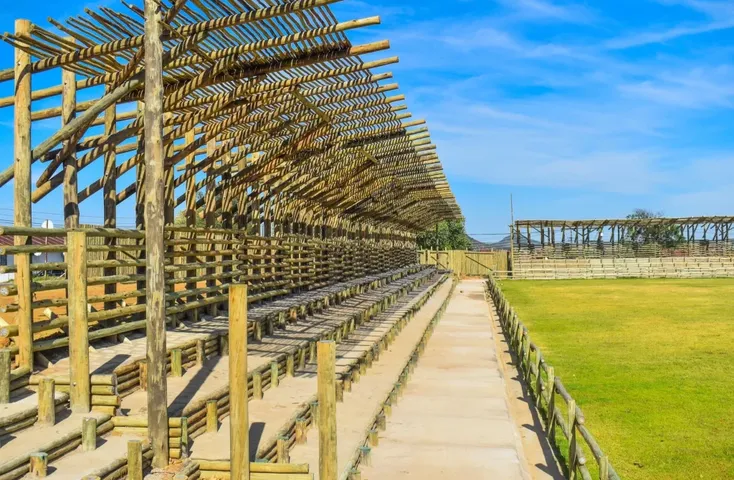
Lesotho has unveiled what has been certified as Africa's first Forest Stewardship Council (FSC)-accredited timber stadium — a groundbreaking facility in the capital, Maseru, that brings together football, biodiversity, education, and community development under a single ambitious vision. Known as the "Stadium of Life," the project forms the centrepiece of the broader Kick4Life Centre and has drawn international attention as one of the most innovative examples of sustainable sports infrastructure on the continent.
The stadium was designed and built by Rise International through its "in loco" training programme, an initiative that simultaneously delivers construction projects and equips local young professionals with practical skills in architecture and building. The development was carried out in partnership with Kick4Life, a charitable football club that uses sport as a vehicle for social transformation across Lesotho.
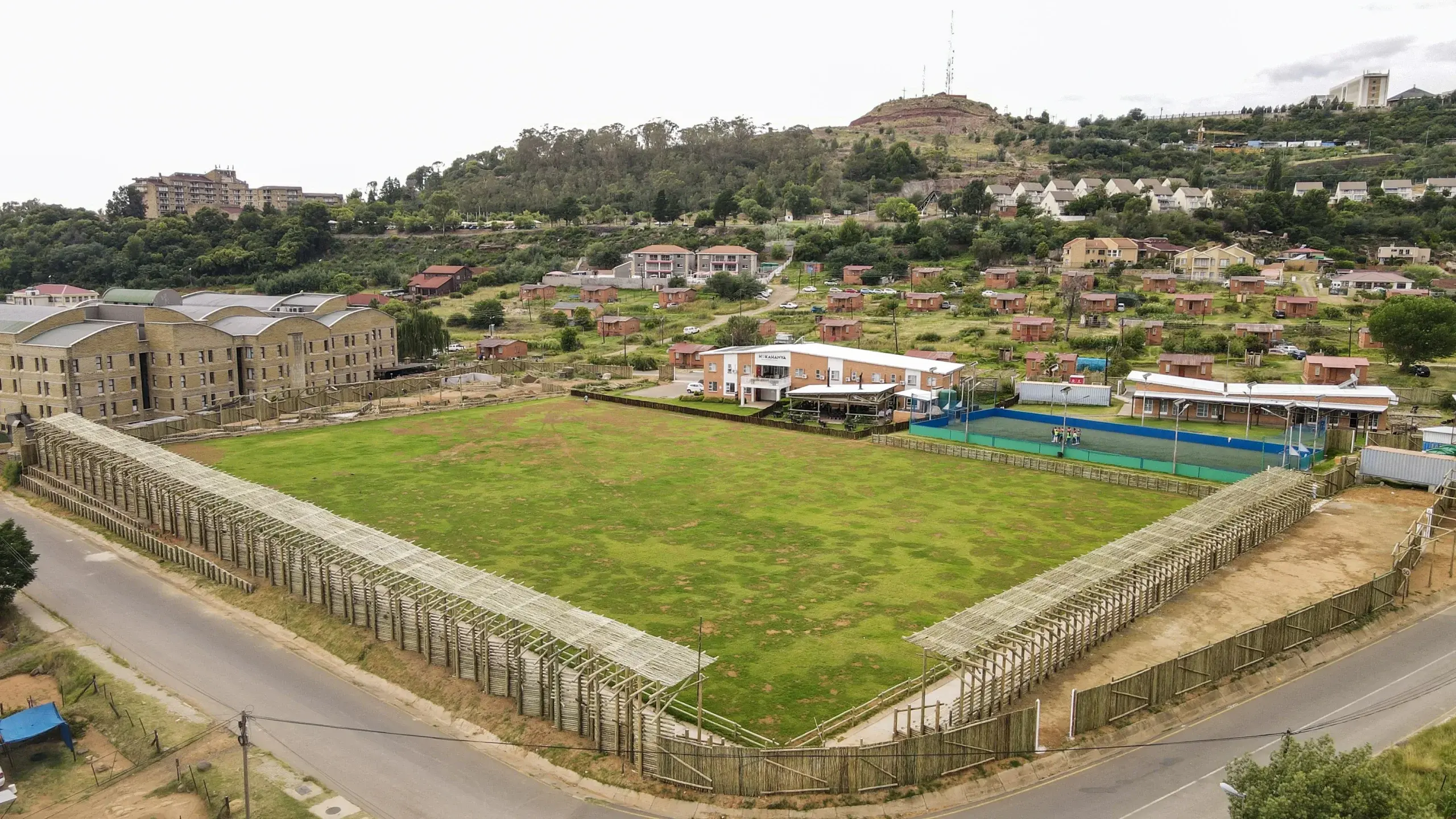
At the heart of the stadium's environmental credentials is its choice of construction materials. The structure relies primarily on sustainably sourced timber, incorporating 8,584 treated eucalyptus poles from FSC-certified plantations in South Africa. By prioritising timber over conventional concrete and steel, the project substantially reduces embodied carbon and demonstrates the viability of renewable materials in large-scale sports infrastructure. The timber-based construction method also eliminated the need for heavy machinery on site, reinforcing a climate-conscious approach from the ground up.
The most architecturally distinctive element is the "Theatre of Life" stand, designed by Milan-based firm Park Associati. Inspired by the Southern Bald Ibis — a bird of deep cultural and ecological significance to Lesotho — the stand combines timber framing, clay flooring, and planted seating terraces to create a space that functions simultaneously as a social venue, an architectural landmark, and a living ecosystem. A companion structure, the "Biodiversity Stand," goes further still, featuring native plant species representing each of Lesotho's ten districts and serving as an open-air educational platform dedicated to the country's natural heritage.
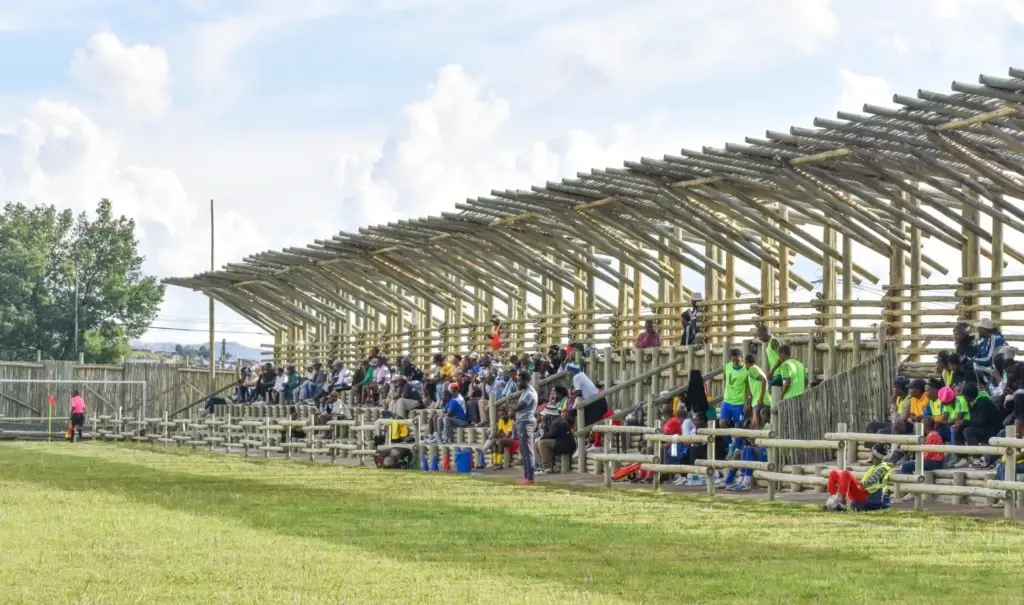
The stadium serves as the home ground of Kick4Life FC, including its women's team, which qualified for the CAF Women's Champions League in 2025 — a milestone that underscores both the sporting legitimacy of the facility and the club's growing regional profile. Yet the venue was never conceived as a football stadium alone. Its designers approached it as a multifunctional civic space, built to serve the surrounding community in ways that extend well beyond match days.
The wider Kick4Life Centre encompasses classrooms, counselling rooms, a restaurant, conference facilities, community gardens, and various shared amenities. The latest expansion adds an outdoor amphitheatre for cultural and educational programming, alongside a gymnasium constructed from repurposed shipping containers. Across these spaces, the centre hosts workshops on life skills, gender equality, climate awareness, employability, and public health, using football as an entry point for broader youth empowerment and social resilience.
FSC certification was awarded by DNV Business Assurance, providing independent verification of the stadium's environmental credentials and positioning it as a benchmark for responsible sports infrastructure in emerging economies. In a region where major construction projects often depend on imported materials, carry heavy carbon footprints, and offer limited local engagement, the Stadium of Life presents a markedly different model — one grounded in low-carbon design, locally sourced materials, meaningful skills transfer, and genuine community participation. For architects, development organisations, and football administrators alike, it makes a compelling case for what sports infrastructure in Africa can look like when ambition is matched by purpose.