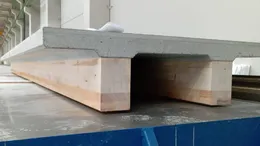

Austria is considered one of the starting points for a construction method that has transformed timber building worldwide. At the Graz University of Technology, cross-laminated timber (CLT) panels were developed in the early 2000s. These are large construction elements made of at least three cross-glued layers of wood, opening up new possibilities for modern timber construction.
Cross-laminated timber (CLT) is particularly dimensionally stable due to its cross-layered structure. For the construction industry, the material is especially attractive because of its suitability for prefabrication and serial construction. The elements are industrially produced in factories and assembled on-site in a short time. Crucially, CLT also enables the construction of multi-story buildings—a field long dominated by steel and concrete.
The Austrian market is shaped by a few major players, including KLH, Binderholz, Mayr-Melnhof Holz, and Stora Enso. The industry recently gained international attention with the high-rise “Ascent” in Milwaukee. At 86.5 meters, it is considered the tallest wood-hybrid building in the world. Of its 25 floors, 19 were constructed using solid timber, with the building comprising 259 apartments. During the planning phase, it was even extended by four additional stories.
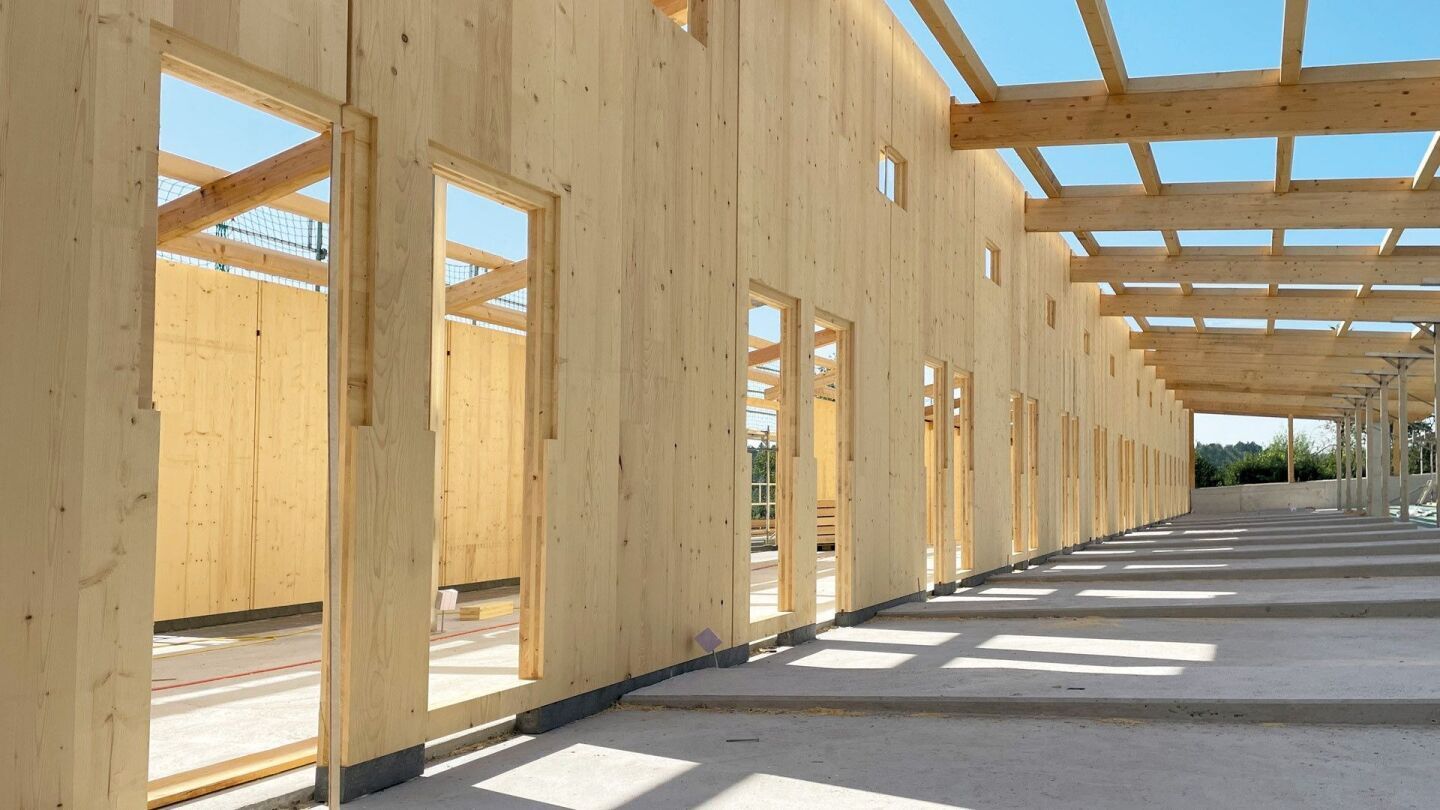
A key factor in its success is the high degree of prefabrication. For the “Ascent” project, columns and beams produced in Austria were used, already equipped with connecting elements. This allowed the 25-story tower to be erected in just six months. In the factories, ready-to-install CLT panels are manufactured with pre-integrated openings for windows and installations. Large projects require precise logistics, as transporting several thousand square meters of CLT panels necessitates numerous truck deliveries.
In addition to materials, Austria also exports planning and system expertise. Engineering firms design projects across Europe, while production takes place in Austrian factories. The industry emphasizes that the interplay of planning, production, and know-how is what drives success.
Today, timber is increasingly accepted as an equal alternative to steel and concrete, although reservations, particularly regarding fire safety, persist. Research and practice are therefore working on new solutions in the areas of safety, acoustics, and hybrid construction methods. With projects like HoHo Vienna or the “Ascent” high-rise, it is evident how strongly Austria has shaped modern timber construction. Whether wood-hybrid construction becomes the new standard in cities now depends on how well regulation, technology, and societal acceptance keep pace with the speed of innovation.