
yesterday at 12:29
,Germany
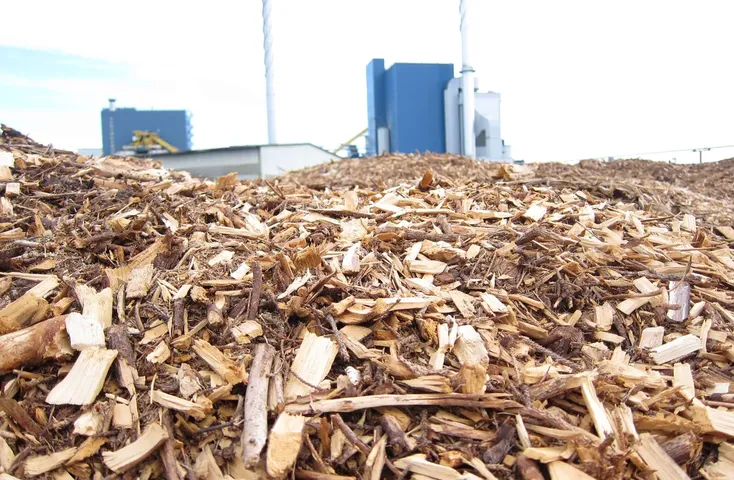
The German federal government aims to implement the provisions of the EU Directive RED III into German law through an amendment to the Biomass Ordinance (BiomasseV). According to plans from the Federal Ministry for Economic Affairs and Climate Action, numerous wood assortments will no longer be considered eligible biomass in the future. Industry associations warn of significant consequences for the energy use of wood – particularly for subsidies, investments, and the operation of facilities.
The Biomass Ordinance defines which input materials are recognized as biomass. This definition is crucial, as it determines eligibility for subsidies and the use of biomass in key regulations such as the Renewable Energy Sources Act (EEG), municipal heat planning, and the Building Energy Act. If certain materials are excluded from the ordinance, they often lose their economic viability in practice.
Criticism focuses particularly on the draft's intention to categorically exclude specific wood assortments – regardless of quality, usability, or market conditions. This threatens to create a regulation that does not adequately consider the realities of forestry and the wood market.
Several industry associations are calling for improvements. Their core concern: the energy use of wood must remain fundamentally possible. Wood is an important component of the energy transition and must not be undermined by blanket exclusions.
In their statements, they warn that the planned restrictions would deeply interfere with existing utilization chains. Subsidy opportunities would be significantly curtailed, potentially endangering both existing and planned facilities. For operators, this concerns fuel security and economic viability; for investors, it affects planning and legal certainty.
Two points are particularly controversial:
Furthermore, the associations accuse the government of going beyond EU requirements and deliberately weakening wood energy. This sends the wrong signal for the energy transition, climate protection, and security of supply.
In public debate, the practical feasibility of the plans is also being questioned. Critics point to the property rights of forest owners and warn of additional bureaucracy. At the same time, it is emphasized that high-quality wood is not burned anyway, while lower-quality residual materials should be used sensibly.
Whether the federal government will stick to the blanket exclusion or adjust the draft remains unclear. However, one thing is certain: the design of the Biomass Ordinance will significantly determine the future role of wood energy in the interplay of subsidies, heat supply, and the energy transition.