today at 09:58
,Belarus
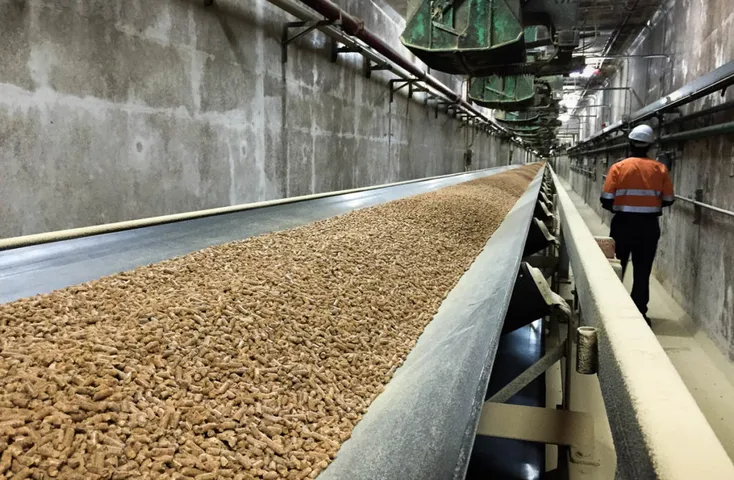
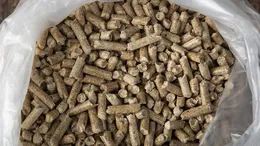
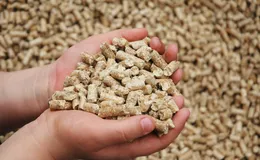
Belarus created a major wood-pellet industry from scratch in less than three years and became one of the leading exporters of pellets to the European market. However, political decisions by the authorities turned into a large-scale crisis for the country and the loss of tens of millions of euros in potential revenue. This is the conclusion reached by the Belarusian Settlement Center (BRC) in its investigation.
In 2019, Alexander Lukashenko ordered the construction of the first six pellet plants. Nearly $40 million was invested in their construction. The result was not long in coming: within two years, Belarus had taken fourth place among exporters of wood pellets to the European Union. By 2023, 64 plants with a total annual capacity of 900,000 tons were operating in the country—roughly half of all pellet imports into the EU.
Nevertheless, the actual utilization of the industry’s capacity proved negligible. In the first nine months of 2023, Belarus produced less than 30,000 tons of pellets—about 3% of potential capacity. This figure was lower than the output of a single Mozyr plant and 20 times smaller than Belarus’s pellet exports to the EU in 2021.
The BRC attributes the collapse of the industry to the actions of the Belarusian authorities themselves, which provoked the imposition of European sanctions. The restrictive measures were a response to the political repression that followed the 2020 presidential election and Minsk’s complicity in Russia’s invasion of Ukraine. In March 2022, international quality certificates for Belarusian pellets were revoked and imports of Belarusian wood-processing products into the EU were banned.
After the sanctions were imposed, Turkey became one of the main transit hubs for circumventing them. Front companies were set up there through which dollar payments with Russian and Turkish partners were arranged. According to the BRC, Belarusian state-linked businesses also began using similar schemes.
The investigation cites the companies Azimut Optima and Kronatex-Bel as examples: between 2022 and 2024 they supplied approximately 150,000 kilograms of pellets to the Turkish firm Lsk Makro Agac Sanayi Ve Ticaret Anonim Sirketi. During the same period, the Turkish company exported 900,000 kilograms of pellets to the EU, some of which, according to trade databases, originated in Belarus and Russia. One of the European buyers of this product was the Polish company ANS Group Sp. z o.o., which at the time of the deliveries was headed by Belarusian entrepreneur Andrei Kuntz.
Among Belarusian pellet suppliers to Turkey, the BRC names both private and state-owned entities—in particular Amkodor, Bellesexport and Evrotorg. Also mentioned are Profitsistema, linked to Sergei Mezentsev, and Svuds Export, whose beneficiary is named as Russian billionaire Igor Rybakov, who is under sanctions in Poland and Ukraine.
Between 2022 and 2024, Turkey exported nearly 250,000 tons of wood pellets to the EU worth about €66 million—ten times more by value than in the preceding three years. However, by 2025 Turkish pellet exports to the EU had returned to pre-sanction levels, amounting to roughly €3 million annually. According to the Polish prosecutor’s office, by mid-2026 187 criminal cases involving circumvention of sanctions against Belarus and Russia were under investigation in the country. Since the restrictions took effect, nearly 2,500 such cases have been registered in Poland, 85% of them related to Belarus; at least 91 cases were directly linked to wood-processing products.
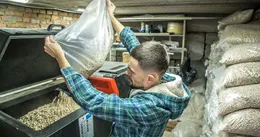
In May 2022, the Belarusian authorities launched a program to increase domestic pellet consumption, hoping to offset the loss of the European market. Experiments were conducted at CHP plants and cement factories to convert gas boilers and furnaces to wood fuel. However, industrial enterprises agreed to purchase pellets only at prices 37% below production cost, rendering such deals loss-making from the outset. At the same time, the population was offered a subsidy of up to 40% of the cost of pellet boilers and preferential access to a fixed volume of pellets.
The authorities hoped to raise domestic pellet consumption to 250,000 tons per year by 2025. In reality, it reached only 52,000 tons. Despite the obvious failure, the Ministry of Forestry still intends to build another pellet plant—in the Uzda forestry district of Minsk Region. Although the project was frozen because of sanctions, the district nevertheless plans to launch a new boiler house that will run on fuel pellets.