yesterday at 12:29
,Germany
Most Ukrainian forests are artificially created by man. It is thanks to the work of foresters that in a few decades it is possible to obtain wood that would take centuries to grow in the wild. That is why the idea of even rows of identical pine trees is quite close to reality.
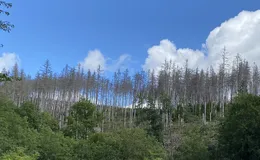
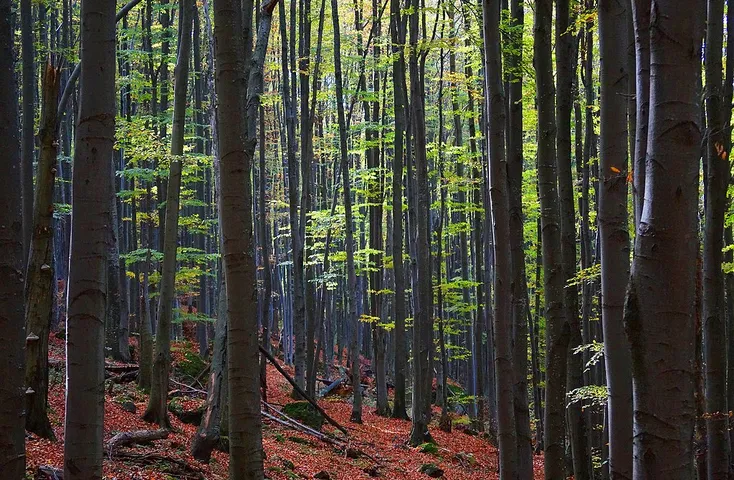
Empty areas after timber harvesting often cause indignation, especially in the mountains, where they are clearly visible from the slopes. This is how the stereotype of the "bald Carpathians" arose. However, mountain forests can look completely different — mixed, multi-layered, resistant to pests and bad weather.
Carpathian forests were historically created as plantations of the same age and species, and harvesting was carried out by continuous felling. It is this management model that led to the appearance of large "bald" areas after felling.
A 2024 government decree launched large-scale changes: in the Carpathians, continuous main logging will be banned. This ban will fully come into force in April 2027, when foresters will work out new methods.
Instead of felling large areas, re-forming felling will now be used. This is a targeted selection of trees, after which the forest retains its appearance and functions. At the same time, the approach to restoration is changing: instead of uniform plantations, complex mixed forests with trees of different ages and layers will be formed — as they were before intensive human influence.
This is not only more environmentally correct, but also more economically efficient: the growth of wood per hectare increases several times, and the forests themselves become more resistant to pests and natural disasters.
To switch to the new system, foresters need training. In the Carpathians, special training areas are already being created and management plans are being developed for the next decade. Here, specialists are trained to determine which trees should be harvested, which ones - to leave, and how to ensure natural forest regeneration without harming the ecosystem.
This is a complex and long-term process, but it opens up the opportunity to return the Carpathians to their natural appearance - diverse, vibrant and sustainable. These are the forests that future generations should see.