yesterday at 12:29
,Germany
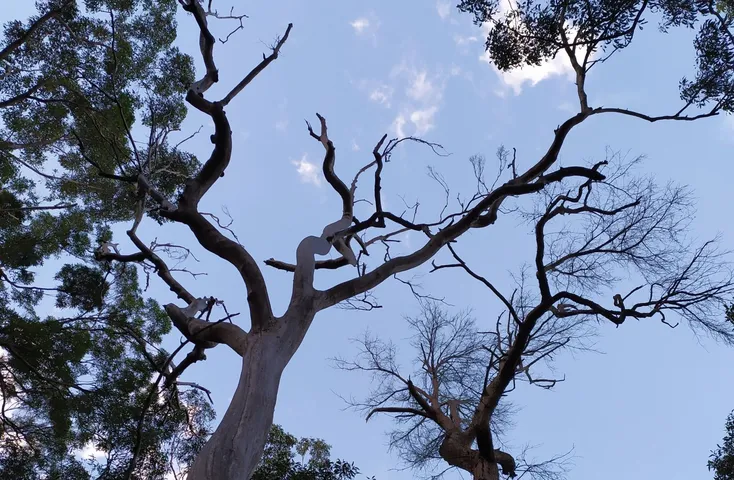
Australian forests are losing trees at an accelerating rate, indicating a long-term shift in vegetation as the climate becomes warmer and drier, according to a new study published in Nature Plants. The analysis draws on more than eight decades of forest data.
The study provides the first national-scale assessment of background tree mortality — deaths not caused by fire, land clearing, or logging — across Australia’s tropical rainforests, savannas, and temperate eucalypt forests. Researchers analysed 83 years of data from more than 2,700 long-term forest plots.
Results show that tree mortality has increased steadily since the 1940s, with a remarkably consistent pattern across all forest types. Over the same period, tree growth has stagnated or slowed, indicating that rising losses are not being offset by increased growth and do not reflect a normal regeneration cycle.
The long-term increase in tree deaths closely aligns with Australia’s warming and drying climate. Rising temperatures emerged as the strongest factor associated with mortality, with the highest increases observed in hot, dry regions and in dense forests where competition for water and light intensifies stress.
The findings raise concerns about the implications for ecosystems and human communities that depend on forests for biodiversity, cultural values, recreation, and timber. Increased mortality also threatens forests’ role in carbon storage. While forests currently absorb about one-third of global human carbon dioxide emissions, continued increases in tree deaths combined with stagnant growth could weaken this capacity.
The study highlights the importance of long-term forest monitoring for understanding climate impacts. However, researchers note a sharp decline over the past 25 years in the number of long-term monitoring plots, reducing Australia’s ability to detect emerging ecological changes.
The authors conclude that sustained, long-term forest monitoring — combined with measurements of carbon dynamics and biodiversity — is essential to guide effective forest management as climate change accelerates.