today at 15:58
,Austria
The Austrian wood industry has proven resilient in 2025 despite a difficult economic environment. The 1,256 member companies of the trade association achieved sales of produced goods amounting to around 10 billion euros. The sector remains strongly export-oriented and generated a foreign trade surplus of around 1.95 billion euros – evidence of its international competitiveness even in economically uncertain times.
However, the nominally stable revenues mask the actual earnings situation. Increased energy, personnel and logistics costs are placing a significant burden on companies. This pressure was further intensified by the military escalation in the Persian Gulf. The market outlook accordingly remains subdued: international crises, ongoing tensions related to the Iran conflict, a weakening economy, cautious construction investments and high financing costs are dampening companies’ willingness to invest.
The industry is therefore making clear demands of policymakers: better framework conditions, less bureaucracy and a consistent focus on growth and competitiveness. The representative body leaves no doubt about its impatience with half-hearted reform attempts:
"Postponing nonsensical projects by just two years does not constitute bureaucracy reduction. It merely means bureaucracy on hold for later."
In addition to the economic challenges, the EU Deforestation Regulation (EUDR) remains a key issue for Austria’s forestry and wood industry. Although important adjustments to the regulation were achieved at the end of 2025, the new rules impose additional verification and documentation obligations affecting millions of forest owners.
The wood industry criticises the fact that countries such as Austria, which have no relevant deforestation risk and where national regulations already reliably ensure sustainable forest management, are being burdened with disproportionate bureaucracy. The industry’s demand is clear: implementation of the EUDR must be practical, legally secure and practice-oriented. Administrative effort must be limited to the necessary minimum without jeopardising security of supply along the entire wood value chain.
Beyond economic policy debates, the Austrian wood industry emphasises its role as a climate protection actor. As a renewable raw material, wood absorbs CO₂ during growth and stores carbon long-term in products and buildings. At the same time, it replaces energy- and emission-intensive materials derived from finite resources.
"Those who use wood store carbon and simultaneously avoid emissions that would arise from the production of other materials."
Active and sustainable forest management also makes forests more climate-resilient, promotes natural regeneration and preserves their capacity for CO₂ uptake. The industry regards climate protection, sustainable wood use and responsible forestry as inseparably linked goals. As a versatile building material, wood also enables more economical and sustainable construction when combined with other materials.
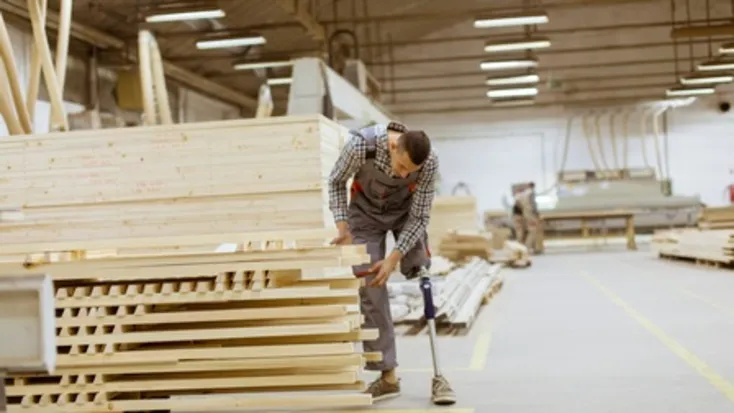
The sector’s societal importance is also reflected in employment figures. The trade association represents more than 1,250 wood-processing companies in areas such as construction products, furniture, panels, the sawmill industry, the ski industry and pallet manufacturing, directly employing around 25,200 people. Across the entire forestry and wood value chain, more than 444,000 people work – predominantly in rural regions where the sector serves as an indispensable economic anchor.