

today at 15:58
,Austria
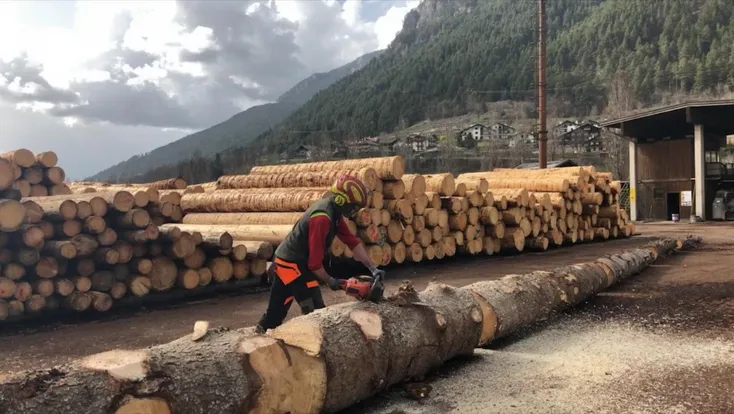
The Veneto wood supply chain finds itself at a crossroads. After years of abundant raw material availability — a direct consequence of the large volumes of timber felled by the Vaia storm in 2018 — the sector is now facing a widespread supply shortage, exacerbated by sharply rising handling costs and an increasingly unstable international geopolitical context.
To address the crisis and identify concrete solutions, Confartigianato Imprese Veneto promoted a meeting in Asiago with sector technicians and scholars, bringing together supply chain stakeholders for an open discussion on market prospects. The initiative underscores the seriousness of the situation, given the economic and employment weight the sector represents for the region.
In Veneto, the artisan wood supply chain includes over 8,800 businesses and employs more than 20,800 workers, spread across the furniture, sawmilling, window and door, construction, and upholstery sectors. This is a widespread and deeply rooted production network now exposed to pressures on multiple fronts.
Structural difficulties are compounded by external factors that are difficult to control. International geopolitical tensions are making the raw materials market more volatile and unpredictable, further complicating business planning.
Domestically, the progressive disappearance of Veneto sawmills weighs increasingly heavily. These often family-run businesses struggle to attract new generations and are severely affected by the lack of generational renewal. The reduction in the number of operators along the transformation chain weakens the overall system's ability to meet demand, amplifying the effects of the available timber shortage.
In the face of this scenario, Confartigianato Imprese Veneto has put forward an ambitious proposal: the creation of a "Veneto Wood Pact", designed to strengthen a short supply chain at regional level and reduce dependence on external sourcing.
The plan operates on multiple levels: supply chain contracts to provide continuity and certainty for operators, incentives to improve forest road infrastructure, direct support measures for local sawmills, and the introduction of bonuses in public tenders for those using certified Veneto wood. The goal is to build an integrated and resilient system capable of valorising the regional forest resource and protecting a sector that represents a pillar of Veneto's artisan economy.