today at 15:58
,Austria
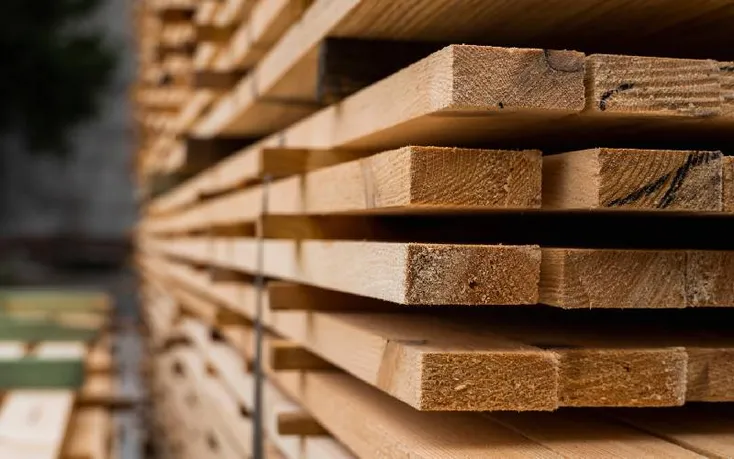
At the close of the Carrefour International du Bois in Nantes, Fibois Pays de la Loire unveiled the results of a business climate survey conducted among one hundred exhibitors. The picture that emerges is that of a forest-wood sector under pressure, yet one that has not abandoned its growth ambitions.
The past year has clearly divided industry professionals. While 28% of the companies surveyed described it as favourable and 38% as satisfactory, one third — or 33% — called it difficult or even very difficult. Economic realities vary widely from one company to another: 42% of respondents reported an increase in turnover, while 35% recorded a decline. Employment, however, has held up better: staffing levels remained stable in 54% of companies and even rose in 29% of cases.
The domestic market is the main source of concern. Nearly 57% of professionals perceive it to be in decline, compared with only 13% who consider it dynamic. European and non-European markets, for their part, are in a more balanced situation, with 23% and 20% of respondents respectively reporting a downturn.
Companies in the sector face a triple set of constraints. The general economic climate ranks as the leading negative factor, cited by 56% of respondents. Price volatility of raw materials is the second source of pressure, mentioned by 47% of professionals. Regulatory constraints complete the picture, cited by 38% of companies as a factor directly affecting their activity.
On a structural level, the issue of standards and regulations dominates: 68% of the companies surveyed see it as the main obstacle to their development. This sentiment is expressed less as a matter of principle than as criticism of administrative complexity: 34% of respondents highlighted the burden of procedures, 28% lamented standards deemed ill-suited to on-the-ground realities, and 27% pointed to their growing proliferation.
In this demanding environment, the sector can rely on real strengths. The image of wood as a material stands out as the most powerful growth lever, endorsed by 85% of respondents. Research and development, together with innovation, come second, cited by 56% of professionals.
“The image of wood constitutes a powerful lever, linked to positive perceptions of the material: authenticity, naturalness, nobility and perceived quality.” — Fibois Pays de la Loire
This image rests on solid foundations: 41% of companies highlight consumers’ positive perception of wood, and 32% emphasise its environmental benefits. In a context of rising decarbonisation challenges, wood appears more than ever as a material of the future, whose appeal strengthens as climate requirements increasingly shape industrial and construction strategies.
Despite economic uncertainties, the outlook remains positive. Forty per cent of companies anticipate growth in their activity over the next twelve to eighteen months, compared with 22% that expect a decline. Developing new markets is the top strategic priority, cited by 77% of respondents. Investment and recruitment intentions reflect a similar momentum: 61% of companies plan to invest and 58% intend to hire in the coming year. Overall, 55% of professionals say they are confident about the future of their company, while 37% remain cautious, watching for signals from the market.