Beijing helps the Kremlin bypass sanctions despite restrictions, as Russian timber continues to reach the European market through China. According to Tara Ganesh, head of the Earthsight team on timber sanctions, sanctioned products worth up to 1 billion euros enter the EU annually, as revealed by an investigation by the German broadcaster SWR.
According to journalists, a key beneficiary of the scheme is Russian billionaire Alexey Mordashov, who controls Russia’s largest forestry holding, «Sveza». After the outbreak of hostilities in Ukraine, Mordashov and the Russian timber processing industry were subjected to sanctions and lost direct access to the European market. However, supplies have reportedly been rerouted through China.
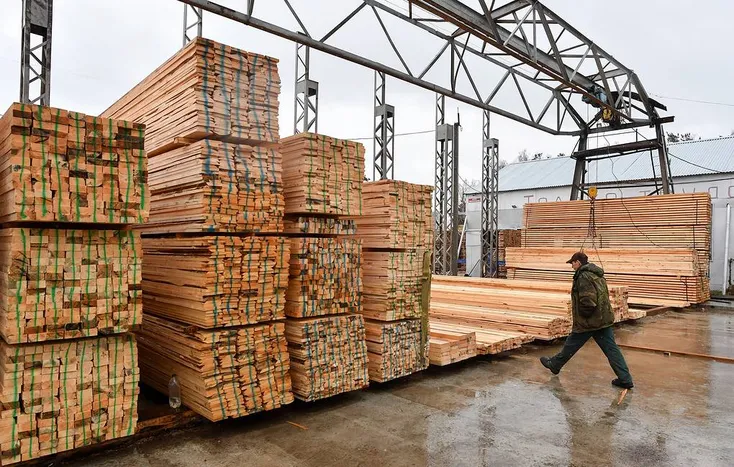
The investigation describes a «repackaging» mechanism: Russian producers disguise the origin of their timber, relabeling it as Chinese, after which the products are shipped to the EU. This includes birch plywood, which is formally exported from China, although, according to SWR and Earthsight, the raw material remains Russian — making such shipments illegal under European restrictions.
Journalists identify Poland as one of the key «entry points» for this flow: after the conflict began, timber imports from China to the EU through Poland sharply increased. However, according to customs data obtained by SWR, after stricter inspections in Poland, import volumes significantly rose through Spain and Portugal.
European producers warn of the consequences.
«These illegal timber supplies threaten the very existence of the European forestry industry», — stated Marek Janke, CEO of Paged, one of Europe’s largest plywood manufacturers.
The investigation emphasizes that this practice violates EU sanctions and the European Union Timber Regulation (EUTR).
According to journalists, the products are also openly promoted: at international trade exhibitions, sellers advertised them as «russian quality». Earthsight also reports on the scale of counterfeiting:
«One company openly showed us their warehouses full of counterfeit Russian plywood», — said Tara Ganesh.
Among the cases uncovered, SWR mentions the involvement of the Chinese branch of the German-Swiss company Hape International in Ningbo. According to trade data, over the past two years, the company imported several thousand tons of Russian timber into China; just a day after journalists reached out, all advertisements for the sale of Russian timber were removed.
European Parliament deputies, cited by SWR, acknowledge that bypassing restrictions is systemic and stress that sanctions must not only be imposed but also effectively enforced. The investigation links the issue to a persistent scheme through China, estimating damages at up to 1 billion euros per year, and highlights the adaptation of supply routes — from Poland to Spain and Portugal — as controls tighten.