
yesterday at 09:58
,Poland
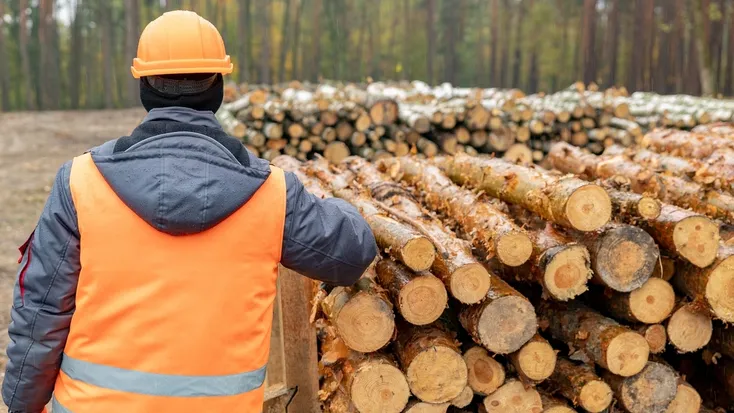
The Polish government, at the initiative of the Ministry of Development, plans to introduce legislation restricting the sale of timber beyond the borders of the European Union. This action is intended to protect the country's raw material potential and support the domestic timber market. The initiative has stirred significant emotions among entrepreneurs in the sector and economic experts.
Timber has been included on the list of strategic resources, underscoring its critical importance to the Polish economy. This decision was not surprising, given the growing domestic demand for timber and its increasing value on international markets. This raw material is not only the foundation of many industrial sectors but also a significant energy component, and its shortage can impact broader economic stability.
The State Forests have long been signaling a timber deficit, estimated at 3-4 million cubic meters annually. This situation poses a serious challenge to Poland's timber industry. Restricting exports is a step aimed at reducing this gap by managing resources in a way that meets the needs of the local economy.
The timber shortage affects the operations of numerous businesses, especially small and medium-sized sawmills, which are an important part of local communities. Their closure could lead to rising unemployment, which in turn brings negative social consequences.
The timber industry in Poland faces challenges related not only to resource management but also to the need to implement more sustainable and innovative practices that will enable the efficient use of available raw materials.
Currently, Poland compensates for the timber deficit through imports. However, this is a temporary solution that does not address the root of the problem. Experts suggest that retaining more domestically sourced timber within the country would be more beneficial, as it could help stabilize the economic situation and facilitate the development of local industrial plants.
The threat posed by the timber deficit also necessitates the adaptation of new strategies by the timber industry. Among the proposed solutions are suggestions for greater investment in sustainable forestry management and the development of timber processing technologies, which could enhance efficiency and add value throughout the entire production chain.
The introduction of timber export restrictions and its recognition as a strategic resource is one aspect of a complex raw material policy that requires coordinated actions at multiple levels. The success of this initiative will depend on the collaboration between various economic sectors and policymakers, as well as the industry's ability to adapt to new conditions.