
yesterday at 12:29
,Germany
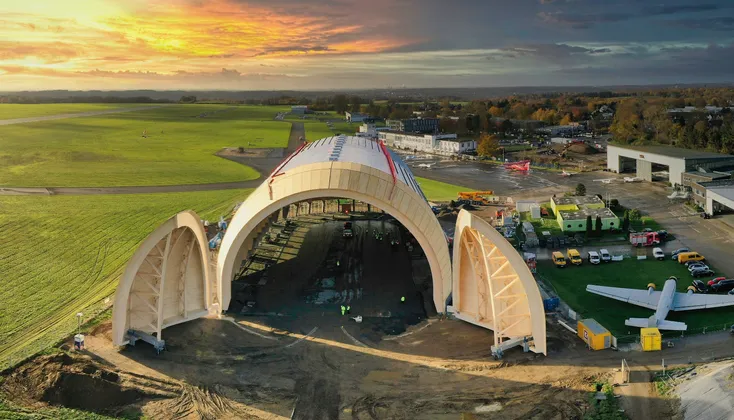
The new airship hangar in Mülheim an der Ruhr is one of the most remarkable structures of recent times and is considered a prime example of modern timber construction. At the end of 2022, a spectacular timber structure replaced the former hangar – a project that has been awarded multiple times for both its engineering achievements and its sustainability. At the same time, the building has quickly established itself as a new landmark of the city and is now also used as an event venue.
The trigger for the project was regulatory requirements, which proved to be a central planning challenge. Only a replacement building was approved, which meant that both the footprint and the characteristic curved form of the predecessor building were predetermined. These framework conditions significantly shaped the design and construction: the goal was a new building that preserves the familiar silhouette while making a clear step forward in terms of construction and design.
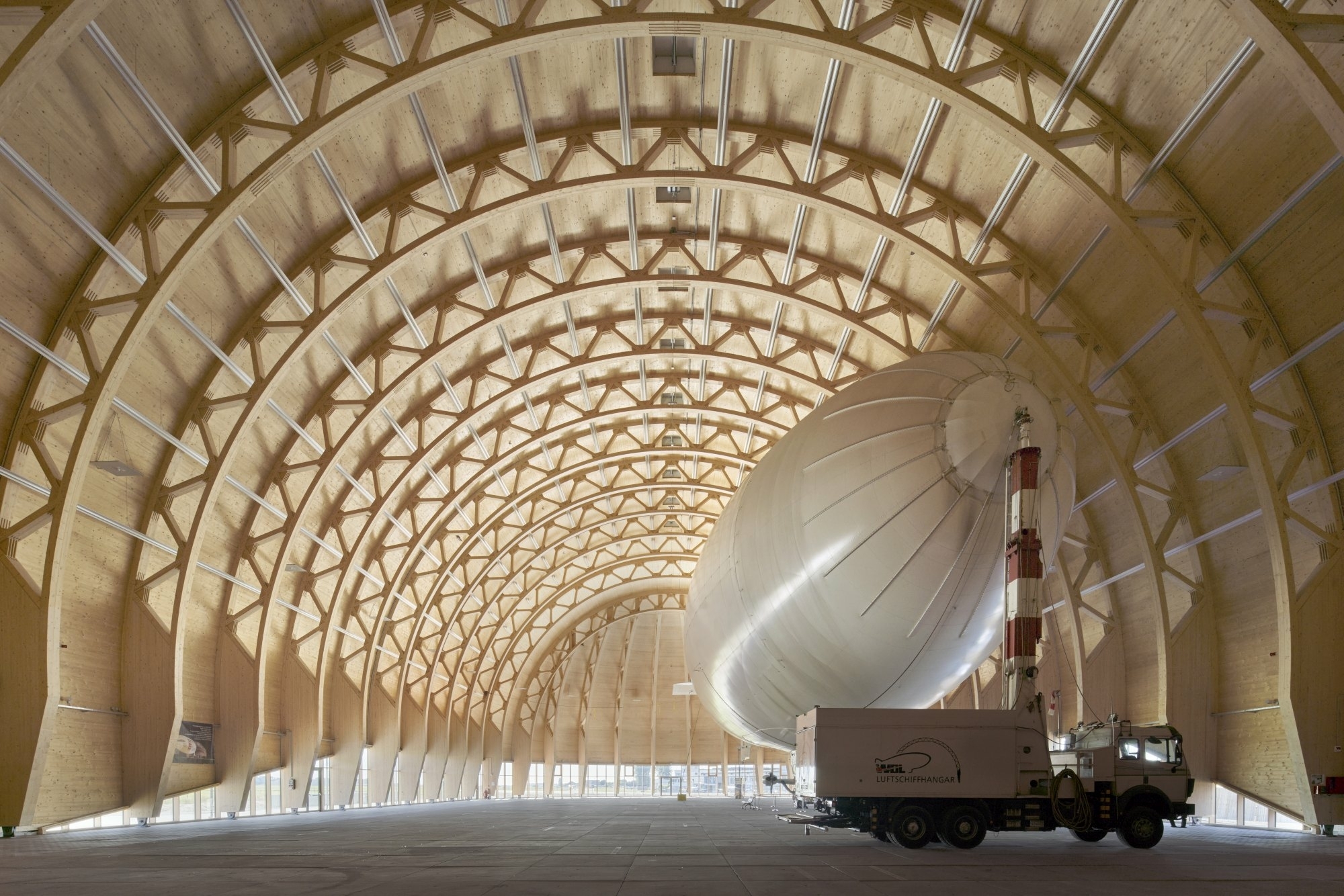
The structural planning was carried out using Allplan. The structural engineering was handled by the civil engineering office Ripkens Wiesenkämper from Essen, while the architectural design was provided by the architectural firm Smyk Fischer from Mülheim an der Ruhr. The central guiding principle was to consistently use timber instead of steel, to maintain the industrial character of the hangar, and yet to create a tangible sense of lightness in the expansive interior space. The logical consequence of this planning was the decision to opt for a truss construction.
Particularly noteworthy is its implementation as a fully timber truss system. This is made possible by nearly 600 specially developed timber joints and connectors, which allow for the complete omission of steel components. The load-bearing structure consists of 15 large two-hinged arches, each reaching up to 26 meters in height. The upper chords and diagonal bracing are integrated into a roof shell made of cross-laminated timber. Externally, a weather-resistant shell of aluminum standing-seam profiles protects the structure.
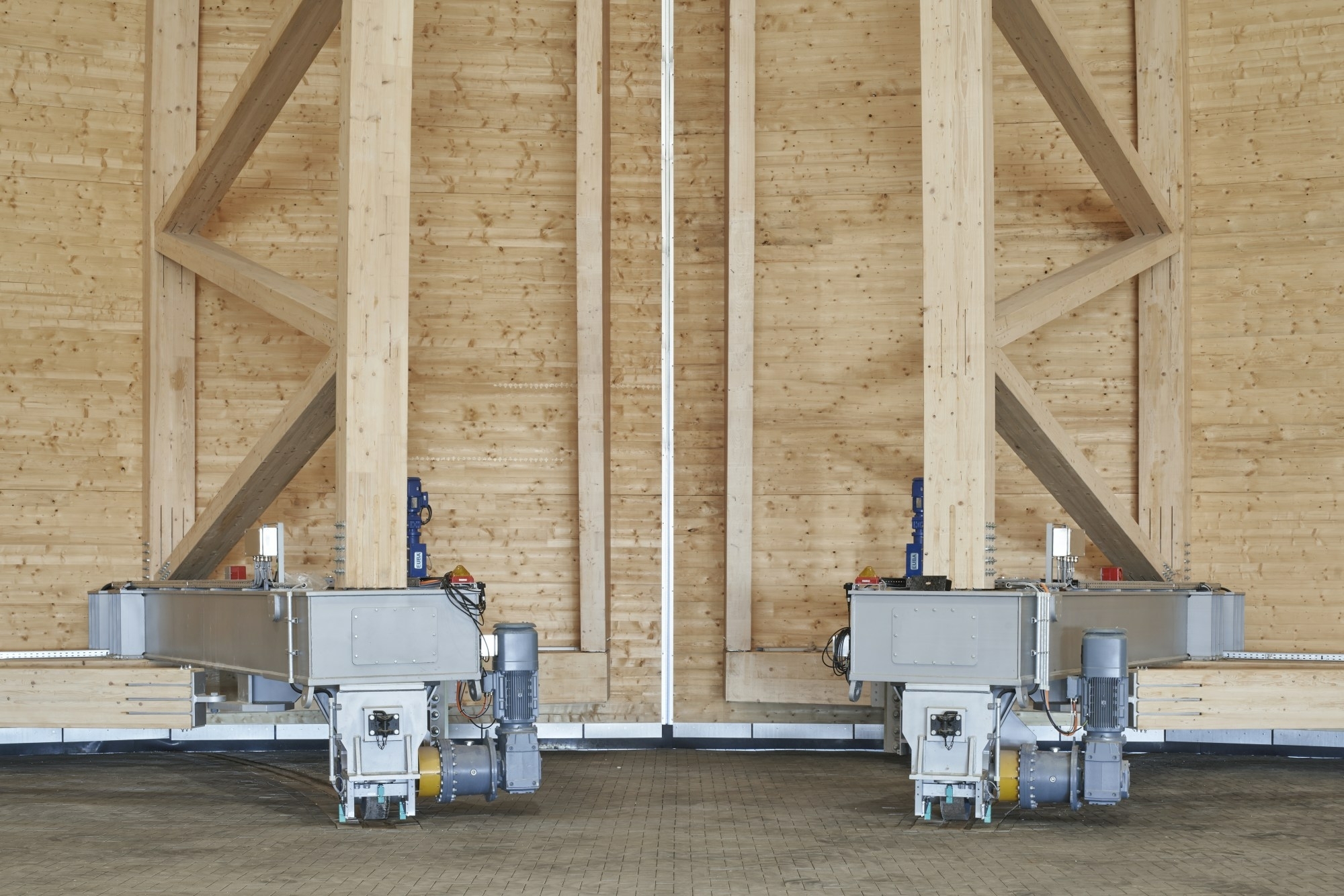
A technical highlight is the monumental, two-wing hangar gate. The particular challenge was to move two gate wings, each weighing around 72 tons, with precision and reliability. In collaboration with the engineering office Dr. Schippke + Partner, a system of massive hinges and a track was developed for this purpose; the gate is powered by electric motors, each with an output of 80 horsepower.
The project’s carbon footprint is also part of its recognition. A total of around 557 tons of spruce wood was used, saving approximately 156 tons of CO₂ compared to a conventional lightweight steel construction. Furthermore, the new building adheres to the principles of circular construction: both the timber framework and the aluminum shell are fully demountable and can be reused or recycled.
In the city and region, the new airship hangar thus stands as a symbol of forward-thinking, resource-efficient construction – and for a new type of use. As an event venue, it offers space for up to 1,500 visitors and creates an extraordinary spatial experience. The Mülheim airship hangar combines design, engineering, and sustainability, and is now regarded as a reference project for modern timber construction.