Mondragón Opens in Álava the Largest Sawmill in Southern Europe to Lead the European Forest Industry
yesterday at 12:58
,Spain
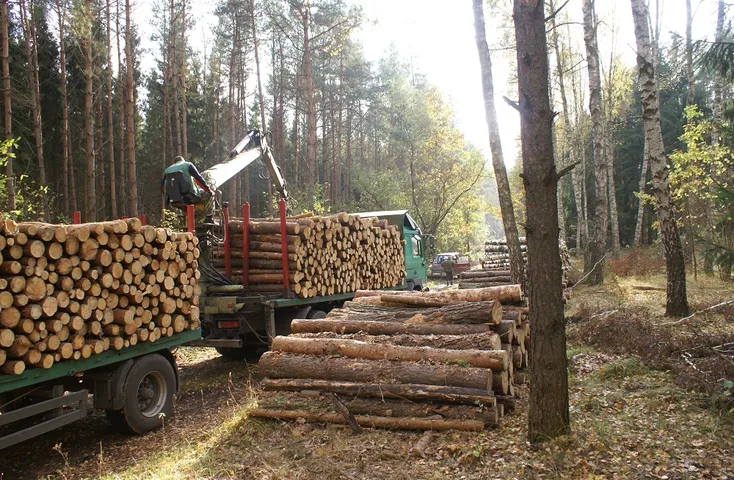
The Ministry of Climate and Environment has published a summary of actions after two years of the Coalition 15 X government. The wood market is at the center of the report: the ministry points to price stabilization for domestic processors, measures to limit the export of raw materials outside Europe, and parallel initiatives in the area of forest protection.
The wood market has long been particularly sensitive to state decisions. In Poland, there is a structural deficit of raw material, estimated by the industry at 3–4 million m³ annually. This shortage translates into price pressure and forces some companies to make foreign purchases, which in practice weakens the competitiveness of domestic processors. An additional source of tension is the export of unprocessed wood, which – in the ministry's view – limits its availability on the domestic market.
MKiŚ emphasizes that measures have been implemented to stabilize wood prices for domestic buyers and introduce mechanisms to limit the export of unprocessed raw material, especially to Asian markets. The priority is to keep a larger portion of harvested wood in Poland for local processing, which – according to the ministry – supports job creation and increases added value in the economy.
The ministry cites data from 2025. In the first three quarters, Polish wood exports to China reportedly fell by about 50%. During the same period, wood exports outside the European Union were down by 47% year-on-year. To what extent this is the result of regulatory changes and new sales rules, and to what extent it is a consequence of an economic slowdown and weaker demand in foreign markets, remains a matter requiring further analysis and commentary from the industry.
In 2024, State Forests introduced changes to the wood sales system, which – as intended – are meant to favor domestic processing and limit the re-export of raw material. Among the tools mentioned are prioritizing plants located closer to the wood harvesting sites, a greater emphasis on the so-called “depth of processing,” limiting orders to 75% of previous purchase volumes, and audits to verify whether the raw material is indeed being processed in Poland. At the same time, State Forests signal the need for legislative changes that would enable more effective and lasting restrictions on wood exports outside the EU.
Demand for wood is also influenced by the ban on burning high-quality raw material in professional energy production, effective from September 2025. This regulation may redirect some wood from the energy sector to the wood industry, though questions remain about the consequences for the biomass market and the impact of these changes on prices and raw material availability in specific market segments.
In parallel, MKiŚ highlights the environmental aspect: halting logging in the most ecologically valuable forests and completing the process of designating boundaries for so-called “social forests” around 13 urban agglomerations. The ministry stresses that these actions are to be carried out in dialogue with foresters, local governments, social organizations, and industry representatives. At the same time, they may lead to additional restrictions on wood supply in some regions, once again raising questions about the balance between nature protection and industrial needs.
In the economic balance, the ministry points to potential benefits for domestic processors and the labor market resulting from greater raw material availability in Poland. On the cost side, it mentions limitations on the activities of entities involved in raw material trade and the need for adjustments in the energy sector. A key unknown remains whether the current reforms will prove sufficient in the face of a persistent deficit of 3–4 million m³ annually, and whether further legal changes, as called for by State Forests, will be necessary to ensure that restrictions on exports outside the EU are permanent rather than merely cyclical.