
The latest economic outlook from the Natural Resources Institute Finland (Luke) paints a gloomier picture of the forest industry's near future. According to estimates, demand for forest industry products will remain weak both this year and next. Factors such as tariffs imposed by the United States, the strengthening of the euro, and low consumer confidence significantly impact market conditions. These issues, combined with global economic uncertainty, have forced the industry to consider rapid adaptation measures.
One of the biggest challenges is the oversupply of forest industry products, which has driven prices down. This oversupply, coupled with weak demand, creates a complex economic situation. Financial results this year are exceptionally poor, prompting both small and large players in the industry to reassess the efficiency of their operations and adjust production volumes.
A particular concern is the forest industry’s financial performance, which is unusually weak this year. The outlook also reveals that construction forecasts in Europe have been revised downward. Practically no growth is expected in Western Europe this year. Construction is one of the most significant uses for forest industry products, and weak expectations in this sector directly affect demand and, consequently, the overall development of the industry. Although growth is expected to begin slowly next year, it is clear that returning to normal levels will take time.
The growing economic uncertainty has cast shadows over many sectors, and the forest industry is no exception. This uncertainty has led to negative effects on domestic production, exports, logging volumes, and timber trade. Logging and timber trade volumes are under particular scrutiny, and their decline impacts the entire value chain, from forest management to logistics. Many companies have been forced to adapt their operating models, and this adaptation may require cuts in both personnel and investments.
The weakness in demand for cardboard and paper is particularly reflected in the forest industry’s export markets. Traditionally, exports to Europe, Asia, and North America have been key markets for these products. The current decline in demand in these markets poses challenges that may require new innovations and market areas to keep the industry competitive.
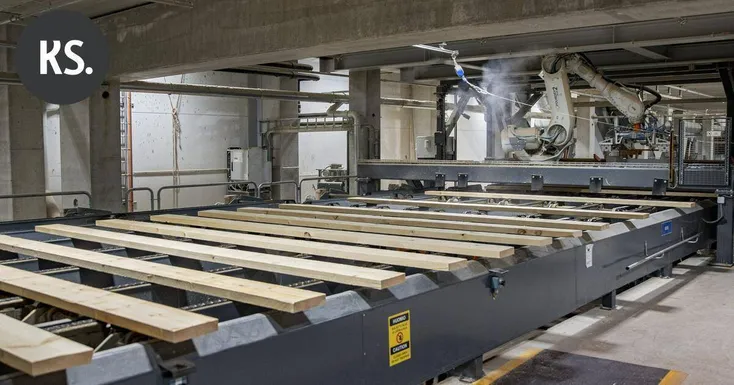
Sawn timber production and exports have also experienced significant impacts. Sawn timber, a crucial component of the construction industry, has suffered from the sluggishness observed in the construction sector in Finland. As the pace of construction slows, demand for sawn timber decreases, placing considerable financial pressure on companies whose business relies on the production and sale of sawn timber.
Overall, the forest industry faces a challenging era. While long-term forecasts may offer hope for slow growth, it is clear that the most pressing issues in the near future relate to adaptation and sustainable operations amid uncertainty. Sustainable use of natural resources and improving production efficiency are becoming even more critical factors as the industry strives to overcome these challenges and navigate future markets.