Mondragón Opens in Álava the Largest Sawmill in Southern Europe to Lead the European Forest Industry
yesterday at 12:58
,Spain
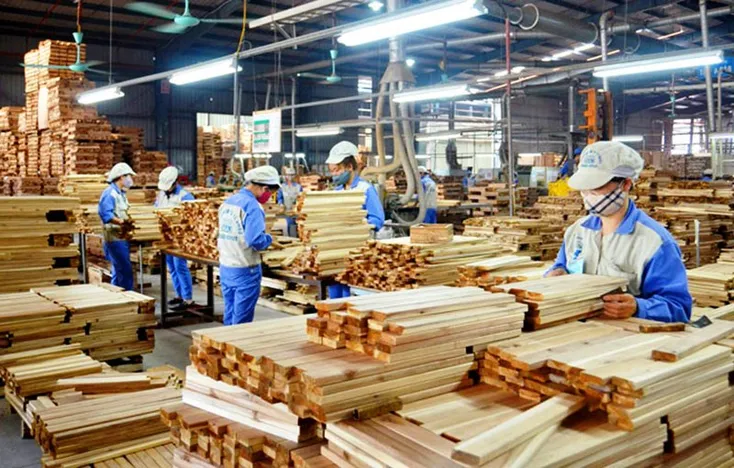
Vietnam is solidifying its position as a leading global exporter of timber and forest products, with the government launching the national certification mark VIETNAM WOOD to propel the industry to its next stage of growth. In 2024, Vietnam’s timber and forest product exports reached $17.35 billion, and they are projected to expand to $18-18.1 billion in 2025. This achievement ranks Vietnam fifth globally and second in Asia.
However, as global market demands for legality, origin traceability, carbon emission reduction, and labor and social responsibility intensify, ‘trust’ and ‘standards’ are emerging as key competitive factors beyond mere volume competition.
The growth of Vietnam’s timber industry is underpinned by robust forest resources. The country’s forest area spans approximately 14.8 million hectares, with a forest coverage rate of 42%. Annually, over 20 million cubic meters of timber are produced from plantations, most of which are processed and exported. This is regarded as a stable raw material base supporting the industry’s long-term growth.
The supply chain structure is also gradually improving. The proportion of domestically sourced timber is increasing, reducing reliance on imports, while millions of hectares of plantations have obtained certification under international sustainable forest management standards such as FSC. Forestry supports the livelihoods of millions, sustains employment in rural and mountainous areas, and plays a crucial role in poverty alleviation and environmental protection.
Vietnam’s timber and forest products are currently exported to over 140 countries and regions, including the United States, the EU, China, Japan, and South Korea. However, as markets expand, the burden of technical regulations and compliance requirements also grows. In particular, standards for legality verification, origin traceability, carbon emissions, and labor and human rights are becoming increasingly stringent in major export markets.
A structural limitation of the industry has been the lack of national brand competitiveness. Many products are exported under foreign brands, limiting added value, and the recognition and prestige of Vietnamese timber in international markets have not been fully reflected, according to evaluations.
To address these limitations, the Forest Protection Department has introduced the national certification mark ‘VIETNAM WOOD’. This is not merely a logo but a policy declaration to establish a national brand identity based on common standards of quality, legality, and sustainability.
‘VIETNAM WOOD’ aims to serve as a kind of ‘identity card’ guaranteeing the credibility of Vietnamese timber. It seeks to enhance corporate trust and market competitiveness by clearly demonstrating legal origin, product quality, and compliance with environmental and social responsibilities.
To this end, the Intellectual Property Office has officially issued geographical indication certificates for ‘Vietnam Wood (VIETNAM WOOD),’ and the government, associations, and businesses have confirmed their institutional foundation and commitment to implementation.
The government and industry emphasize that the certification mark should not be limited to the production stage but must extend across the entire value chain, encompassing processing, distribution, and branding. Added value is created not only through manufacturing but also through technology application, distribution systems, and branding strategies, necessitating parallel efforts in national certification and individual corporate brand building.
In the initial implementation phase, seven outstanding companies were granted certification trademark rights. These companies are expected to form the core initial group sharing the ‘VIETNAM WOOD’ brand. Future success will depend on the transparency of selection criteria, the ability of companies to fulfill traceability, carbon, and social responsibility commitments, and overseas marketing strategies.
The industry anticipates that, with a clear legal framework and cooperation among the government, associations, and businesses, Vietnam’s timber industry can transition from a focus on ‘mass exports’ to a ‘sustainable and responsible high-value industry.’ Linking Vietnam’s world-class export performance with a national brand, standards, and a trust system has emerged as the next challenge for the timber industry.