yesterday at 12:29
,Germany
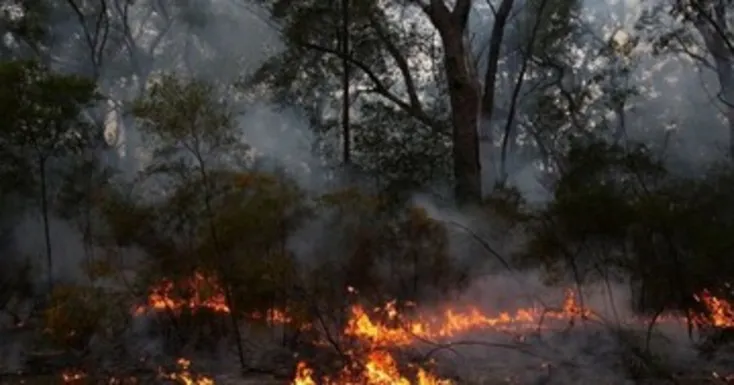
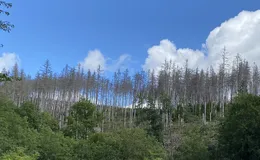
The war in Ukraine has left behind not only the ruins of cities and villages but also significant damage to natural systems, particularly forests. As Yevhen Khlobystov, Dean of the Faculty of Natural Sciences at Kyiv-Mohyla Academy, states, part of the forest fund has been directly destroyed, and irreversible changes to ecosystems have occurred in certain areas.
"In regions where hostilities are ongoing, it is difficult to accurately assess the scale of losses. The situation is constantly changing," notes Khlobystov.
This means that the environment in these zones is continuously subjected to new blows, and even preliminary assessments may not reflect the full extent of the destruction.
In some areas where research can already be conducted, scientists are observing irreversible changes. "The damage is often of such a nature that the composition of forests changes, and a new ecosystem is formed," he adds. This means that returning to the previous state may be impossible due to the loss of many key tree species, flora, and fauna.
The change in forest composition is one of the key consequences of the war for Ukraine's nature. In some affected territories, new ecosystems are already beginning to form, indicating nature's adaptation to new conditions. However, these changes may bring both positive and negative ecological consequences.
Restoring destroyed forests will require significant time and effort. "Detailed studies are necessary to assess ecological changes and to develop restoration strategies," emphasizes Khlobystov. This entails the involvement of substantial scientific and financial resources, as well as coordination with international organizations that can provide the necessary knowledge and support.
In light of this, the restoration of Ukraine's natural resources after the war becomes a priority task, not only for preserving ecological balance but also for ensuring the sustainable development of the nation in the future. It is evident that the challenges are immense, but a scientific approach and international cooperation can serve as the foundation for the revival of Ukrainian forests and the preservation of biodiversity in the post-conflict period.